
Egg Wash vs Milk Dip for Fried Chicken - Ensuring Better Coating Adhesion
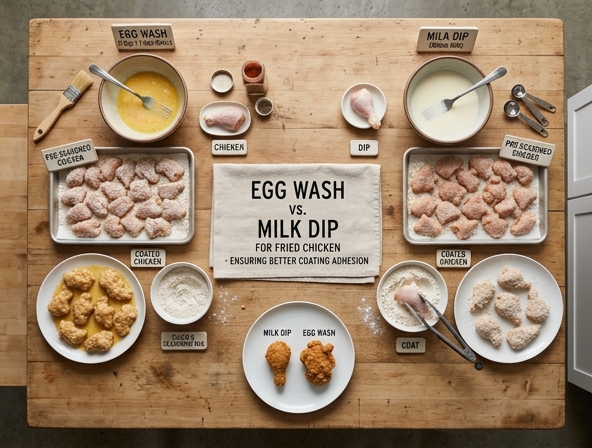
Achieving a perfectly adhered crust on fried chicken is a persistent challenge for many culinary professionals. While standard egg washes and milk dips are fundamental industry staples, selecting the optimal binder is vital for consistent results. Understanding the protein-binding properties of each medium significantly improves structural integrity. Note that proper substrate preparation remains essential for success. Mirroring techniques used in top-tier kitchens, our analysis explores which method best secures your breading, guiding your frying technique.
| Aspect | Summary Details |
|---|---|
| Core Objective | Achieving optimal crust adhesion and structural integrity for fried chicken. |
| Methods Compared | Standard Egg Wash vs. Milk Dip binders. |
| Technical Focus | Utilizing the unique protein-binding properties of each liquid to secure breading. |
| Success Factor | Proper substrate preparation is essential for consistent results, regardless of the binder choice. |
| Recommendation | Align your binder selection with professional techniques to improve frying outcomes. |
Egg Wash vs. Milk Dip for Fried Chicken: Ensuring Better Coating Adhesion
The quest for the perfect piece of fried chicken-one defined by a shatteringly crisp exterior and succulent, juicy meat-is often derailed by a single, frustrating culinary failure: the "naked spot." There is nothing more disheartening than pulling a golden-brown piece of chicken from the fryer only to watch the crust slide off like a loose sweater, leaving behind a soggy, under-seasoned surface. The secret to bridging the gap between the meat and the breading lies in the adhesive base: the liquid dip.
The debate between using an egg wash and a milk or buttermilk dip is as old as the fry-basket itself. Both methods aim to solve the same problem, but they do so through different chemical mechanisms. To master your fried chicken, you must understand not just which one to choose, but why each one behaves the way it does.
The Science of Adhesion: How Binders Work
At its core, the liquid dip acts as a biological glue. When you coat chicken in flour, the flour is simply a loose powder. To make that powder transform into a crust, it needs a medium to hydrate it. The proteins in the liquid bind to the proteins in the meat, while the starches in the flour absorb the moisture to create a cohesive structure. If the dip is too thin, the crust falls off; if it is too thick, the crust becomes gummy or bread-like.
The Egg Wash: The Structural Heavyweight
The traditional egg wash-usually a combination of beaten eggs and a splash of water or milk-is the workhorse of the breading world. Eggs are high in protein and fat, and when exposed to the heat of the fryer, these proteins coagulate rapidly. This creates a firm, consistent "net" that holds the flour coating tightly against the surface of the chicken.
- Pros: Excellent adhesion, particularly for heavy, thick coatings like panko or double-dredged flour. It provides a distinct structural integrity that survives long periods under heat lamps.
- Cons: If the ratio of egg to liquid is too high, the coating can take on a slightly rubbery or "bready" texture. It also lacks the tenderizing properties found in dairy-based dips.
The Dairy Dip: The Tenderizer
Using milk, or more commonly, buttermilk, is a technique rooted in Southern tradition. Buttermilk is slightly acidic, which does two things: it breaks down the muscle fibers in the chicken, leading to a more tender finished product, and its viscosity is higher than standard milk, allowing it to coat the chicken more effectively.
- Pros: Superior flavor and tenderness. The acidity of the buttermilk helps unlock flavor in the meat, and the coating remains lighter and crispier compared to the more structural egg-based crust.
- Cons: Because it lacks the high protein content of eggs, it is sometimes less effective at holding onto a heavy breading. It requires a more careful hand during the dredging process to ensure the crust doesn't slide off.
The "Best of Both Worlds" Technique
For those aiming for professional-grade results, the most effective method is often a hybrid. Many top-tier kitchens use a slurry or a double-dredge system. By whisking a small amount of flour into your egg or buttermilk wash, you create a thicker, more adhesive consistency. This "batter-like" stage acts as a bridge, ensuring that the final layer of dry flour has a robust surface to cling to.
Furthermore, don't ignore the importance of the Resting Phase. Regardless of whether you use egg or buttermilk, once the chicken is coated, it must rest on a wire rack for at least 15 to 20 minutes before it touches the hot oil. This resting period allows the moisture from the chicken to hydrate the flour-liquid-flour layers, creating a "cement" that will not detach during the violent bubbling of the frying process.
Troubleshooting Your Coating
If you find that your crust is still failing, check these three factors:
- Surface Moisture: Before dipping the chicken in your chosen liquid, pat it thoroughly dry with paper towels. Excessive moisture on the surface of the raw meat creates a barrier that prevents the dip from bonding to the proteins.
- Flour-to-Starch Ratio: Add a tablespoon or two of cornstarch or potato starch to your flour dredge. Starch is hydrophobic and crisps up more aggressively than wheat flour, which helps reinforce the bond created by your egg or milk dip.
- Temperature Control: If the oil is too cold, the breading will soak up grease before it sets. If the oil is too hot, the exterior will burn before the bond is fully established. Keep your oil consistently between 350°F and 375°F (175°C-190°C).
Conclusion: Which Should You Choose?
The choice ultimately depends on your desired outcome. If you are aiming for a classic, thick-crust fried chicken that holds up to heavy seasoning, the egg wash is your best friend. If you prioritize a tender, succulent bite with a lighter, lace-like crust, buttermilk is the superior choice.
Ultimately, the "better" coating isn't just about the liquid you choose-it's about the harmony between the meat, the binder, and the dredge. By controlling the moisture, allowing for proper rest times, and understanding the chemistry of your ingredients, you can ensure that your crust remains exactly where it belongs: perfectly adhered to the chicken, bite after delicious bite.
Disclaimer:
The information provided on Eateryn is for general educational and informational purposes only and is not intended as medical, nutritional, or healthcare advice. It should not be used to diagnose, treat, cure, or prevent any disease or medical condition.
Always consult a qualified physician, registered dietitian, or other certified healthcare professional before making changes to your diet, exercise routine, or lifestyle, or regarding any medical questions or concerns you may have. Never disregard or delay seeking professional medical advice because of something you have read on this website.