
Egg vs Water for Bagel - Determining the ideal dough composition
Many bakers struggle to achieve the quintessential, blistered bagel crust while maintaining a resilient, chewy interior. While traditional recipes rely strictly on water, many artisans now incorporate eggs to alter dough mechanics. This substitution fundamentally shifts crumb density and structural appeal. Note that hydration ratios must be recalibrated when introducing these proteins. Whether you seek the classic snap of a water-based bagel or the tender, golden crumb of an enriched version, we will now analyze these variables.
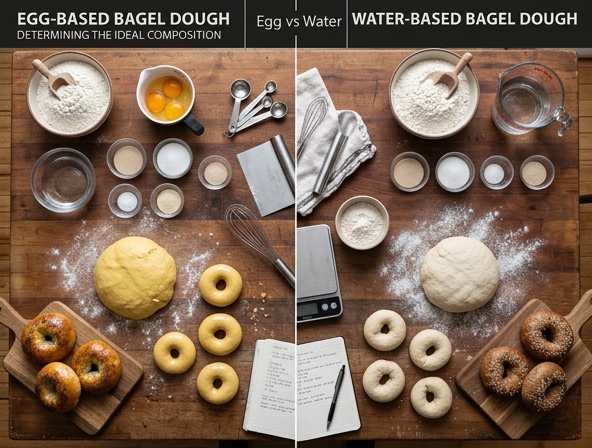
| Feature | Water-Based (Traditional) | Egg-Based (Enriched) |
|---|---|---|
| Crust Profile | Quintessential, blistered | Golden |
| Interior/Crumb | Resilient, chewy | Tender, higher density |
| Technical Requirement | Standard hydration | Requires recalibrated hydration ratios |
The Great Debate: Egg vs. Water in Bagel Dough Composition
For the purist, the perfect bagel is a study in minimalism. Flour, water, salt, yeast, and a touch of malt syrup-this is the foundational architecture of the iconic New York-style bagel. Yet, venture into any reputable deli or artisanal bakery, and you will inevitably find a different, warmer-hued candidate resting on the rack: the egg bagel. This divergence raises a fundamental culinary question: how does replacing water with eggs fundamentally alter the chemistry, structure, and sensory experience of the bagel?
The Chemistry of the Canvas: Water-Based Dough
To understand why a water-based bagel behaves the way it does, one must look at the gluten network. Water is the solvent that hydrates the proteins (gliadin and glutenin) in wheat flour, allowing them to bind and form the complex, elastic web of gluten that gives a bagel its characteristic "chew."
In a water-based bagel, the absence of fat (or its near-absence) allows the gluten network to tighten significantly during the boiling and baking process. This creates a high-tension exterior-the "crust"-that resists the teeth, followed by an interior crumb that is dense, tight, and slightly resistant. Water is neutral; it acts as a carrier for the flour's natural nutty notes and the sweetness of the malt, resulting in a clean, professional finish that prioritizes textural integrity over softness.
The Enrichment Effect: The Role of Eggs
When you introduce eggs into the equation, you are essentially "enriching" the dough. Eggs are not merely liquid; they are a complex mixture of proteins, fats (lipids), and emulsifiers, most notably lecithin. This addition changes the bagel from a lean, structural masterpiece into a soft, tender, and slightly brioche-like creation.
1. The Emulsification Power of Lecithin
The lecithin found in egg yolks acts as a natural emulsifier, which helps disperse the fats more evenly throughout the dough. This lubrication prevents the gluten strands from tightening as aggressively as they do in a water-based bagel. The result is a bagel that is noticeably softer and more tender. While a water-based bagel might tear under pressure, an egg bagel provides a more yielding, velvety crumb.
2. Color and the Maillard Reaction
The yellow hue of an egg bagel is unmistakable. This color comes from the carotenoids in the egg yolks. Furthermore, the amino acids and sugars present in eggs participate more actively in the Maillard reaction-the chemical process responsible for browning and the development of complex, savory flavors. Consequently, egg bagels often feature a darker, richer crust that carries a deeper, almost toasted-custard aroma compared to the stark, golden-brown finish of a water-bagel.
The Boiling Factor: The Critical Distinction
The defining characteristic of the bagel-the boil-is where the two dough types diverge most dramatically. Bagels are boiled in water (often with malt or honey) to gelatinize the starches on the surface before baking. This gelatinization is what seals the crust, trapping moisture inside and ensuring the chew.
Water-based doughs handle the boiling process with relative ease. The gluten structure is resilient enough to withstand the agitation of the boiling liquid. However, egg-enriched dough is more delicate. The fats in the egg interfere with the tight gluten structure, making the dough slightly more susceptible to structural collapse if handled roughly during the transition from the boil to the baking sheet. A baker must be more precise with an egg-dough formulation; if the dough is too soft, the bagel may lose its characteristic "hole" or flatten slightly during the boil.
Flavor Profile: Comparing the Experience
The choice between water and egg is ultimately a preference of flavor profile versus functional texture:
- The Water Bagel (The "Classic"): Best for savory applications. It provides a neutral base that lets the toppings (everything, onion, garlic) shine. The focus here is on the contrast between the hard, crispy exterior and the dense, chewy center. It is the superior choice for a traditional lox-and-cream-cheese sandwich because it stands up to moist ingredients without becoming soggy.
- The Egg Bagel (The "Comfort"): Best for those who prefer a softer, slightly sweet experience. Because of the fat content, egg bagels often have a longer shelf life, remaining soft for a day or two longer than their water-based counterparts, which tend to go stale quickly due to the rapid staling (retrogradation) of starch in a lean dough. They pair beautifully with sweeter schmears, such as honey-walnut cream cheese or even plain butter.
Determining the Ideal Composition
If you are a home baker or a professional looking to dial in your recipe, the "ideal" composition depends on the intended outcome. For a commercial operation, consistency is key. A water-based dough is more predictable in high-volume production, while an egg-based dough requires a more delicate touch.
For those looking for a middle ground, many bakers employ a "modified enrichment" strategy. Using a small percentage of egg yolk or adding a small amount of oil to a water-based dough can bridge the gap-adding a touch of tenderness and a better shelf life without sacrificing the traditional "chew" that bagel aficionados demand.
Conclusion: Respecting the Tradition, Embracing the Evolution
The bagel is a versatile vessel, and the liquid base is the primary lever a baker has to control its final character. While the water-based bagel remains the gold standard for the quintessential New York experience, the egg bagel offers a level of richness and softness that appeals to a different palate-one that values the comfort of a tender crumb over the challenge of a tough crust.
Whether you choose the crystalline structure afforded by water or the emulsified richness provided by eggs, both methods require a respect for the fermentation and boiling process. The ideal dough is not necessarily the one that follows the most popular recipe, but the one that best serves the ingredient profiles and the desired eating experience you wish to create.
Disclaimer:
The information provided on Eateryn is for general educational and informational purposes only and is not intended as medical, nutritional, or healthcare advice. It should not be used to diagnose, treat, cure, or prevent any disease or medical condition.
Always consult a qualified physician, registered dietitian, or other certified healthcare professional before making changes to your diet, exercise routine, or lifestyle, or regarding any medical questions or concerns you may have. Never disregard or delay seeking professional medical advice because of something you have read on this website.