
Dutch vs French for Apple Pie - Choosing Between Crumble and Streusel Toppings
Choosing the perfect topping for an apple pie often challenges even experienced bakers. While traditional lattice crusts provide structural familiarity, moving toward Dutch or French finishes offers a sophisticated upgrade. These toppings elevate the experience by adding textural complexity and caramelized depth. Note that ingredient ratios determine success; precise butter incorporation remains vital. Whether utilizing the flour-heavy Dutch crumble or the nut-enriched French streusel, each selection refines your outcome. This guide details how to master these variations.
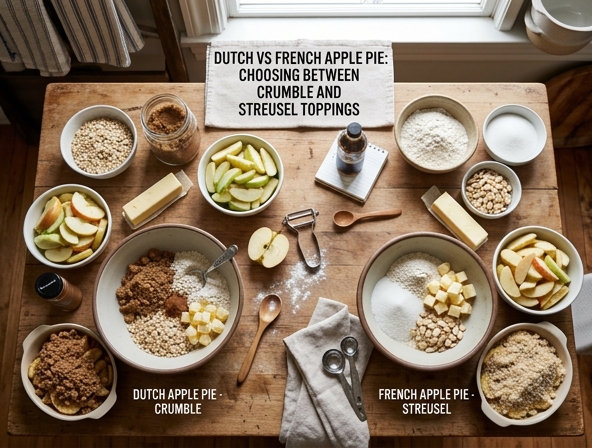
| Topping Type | Primary Characteristics | Key Ingredient Focus |
|---|---|---|
| Dutch | Traditional flour-heavy crumble. | Focuses on butter incorporation for a crisp, textural finish. |
| French | Nut-enriched streusel. | Adds complex, sophisticated flavors through nutty additions. |
| Note: Both styles serve as high-quality upgrades to standard lattice crusts, relying on precise butter ratios for success. | ||
The Great Apple Debate: Choosing Between Dutch and French Toppings
There is perhaps no scent more synonymous with the arrival of autumn than that of apples bubbling away in a hot oven, encased in a buttery, flaky shell and dusted with warm spices. For generations, the apple pie has served as the centerpiece of home-style comfort. Yet, beneath the familiar facade of the "all-American" apple pie lies a significant culinary choice that can entirely redefine the experience: the topping. Are you reaching for the hearty, crunchy, buttery depths of a Dutch-style streusel, or the refined, delicate, and often sophisticated textures associated with French-inspired fruit tarts and crumbles?
The Dutch Legacy: The Majesty of Streusel
When we talk about "Dutch Apple Pie," we are almost invariably referring to a pie topped with a generous, golden-brown layer of streusel. In the American baking lexicon, the term "Dutch Apple Pie" has become shorthand for a pie that swaps the traditional top crust for a mountain of crumbs. But what exactly is a streusel?
Originating from the German word streuen (meaning "to scatter" or "to strew"), streusel is a crumbly mixture of fat, sugar, and flour. The magic of a Dutch-style topping lies in the ratio of these ingredients. By rubbing cold butter into a mixture of flour, granulated or brown sugar, and a hint of cinnamon, the baker creates a topping that bakes up crisp, rich, and incredibly indulgent.
Why choose the Dutch topping? The appeal is primarily texture. While a traditional double-crust pie provides a uniform chew, the Dutch topping provides a structural contrast. The streusel acts as an insulator, shielding the apples from the direct heat of the oven, allowing them to steam in their own juices. The result is a molten, jammy fruit filling topped with a satisfying, almost cookie-like crunch that bridges the gap between pie and cobbler.
The French Influence: Refinement and Contrast
While the term "French Apple Pie" is less strictly defined than its Dutch counterpart, it generally signals a pivot toward technical elegance. In French pastry, the focus is often on the harmony of fruit and crust. When a French-inspired recipe calls for a crumble (often referred to as a crumble aux pommes), the approach is typically more refined than the rustic Dutch streusel.
French-style toppings often incorporate ingredients that elevate the flavor profile beyond basic sugar and spice. You might find finely ground almonds or hazelnuts-a nod to the French love for pâte sablée-added to the flour mixture. This adds a nutty depth that complements the tart acidity of Granny Smith or Honeycrisp apples. Furthermore, French pastry chefs often emphasize a thinner, more precise layer of crumbs, allowing the quality of the fruit to take center stage rather than burying it under a mound of butter and sugar.
The Science of the Crumb
Whether you lean toward the Dutch or French philosophy, the science of the perfect topping remains the same. The secret is the temperature of the butter.
- Cold Butter: If your butter is too warm, your streusel will melt into a greasy paste rather than forming distinct, crunchy nuggets. Always start with cubes of butter straight from the refrigerator.
- The Binding Agent: While flour is the base, consider the flour-to-sugar ratio. Higher sugar content creates a caramelized, hard candy-like snap. Higher flour content creates a sandy, soft texture.
- The Spice Profile: Cinnamon is the default, but don't be afraid to experiment. A Dutch topping benefits from the warmth of freshly grated nutmeg and cloves. A French-inspired topping, however, pairs beautifully with a hint of vanilla bean or even a pinch of sea salt to cut through the richness of the fruit.
Choosing Your Style: When to Go Dutch vs. French
Deciding between the two depends on the mood and the occasion. Choose the Dutch Streusel when you are looking for pure, unadulterated comfort. It is the perfect pairing for a scoop of vanilla bean ice cream; the melting ice cream interacts with the craggy, buttery peaks of the streusel to create a texture that is nothing short of sublime. It is the ultimate "homestyle" dessert, rugged and forgiving, perfect for large family gatherings or a chilly Sunday evening.
Conversely, opt for a French-style crumble when you want to highlight the elegance of the fruit. If you have spent time sourcing heirloom apples or have created a complex filling using Calvados (apple brandy) or a reduction of apple cider, you don't want to mask that flavor. A lighter, nut-infused French topping offers a sophisticated texture without overwhelming the delicate aroma of the orchard.
The Verdict
The rivalry between the Dutch and French approaches is, in truth, a false one. Both styles honor the apple in their own unique way. The Dutch style invites us to indulge in the sweetness of butter and the delight of a jagged, crunchy texture. The French style encourages us to appreciate the fruit itself, using the topping as a subtle accent rather than a heavy blanket.
Ultimately, the best apple pie is one that brings people together. Whether you are mixing a quick bowl of brown sugar and butter for a rustic Dutch top or carefully grinding almonds to create a refined French-inspired crust, the effort is measured in the smiles around your table. So, don't worry too much about the nomenclature. Trust your instincts, respect your ingredients, and remember: you can never really go wrong when butter, sugar, and cinnamon are involved.
Disclaimer:
The information provided on Eateryn is for general educational and informational purposes only and is not intended as medical, nutritional, or healthcare advice. It should not be used to diagnose, treat, cure, or prevent any disease or medical condition.
Always consult a qualified physician, registered dietitian, or other certified healthcare professional before making changes to your diet, exercise routine, or lifestyle, or regarding any medical questions or concerns you may have. Never disregard or delay seeking professional medical advice because of something you have read on this website.