
Dry White Wine vs Fish Stock for Clam Chowder - Evaluating Liquid Bases
Dry White Wine vs. Fish Stock for Clam Chowder
Achieving a balanced clam chowder often feels like a compromise between briny depth and bright acidity. While standard recipes rely on water or cream, these bases frequently lack the structural complexity required for a premium bowl. By strategically layering dry white wine-such as a mineral-forward Muscadet-against a concentrated rockfish stock, you master nuanced flavor intensity. Note: success requires careful reduction to manage salinity. This analysis evaluates how these specific foundations elevate your signature chowder profile.
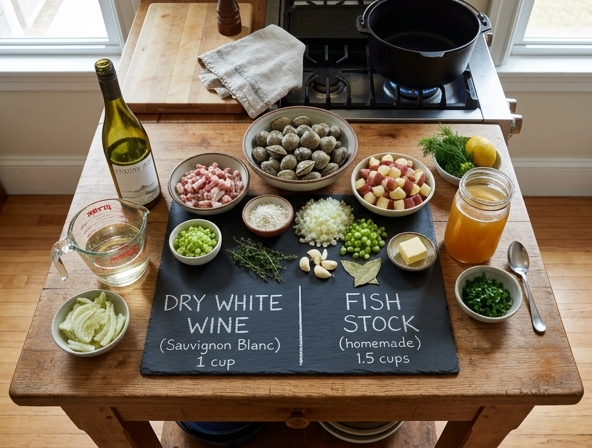
| Feature | Dry White Wine | Fish Stock |
|---|---|---|
| Primary Contribution | Bright acidity and complexity | Briny depth and body |
| Recommended Type | Mineral-forward (e.g., Muscadet) | Concentrated rockfish stock |
| Critical Technique | Reduces to concentrate flavor | Reduces to manage salinity |
| Overall Impact | Provides structural balance | Provides intense, foundational flavor |
The Liquid Foundation: Evaluating Dry White Wine vs. Fish Stock for the Perfect Clam Chowder
Clam chowder is more than a simple soup; it is a culinary institution. Whether you lean toward the creamy, indulgent comfort of a New England style or the bright, tomato-forward profile of a Manhattan iteration, the success of your chowder rests entirely on its liquid base. While potatoes, bacon, and high-quality bivalves provide the structure and substance, the liquid is the soul of the dish. For home cooks and chefs alike, a perennial debate persists: should you rely on the bright, acidic profile of a dry white wine, or the deep, briny complexity of a high-quality fish stock?
The Role of the Liquid Base
Before choosing between these two titans of the soup world, one must understand what a liquid base is tasked with achieving. In a clam chowder, the liquid acts as the medium for flavor extraction and emulsion. It must be robust enough to support the salinity of the clams, subtle enough to allow the sweetness of the bivalves to shine, and complex enough to provide a lingering finish. When we introduce wine or stock, we aren't just adding liquid; we are building a flavor architecture.
The Case for Dry White Wine: Brightness and Balance
Dry white wine is a transformative ingredient. In many seafood preparations, a splash of wine acts as a "deglazing" agent that pulls caramelized sugars and aromatics from the bottom of the pot. But its impact on clam chowder goes deeper than mere deglazing.
1. The Acid Factor
Clam chowder, especially the cream-based New England variety, is inherently rich. The combination of heavy cream, butter, and starchy potatoes can quickly become cloying. A crisp, dry white wine-think Sauvignon Blanc, Pinot Grigio, or a dry Vermentino-introduces a necessary acidity. This brightness cuts through the fat, cleansing the palate and ensuring that every bite tastes as fresh as the first.
2. Enhancing Aromatics
Wine is chemically complex. The esters and floral notes in a good dry white wine accentuate the natural sweetness of the clams. When the wine reduces during the initial stages of the recipe, the alcohol evaporates, leaving behind a subtle, vinous essence that highlights the "oceanic" character of the dish without overpowering it.
The Case for Fish Stock: Depth and Umami
If wine is the bright soprano note in the chowder, fish stock is the resonating bass. For those who prioritize a deep, savory, and restorative bowl, there is no substitute for a well-crafted fish stock.
1. Building Umami Foundations
Fish stock, particularly one made from white fish carcasses and aromatics, provides a concentrated hit of umami. It bridges the gap between the earthiness of the potatoes and the mineral intensity of the clams. When you use fish stock as your primary simmering liquid, the soup gains a "meaty" texture that wine simply cannot provide on its own.
2. The Gelatin Effect
A properly made fish stock contains collagen from the fish bones. As the stock simmers with the potatoes, this collagen releases, thickening the soup naturally and providing a silky mouthfeel that is the hallmark of a high-end chowder. Even in a cream-based soup, the presence of real stock provides a texture that store-bought clam juice or water simply lacks.
Comparative Analysis: The "Hybrid" Approach
The choice between wine and stock is rarely an "either/or" scenario for the professional chef. The most complex and balanced chowders often employ a symbiotic relationship between the two.
The ideal technique involves a two-stage liquid application:
- Deglazing with Wine: After sautéing your onions, leeks, or salt pork, add a generous splash of dry white wine. Let it reduce by half. This step locks in the aromatics and creates a foundation of acidity.
- Simmering with Stock: Once the wine has reduced, introduce your fish stock. Use this to simmer the potatoes until tender. By this point, the wine has provided the "top notes," and the stock is providing the "body."
Important Considerations: Salt and Quality
When evaluating these bases, one must be mindful of salt levels. Fish stock can be notoriously salty, especially if it is a commercial variety. If you are using store-bought stock, always opt for "low sodium" versions to give yourself control over the seasoning. Similarly, when choosing a wine, avoid anything with residual sugar. A "sweet" or "off-dry" wine can ruin a chowder, turning a sophisticated seafood dish into a jarringly saccharine mistake.
The Final Verdict
If you are forced to choose only one, the decision should be guided by your ultimate goal for the chowder:
- Choose Fish Stock if: You want a rustic, deeply savory, and substantial chowder that feels like a meal in itself. It is the best choice for a cold-weather New England chowder where body and comfort are paramount.
- Choose Dry White Wine if: You are serving a lighter, perhaps more refined version of the dish, or if you are using particularly large, flavorful clams (like quahogs or steamers) that don't need the extra help of a heavy stock to make a statement.
Ultimately, the best clam chowder is one that manages the delicate balance between the land and the sea. By using dry white wine to lift the flavors and fish stock to anchor them, you create a liquid base that respects the ingredients. Don't be afraid to experiment-a dash of dry vermouth, a house-made fumé, or even a splash of dry cider can bring a unique signature to your pot. The liquid you choose is the canvas upon which your chowder is painted; treat it with the same respect you accord your clams, and the result will be nothing short of extraordinary.
Disclaimer:
The information provided on Eateryn is for general educational and informational purposes only and is not intended as medical, nutritional, or healthcare advice. It should not be used to diagnose, treat, cure, or prevent any disease or medical condition.
Always consult a qualified physician, registered dietitian, or other certified healthcare professional before making changes to your diet, exercise routine, or lifestyle, or regarding any medical questions or concerns you may have. Never disregard or delay seeking professional medical advice because of something you have read on this website.