
Dry Rub vs Wet Marinade for Fried Chicken - Infusing Deeper Seasoning
Optimizing Flavor Infusion in Fried Chicken
Many cooks struggle with poultry that tastes bland despite a flavorful exterior. While standard dredging often leaves the meat unseasoned, deep infusion techniques ensure flavor reaches the bone. Note that moisture retention dictates the ideal approach: buttermilk marinades excel at tenderizing, while dry-brining rubs focus on intense, concentrated savoriness. This guide evaluates both methodologies, providing the technical framework needed to achieve a perfectly seasoned, consistent result in every batch of fried chicken you prepare.
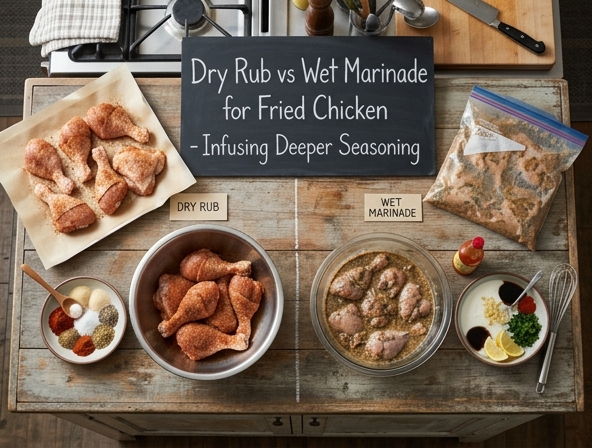
| Method | Primary Focus | Best For |
|---|---|---|
| Dry Rub (Dry-Brining) | Intense, concentrated savoriness | Achieving deep, bold flavor profiles throughout the meat. |
| Wet Marinade (Buttermilk) | Tenderizing and moisture retention | Creating succulent, tender textures while balancing seasonings. |
The Ultimate Fried Chicken Debate: Dry Rub vs. Wet Marinade for Deeper Seasoning
For the home cook and the professional chef alike, fried chicken is a study in contrasts: a shattering, golden crust giving way to succulent, tender meat. But the secret to achieving a level of flavor that transcends a simple breading lies in the preparation stage. The age-old debate-dry rub versus wet marinade-isn't just a matter of preference; it is a fundamental question of chemical engineering and flavor physics.
The Philosophy of the Dry Rub: Surface Intensity
Dry rubs are the purists' approach to seasoning. By coating chicken pieces in a concentrated mixture of salt, herbs, spices, and aromatics, you are creating a flavor profile that is designed to interact directly with the high heat of the fryer. When you apply a dry rub-especially one that contains sugar or dehydrated aromatics like garlic and onion powder-you are seasoning the meat from the outside in.
The primary advantage of the dry rub is crust integrity. Because you are not introducing excess moisture to the chicken surface before the dredging phase, the spice mixture binds directly to the meat proteins. As the chicken hits the hot oil, these spices toast instantly, creating a complex, aromatic foundation for the crust. Dry rubs are particularly effective for recipes that rely on a thick, craggy crust, as they prevent the "gummy" layer that can sometimes form between the skin and the breading when too much liquid is present.
The Science of the Wet Marinade: Osmotic Penetration
If the dry rub is about surface intensity, the wet marinade is about depth. Whether it is a classic buttermilk soak, a salty brine, or an acidic citrus-based concoction, wet marinades utilize the principles of osmosis to draw flavor deep into the muscle fibers of the chicken.
Buttermilk is the gold standard for Southern-style fried chicken, and for good reason: it contains lactic acid. This acid is mild enough to tenderize the chicken without turning the texture into mush (as a stronger acid like lemon juice might if left too long). The calcium in the buttermilk also helps activate enzymes in the chicken that further break down tough proteins, resulting in a significantly more tender bite. When you marinate, you aren't just adding flavor; you are altering the physical structure of the meat to ensure it stays juicy long after it has left the fryer.
The Conflict: Texture vs. Tenderness
Choosing between these two methods forces you to prioritize your outcome. If you use a wet marinade, you face the "adhesion challenge." Breading does not want to stick to wet chicken. You must ensure the surface is tacky rather than dripping, often requiring a "double-dredge" or a rest period after marinating to allow the surface moisture to evaporate. If the chicken is too wet, the steam generated by the marinade will push the crust away from the meat as it fries, leading to the dreaded "shedding" crust.
Dry rubs, conversely, offer maximum convenience and a superior bond between meat and crust. However, they lack the tenderizing power of a brine. A dry-rubbed piece of chicken relies entirely on the quality of the bird and the accuracy of the frying temperature to maintain its moisture. If you overcook a dry-rubbed piece of chicken, you have very little room for error; the meat will inevitably dry out.
The "Hybrid" Breakthrough: The Dry Brine
In recent years, many chefs have turned to a middle ground: the dry brine. By liberally salting the chicken and letting it sit in the refrigerator, uncovered, for several hours or overnight, you utilize the moisture *within* the bird to dissolve the salt. This creates a natural brine on the surface of the chicken. The salt pulls the moisture out, dissolves the seasonings, and then is reabsorbed into the meat along with the flavor profile of your rub.
This method provides the tenderizing benefits of a wet marinade without the excess moisture that compromises the crust. It is a game-changer for home cooks because it requires no specialized equipment-only time and a wire rack.
Practical Tips for Implementation
- For the Wet Marinade Enthusiast: Always pat the chicken dry with paper towels after removing it from the marinade. This step is non-negotiable if you want a crispy crust.
- For the Dry Rub Proponent: Focus on salt content. Ensure your rub is at least 15-20% salt by volume, as the salt is the vehicle that carries all other flavors into the meat.
- The Timing Factor: If you use an acidic marinade (buttermilk or yogurt), limit your time to 4–8 hours. Beyond that, the acid can turn the exterior of the meat chalky.
- The Seasoning Bridge: Don't just season the chicken; season the breading *and* the marinade. By layering seasonings at every step, you ensure that even if the flavors don't fully penetrate, the experience of eating the chicken is consistently bold.
Conclusion
Whether you choose the intense, toasted aromatics of a dry rub or the succulent, tenderizing embrace of a buttermilk marinade, the goal remains the same: transforming a humble protein into something extraordinary. If your priority is a glass-shattering crust, lean toward the dry rub or the dry brine. If your priority is a melt-in-your-mouth tenderness, the wet marinade is your best ally. Ultimately, the best fried chicken is rarely the result of a single technique, but rather the result of a cook who understands exactly what their chicken needs to reach its peak potential.
Disclaimer:
The information provided on Eateryn is for general educational and informational purposes only and is not intended as medical, nutritional, or healthcare advice. It should not be used to diagnose, treat, cure, or prevent any disease or medical condition.
Always consult a qualified physician, registered dietitian, or other certified healthcare professional before making changes to your diet, exercise routine, or lifestyle, or regarding any medical questions or concerns you may have. Never disregard or delay seeking professional medical advice because of something you have read on this website.