
Dry Pan vs Buttered Pan for Grilled Cheese Sandwich - Preventing Unwanted Burning
Dry Pan vs. Buttered Pan: Mastering the Grilled Cheese
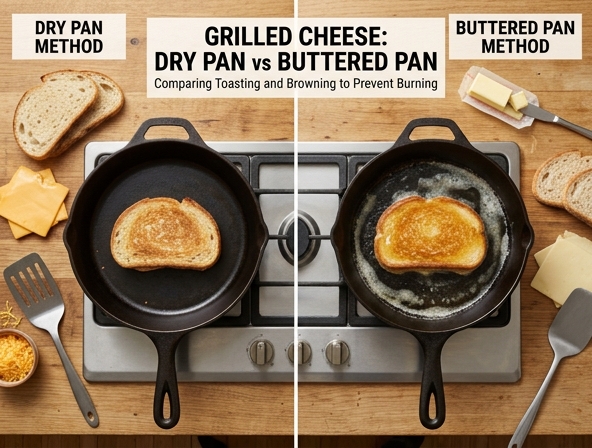
Achieving a golden, charred-free crust is a frequent frustration for home cooks. Many rely on high-heat searing or liberal buttering, assuming these traditional methods guarantee consistency. However, mastering precise temperature control and fat application effectively eliminates scorched surfaces. While heat sensitivity varies by appliance, a measured approach remains vital. Whether using cast-iron or non-stick surfaces, technique governs results. This analysis evaluates dry-pan versus buttered-pan methods to ensure your next sandwich is toasted to perfection.
| Aspect | Summary |
|---|---|
| Objective | Achieving a perfectly golden, charred-free crust on grilled cheese sandwiches. |
| Common Misconceptions | Over-reliance on high-heat searing or excessive buttering to guarantee consistency. |
| Key Success Factors | Precise temperature control and thoughtful fat application are the primary drivers of success. |
| Equipment Note | Technique is more important than the cookware used; both cast-iron and non-stick surfaces require a measured, controlled approach. |
The Ultimate Grilled Cheese Debate: Dry Pan vs. Buttered Pan for the Perfect Melt
There are few comfort foods as iconic as the grilled cheese sandwich. It is a masterpiece of simplicity: bread, cheese, and fat. Yet, despite its minimalist nature, the grilled cheese is a battleground for culinary debate. At the heart of this argument is the "Fat Paradox"-how to achieve that deep, caramelized golden-brown crust without succumbing to the dreaded black, charred exterior or a soggy, grease-soaked interior. The primary point of contention remains: should you put the butter in the pan, or keep the pan dry?
The Case for the Buttered Pan: The Traditionalist's Approach
For generations, the standard method taught in home kitchens has been simple: place a knob of butter in the skillet, let it foam, and drop the sandwich in. This method is beloved for one reason above all else: flavor. Nothing mimics the deep, nutty, dairy-rich aroma of butter toasted in a skillet. When you place a sandwich into a buttered pan, the bread acts like a sponge, immediately soaking up the fat and creating an incredibly crispy, flavor-packed crust.
The Hidden Danger: The Smoke Point
However, the buttered pan method comes with a significant technical drawback: the smoke point. Butter is composed of fat, water, and milk solids. Those milk solids are exactly what provide the flavor, but they are also incredibly temperamental. In a hot pan, milk solids can burn in seconds, turning from a golden brown to a bitter, acrid black long before the cheese in the center of the sandwich has had time to melt. If your heat is even slightly too high, you are essentially seasoning your bread with burnt carbon.
The "Dry Pan" Method: Precision and Patience
The "dry pan" method-often confused with the "mayonnaise" method-is the secret weapon of sandwich artists who prioritize consistency and color control. In this technique, you apply the fat (either butter or mayonnaise) directly to the exterior of the bread rather than heating it in the pan first. You then place the sandwich into a completely dry, preheated skillet.
Why It Prevents Burning
By moving the fat source from the pan to the bread, you gain two distinct advantages:
- Controlled Heat Transfer: Without a pool of fat swirling in the pan, you avoid the erratic temperature spikes that occur when butter solids hit hot metal. The fat on the bread heats gradually and evenly, interacting directly with the bread surface rather than searing it instantly.
- Even Browning: When you butter the pan, the bread often browns where it touches the pool of fat, but may remain pale or uneven elsewhere. Buttering the bread ensures a uniform coating, leading to a consistent "maillard reaction" across the entire surface of the crust.
The Mayonnaise Revolution: The Pro-Grade Compromise
If you ask professional chefs about preventing burnt grilled cheese, they will often steer you toward mayonnaise. It may sound sacrilegious to the butter purist, but from a food science perspective, mayonnaise is superior for browning. Mayonnaise is essentially an emulsion of oil, egg yolks, and vinegar.
Because the oil in mayonnaise has a much higher smoke point than butter, it can withstand the heat required to melt thick slices of cheddar or gruyere without burning. The egg proteins also aid in creating an incredibly even, crispy crust that stays crunchy longer than one made with butter alone. Furthermore, the slight acidity of the vinegar cuts through the richness of the cheese, balancing the sandwich's flavor profile.
Mastering the "Low and Slow" Philosophy
Regardless of whether you choose the buttered pan or the dry pan method, the single greatest cause of burnt grilled cheese is impatience. High heat creates a false sense of progress; the bread looks done, but the inside remains cold and the cheese remains a solid brick.
Techniques for the Perfect Melt:
- Preheat your skillet to medium-low: Never start on high. The goal is to reach a temperature that melts the cheese at the same rate the bread browns.
- Use a lid (with caution): If you are struggling with a thick sandwich where the cheese won't melt, place a lid over the skillet for the first two minutes. This traps ambient heat and steam, accelerating the melting process without needing to turn up the heat.
- The "Flip-Check": Lift the sandwich early. If you see the bread darkening too quickly, move the pan off the heat for 30 seconds to allow the surface temperature to stabilize.
The Verdict: Which Method Wins?
If your priority is the classic, nostalgic flavor of a diner-style grilled cheese, the buttered pan is difficult to beat-provided you keep the heat low and stay vigilant. However, if your goal is the perfect, burn-free, uniform crust, the dry pan method using mayonnaise is the clear winner.
Ultimately, the most successful grilled cheese practitioners use a hybrid approach: they use a light swipe of mayonnaise on the bread for the perfect, burn-resistant crust, and then add a small sliver of butter to the pan in the final 30 seconds of cooking. This provides that signature buttery aroma while ensuring the structural integrity of the crust remains intact.
In the world of grilled cheese, the pan is just a tool. The real secret to preventing burning isn't the fat itself-it's the restraint. By lowering your heat and taking the time to let the heat conduct through the bread, you ensure that your sandwich is defined by the gooey, molten cheese within, rather than the burnt bread without.
Disclaimer:
The information provided on Eateryn is for general educational and informational purposes only and is not intended as medical, nutritional, or healthcare advice. It should not be used to diagnose, treat, cure, or prevent any disease or medical condition.
Always consult a qualified physician, registered dietitian, or other certified healthcare professional before making changes to your diet, exercise routine, or lifestyle, or regarding any medical questions or concerns you may have. Never disregard or delay seeking professional medical advice because of something you have read on this website.