
Dry Herbs vs Fresh Herbs For Meatloaf - Enhancing Aromatic Potency Levels
Achieving the perfect balance of aromatics in meatloaf often proves challenging, leaving many dishes tasting muted or inconsistent. While standard culinary practices suggest using whatever is readily available, the selection between dry and fresh herbs significantly influences flavor depth. Dry herbs offer concentrated, earthy potency, whereas fresh varieties provide vibrant, nuanced brightness-such as using fresh thyme versus dried rosemary. This guide examines technical application strategies, ensuring you master aromatic profiles for your next savory loaf.
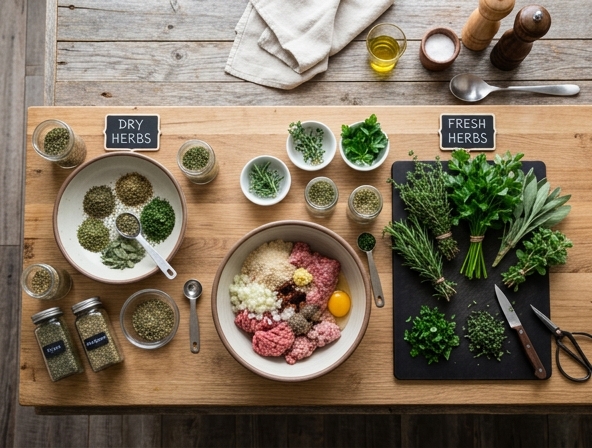
| Herb Category | Flavor Profile | Impact on Meatloaf |
|---|---|---|
| Dry Herbs | Concentrated and earthy | Provides deep, intense potency and a consistent flavor foundation. |
| Fresh Herbs | Vibrant and nuanced | Adds brightness and high-note aromatics for a more complex profile. |
| Mastery Tip: Combine both types strategically to balance depth with brightness for a superior meatloaf. | ||
Dry Herbs vs. Fresh Herbs For Meatloaf: Enhancing Aromatic Potency Levels
The humble meatloaf is a culinary paradox: it is at once a simple, nostalgic comfort food and a complex, structural challenge. Because it requires a long, slow roast in the oven, the seasoning profile must be robust enough to survive the internal temperature migration while still providing a nuanced aromatic experience upon slicing. When deciding between fresh and dry herbs, the choice is not merely about availability-it is about the chemistry of flavor extraction.
The Science of Flavor: Volatile Oils and Fat Solubility
To understand why we choose one herb over the other, we must look at how meatloaf is composed. Meatloaf is a high-fat, high-moisture environment. Most aromatic compounds in herbs are hydrophobic-meaning they are fat-soluble. When you mix herbs into a blend of ground beef, pork, and binders like breadcrumbs or eggs, the fat acts as a delivery vehicle for the flavor.
Dry herbs, having been dehydrated, possess a concentrated cellular structure. Their essential oils are dormant but potent, requiring both time and heat to bloom. Fresh herbs, conversely, contain a higher water content, which makes their flavor profile bright, ethereal, and immediate. However, in the high-heat, hour-long environment of an oven, fresh herbs often lose their delicate top notes, whereas dry herbs slowly release their deep, resinous character throughout the cooking process.
The Case for Dry Herbs: The Backbone of the Loaf
For a traditional, savory meatloaf, dry herbs are often the superior choice for the "backbone" of the dish. Because meatloaf relies on a slow protein coagulation, dry herbs like thyme, oregano, and marjoram can permeate the meat mixture evenly as the fat renders.
- Potency and Preservation: Dried herbs have a higher concentration of essential oils by weight compared to their fresh counterparts. Because they are already "broken down" by the drying process, they require less work to release their flavor into the meat mixture.
- Structural Consistency: Adding large volumes of fresh herbs can sometimes introduce unwanted moisture to the meatloaf, which may lead to a soggy texture or cause the loaf to crack. Dry herbs provide flavor without compromising the integrity of your binder.
- Heat Stability: Woody herbs like dried sage and rosemary are designed by nature to withstand high heat. In a meatloaf, these herbs act as a slow-release flavor profile, ensuring that the last bite is as seasoned as the first.
The Role of Fresh Herbs: The "High Note"
While dry herbs provide the base, fresh herbs offer an elevation that dry versions simply cannot replicate. Fresh flat-leaf parsley, chives, and even a small amount of fresh basil can transform a meatloaf from "tasty comfort food" to a gourmet centerpiece. The trick, however, is in the application.
If you prefer the bright, verdant profile of fresh herbs, do not rely on them as your sole flavoring agent. Instead, treat them as a "finish" or a "top-note." Consider finely mincing fresh parsley and incorporating it into a glaze that you brush onto the meatloaf during the final 15 minutes of cooking. This prevents the heat from "cooking out" the fresh, grassy notes, allowing them to remain vibrant against the savory, umami-rich crust.
The Conversion Ratio: Mastering the Potency
When swapping ingredients in a recipe, a common mistake is using a 1:1 ratio. Because of the dehydration process, dry herbs are significantly more potent than fresh ones. The standard culinary rule of thumb is the 1:3 ratio: one teaspoon of dried herbs is equivalent to one tablespoon of chopped fresh herbs.
When working with meatloaf, this is a critical calculation. If a recipe calls for a tablespoon of fresh thyme, replacing it with a tablespoon of dried thyme will overwhelm the meat with woody, medicinal notes. Always scale down when moving from fresh to dry, and always scale up when moving from dry to fresh.
Layering for Complexity: The Hybrid Approach
The most successful meatloaves utilize a hybrid approach. Start with a "dry rub" base. Sautéing your onions and garlic in a bit of butter and adding your dry herbs (such as oregano, rosemary, and thyme) to the pan allows them to "bloom" in the fat before they ever hit the meat. This unlocks the essential oils early.
Once the mixture has cooled, fold in your meats and binders. At this stage, add a smaller amount of chopped fresh herbs-perhaps some fresh parsley or tarragon. This creates a "flavor bridge." The dry herbs provide the deep, earthy undertones that persist through the long cook, while the trace of fresh herbs adds a complexity that prevents the meatloaf from tasting one-dimensional or overly "processed."
Final Considerations: Herb Profiles for Specific Meatloaves
The type of meat you are using should dictate your herb strategy:
- Beef-Heavy Loaves: Benefit from robust, woody dried herbs like sage and rosemary, which stand up to the iron-rich flavor of the beef.
- Pork-Heavy or Veal Loaves: These are more delicate. Lean toward fresh herbs like chives or a small amount of fresh thyme, which complements the sweetness of the pork without overpowering the natural flavors of the meat.
- The "Poultry" Loaf (Turkey/Chicken): These benefit significantly from fresh sage and savory, as these herbs fill the void left by the lack of fat.
Ultimately, the mastery of meatloaf seasoning lies in understanding the lifecycle of the herb. Think of your meatloaf not just as a mix of ingredients, but as a long-term aromatic project. By balancing the long-lasting stability of dried herbs with the vibrant, immediate brightness of fresh aromatics, you can achieve a level of flavor depth that turns a simple kitchen staple into a culinary achievement. Whether you are aiming for a classic diner style or a rustic, garden-inspired loaf, let the heat of your oven be the final judge of your aromatic layers.
Disclaimer:
The information provided on Eateryn is for general educational and informational purposes only and is not intended as medical, nutritional, or healthcare advice. It should not be used to diagnose, treat, cure, or prevent any disease or medical condition.
Always consult a qualified physician, registered dietitian, or other certified healthcare professional before making changes to your diet, exercise routine, or lifestyle, or regarding any medical questions or concerns you may have. Never disregard or delay seeking professional medical advice because of something you have read on this website.