
Dry Brining vs Wet Brining for Barbecue Ribs - Enhancing Meat Moisture Retention
Dry Brining vs. Wet Brining for Barbecue Ribs
Many pitmasters struggle to achieve consistent, succulent ribs, often settling for dry or rubbery textures. While enthusiasts debate wet versus dry brining, both methods fundamentally enhance muscle protein structure for superior moisture retention. However, proper execution remains crucial; over-brining risks undesirable cured-meat textures. For instance, salt-based dry rub applications often outperform liquid immersion in flavor density and surface crust. The following analysis explores these techniques, providing the technical framework necessary to elevate your barbecue craft.
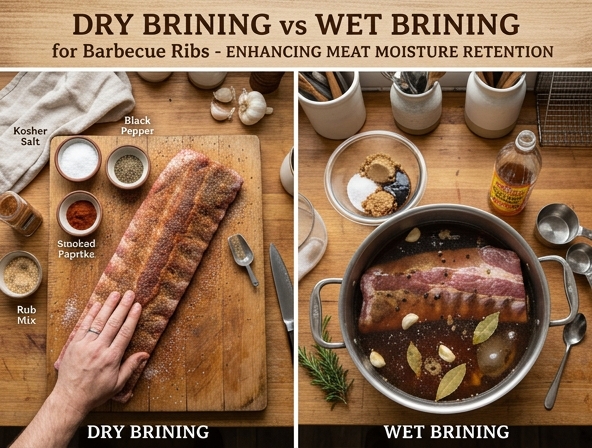
| Comparison Factor | Dry Brining | Wet Brining |
|---|---|---|
| Technique | Direct application of salt and dry seasonings to the meat surface. | Submerging the meat in a liquid salt solution (brine). |
| Flavor Impact | Promotes flavor density and a superior surface crust. | Generally results in a milder, more uniform flavor profile. |
| Primary Benefit | Efficient moisture retention without extra equipment. | High level of hydration throughout the meat fibers. |
| Execution Risk | Excessive salt can lead to a "cured" or ham-like texture. | Over-brining can cause mushy or unappealing rubbery textures. |
| Overall Verdict | Recommended for those prioritizing crust and flavor concentration. | A traditional method that requires careful timing to avoid texture issues. |
Dry Brining vs. Wet Brining for Barbecue Ribs: Enhancing Meat Moisture Retention
For the dedicated pitmaster, the pursuit of the "perfect" rack of ribs is a lifelong endeavor. It is a balancing act of smoke, spice, heat, and time, but above all, the ultimate goal is moisture. Whether you are smoking baby back ribs or full spares, nothing ruins the experience faster than dry, chalky, or stringy meat. In the culinary world, brining has long been hailed as the secret weapon for moisture retention. However, when it comes to ribs, there is a fierce debate between the two primary methods: wet brining and dry brining. Understanding the science behind these techniques is essential for taking your barbecue game to the next level.
The Science of Brining: Osmosis and Denaturation
To understand why we brine, we must look at the cellular structure of the meat. Muscle fibers in ribs consist of proteins held together in a complex lattice. When exposed to salt, two major chemical processes occur: osmosis and protein denaturation.
Osmosis is the movement of water molecules through a semi-permeable membrane. In a brine, the high concentration of salt outside the cells draws moisture out initially, but eventually, the salt begins to move into the cells. This shifts the internal salt concentration, signaling the meat to pull water back in-but this time, the water is held more securely within the structure of the muscle proteins. This is where denaturation comes in. Salt alters the electrical charges of the protein molecules, causing them to relax and "unravel" slightly. This creates more space between the protein strands, allowing them to trap and hold onto water during the cooking process. The result is a finished product that is significantly more succulent.
Wet Brining: The Immersion Method
Wet brining involves submerging your ribs in a saltwater solution, often augmented with sugar, aromatics, herbs, and spices, for a period ranging from four to twenty-four hours. This is the traditional method used for turkeys and leaner cuts of pork, but it has specific implications for ribs.
The Pros of Wet Brining
The primary advantage of wet brining is the infusion of secondary flavors. If you want your ribs to taste like aromatics-garlic, rosemary, or citrus-before they even hit the smoke, a wet brine is an effective delivery system. Furthermore, because the meat is submerged in liquid, the temperature remains consistent, and the salt is distributed evenly across the entire surface area, including the nooks and crannies of the bone.
The Cons of Wet Brining
However, wet brining presents significant challenges for ribs. The biggest issue is "water logging." Because the meat absorbs excess water, the exterior becomes difficult to sear or "bark up." In barbecue, the bark-that delicious, crusty outer layer-is a result of the Maillard reaction, which requires a dry surface. Wet-brined ribs often steam rather than smoke, resulting in a rubbery, pale exterior that lacks that signature barbecue crunch. Additionally, the process is cumbersome, requiring large containers and refrigerator space, and it can dilute the natural flavor of the pork, leaving the meat tasting slightly "soapy" if over-brined.
Dry Brining: The Concentrated Approach
Dry brining, often called "salting" or "pre-salting," is the process of applying an even layer of kosher salt to the surface of the meat and allowing it to sit in the refrigerator, uncovered, for several hours or overnight. No additional liquid is added.
The Pros of Dry Brining
For ribs, dry brining is widely considered the superior technique by competitive pitmasters. First, it avoids the water-logging issue. By drawing moisture out and allowing it to be reabsorbed, the salt works its magic without adding excess volume to the meat. As the surface moisture evaporates during the long rest in the fridge, it creates a "pellicle"-a tacky, dry surface that is perfect for grabbing smoke particles and forming a deep, flavorful, mahogany-colored bark.
Furthermore, dry brining concentrates the natural flavor of the meat. Without the dilution factor of a liquid brine, the pork's savory notes are enhanced, not masked. It is also an incredibly convenient process. You simply apply the salt, place the rack on a wire rack in the fridge, and walk away. There is no mess, no large tubs of liquid, and no risk of a "mushy" texture from over-saturation.
The Cons of Dry Brining
The only downside is the lack of aromatics. If you rely on your brine to add complex spice profiles, you will have to rely more heavily on your dry rub during the actual cooking phase. However, most experienced smokers agree that flavor depth should come from the smoke and the rub, not the brine.
Comparative Execution: Which Wins for Ribs?
When you compare the two, the verdict for ribs leans heavily toward dry brining. Ribs are not like chicken breasts; they are relatively thin, high in fat, and contain a significant amount of connective tissue. They do not need the radical structural change that a wet brine provides. Instead, they need moisture management and a dry surface for smoke adhesion.
If you wet brine ribs, you are effectively fighting against the very thing that makes BBQ ribs great: the crust. By the time you get the exterior dry enough to form a bark, you risk overcooking the interior meat. By contrast, dry brining respects the integrity of the muscle structure while setting the stage for the perfect smoke-to-bark ratio.
Best Practices for Success
To master the dry-brine technique for your next cook, follow these guidelines:
- Use the Right Salt: Stick to kosher salt. It has a larger crystal size, which is easier to distribute evenly. Avoid table salt, as the iodine content can leave a metallic aftertaste.
- Consistency is Key: Use about ½ teaspoon of kosher salt per pound of meat. Apply it evenly to both the bone side and the meat side.
- Timing: Give your ribs at least two hours in the fridge, though twelve to twenty-four hours is the "sweet spot" for maximum moisture retention and surface texture.
- Leave it Uncovered: Airflow is essential. Leaving the rack uncovered in the fridge ensures the surface dries out, which is exactly what you want for a superior bark development.
Conclusion
While wet brining has its place in the kitchen for lean meats, dry brining is the undisputed champion for barbecue ribs. By utilizing the natural science of osmosis to retain moisture while simultaneously preparing the surface for the Maillard reaction, dry brining ensures your ribs arrive at the table with the ideal balance of internal succulence and external crunch. For your next cookout, skip the liquid tub and reach for the salt shaker early-your guests will taste the difference in every bite.
Disclaimer:
The information provided on Eateryn is for general educational and informational purposes only and is not intended as medical, nutritional, or healthcare advice. It should not be used to diagnose, treat, cure, or prevent any disease or medical condition.
Always consult a qualified physician, registered dietitian, or other certified healthcare professional before making changes to your diet, exercise routine, or lifestyle, or regarding any medical questions or concerns you may have. Never disregard or delay seeking professional medical advice because of something you have read on this website.