
DIY vs Store Bought for Hot Dog - Culinary Crafting Potential
Many culinary enthusiasts find that mass-produced hot dogs lack flavor complexity and ingredient integrity. While supermarket shelves offer convenience, they prioritize preservation over depth. Shifting to DIY production grants complete control over seasoning profiles and texture. However, achieving true artisanal standards requires time and precision equipment. For instance, integrating natural casings and house-made ferments elevates the final product significantly. This analysis evaluates the technical trade-offs between commercial convenience and culinary craft to refine your approach.
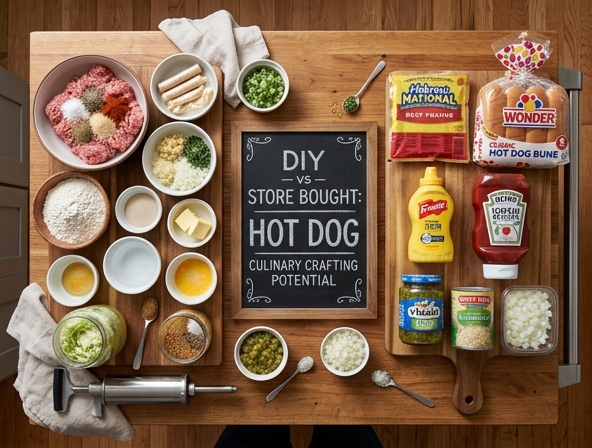
| Comparison Factor | Store-Bought | DIY (Homemade) |
|---|---|---|
| Convenience | High; ready for immediate consumption. | Low; requires significant time and effort. |
| Flavor Profile | Standardized; often lacks depth. | Fully customizable; allows for complex seasoning. |
| Ingredients | Prioritizes preservation. | Focuses on integrity and high-quality components. |
| Requirements | None. | Requires precision equipment and specialized techniques. |
| Culinary Potential | Basic functionality. | Artisanal; potential for natural casings and ferments. |
The Humble Sausage: A Culinary Crossroads
The hot dog-or the frankfurter, wiener, or sausage, depending on your geography-is perhaps the most misunderstood item in the American culinary canon. Often relegated to the realm of ballpark snacks, backyard barbecue fillers, or late-night convenience, the hot dog is frequently dismissed as a mass-produced mystery. However, when we strip away the stigma of "processed meat," we find a blank canvas for culinary innovation. The debate between store-bought convenience and DIY crafting is not merely about food quality; it is a battle between the efficiency of industrial production and the artistry of the home kitchen.
The Store-Bought Standard: Convenience vs. Composition
There is no denying the allure of the store-bought hot dog. Brands like Nathan's Famous, Hebrew National, or local artisan-adjacent brands serve a specific, nostalgic purpose. They are consistent, emulsified to a perfect, uniform texture, and provide a reliable "snap" that many home cooks struggle to replicate.
However, from a culinary standpoint, store-bought options are beholden to the constraints of the supply chain. Mass-market hot dogs rely heavily on binders, stabilizers, and emulsifiers to ensure the product remains stable through weeks of shipping and storage. The flavor profile is almost always standardized: heavy on garlic, onion, and smoke-flavoring additives. While delicious in a classic context, they lack the "culinary soul" that comes from fresh, high-quality ingredients processed with intent.
The Art of the DIY Frank: Crafting Your Own Identity
Stepping into the world of DIY sausage-making is a transition from consumer to creator. When you craft a hot dog from scratch, you move from the "mystery meat" narrative to total ingredient transparency. You choose the protein-perhaps a blend of grass-fed brisket and pasture-raised pork shoulder-and you control the fat-to-meat ratio, which is the secret engine of flavor and mouthfeel.
The DIY approach allows for flavor profiles that simply do not exist on the supermarket shelf. Want a Merguez-style lamb dog with harissa? Or a pork-and-fennel frankfurter with notes of citrus zest? When you handle the grind, you become the architect of the experience. You are no longer eating a standard-issue frankfurter; you are eating a signature dish.
The Mechanics of the Emulsion: A Lesson in Science
The primary barrier to entry for the DIY hot dog is the "emulsion." Unlike a coarse-ground Italian sausage, a hot dog relies on a fine, silky protein paste that holds fat and moisture in a state of suspended animation. This is a culinary exercise in thermodynamics.
To succeed at home, you must keep your equipment and meat near the freezing point during the grinding and mixing process. If the temperature spikes, the fat will "smear" rather than emulsify, resulting in a crumbly, dry sausage rather than that characteristic bouncy, juicy texture. Achieving this at home requires a robust food processor or a high-end meat grinder with the correct plates. It is a technical challenge, but it is one that rewards the patient cook with a final product that is demonstrably superior in texture to anything vacuum-sealed in plastic.
Comparing the Approaches
| Feature | Store-Bought | DIY Crafting |
|---|---|---|
| Ingredients | Highly processed, additives | Fresh cuts, natural seasonings |
| Texture | Consistently bouncy/uniform | Customizable; variable based on grind |
| Flavor | Standardized/Nostalgic | Limitless experimentation |
| Effort | Zero (Immediate consumption) | High (Grinding, stuffing, smoking) |
| Cost | Inexpensive/Low | Higher (Equipment & premium meat) |
Beyond the Grind: The Smoking and Poaching Process
The "culinary potential" of the DIY hot dog doesn't end at the mixing bowl. Once the sausages are stuffed into natural sheep casings, the real artistry begins with the cooking process. You are not limited to a boiling pot of water. You can explore the nuance of real wood smoke-cherry wood for a subtle sweetness, or hickory for a punchy, aggressive finish.
After the smoking process, poaching the hot dogs to an internal temperature of 150°F ensures that the emulsion sets perfectly. This dual-stage cooking-smoke for flavor, heat for texture-is where the DIY hot dog transitions from a "sausage" to a piece of charcuterie. The smell in your kitchen alone makes the effort worthwhile, as the aroma of rendered fat and toasted spices fills the room, creating an anticipation that no plastic package can provide.
The Verdict: Is DIY Worth the Effort?
If you are looking for a quick lunch, the store-bought hot dog is an American institution for a reason. It is efficient, reliable, and fundamentally tied to our cultural history of outdoor dining. However, for the culinary enthusiast, the store-bought option is a closed chapter. It is the beginning, not the end.
The DIY hot dog offers the opportunity to practice one of the most technical and rewarding aspects of butchery. It forces you to learn about fat ratios, temperature control, and spice balancing. More importantly, it turns a meal into a project. When you serve a homemade hot dog, you aren't just serving a snack-you are serving a vision of what a hot dog *could* be if it were treated with the same respect as a dry-aged steak or a delicate terrine.
Whether you choose to embrace the convenience of the store shelf or the complexity of the kitchen counter, the hot dog remains a testament to our desire for flavor. But for those willing to get their hands dirty, the reward is a culinary identity that is uniquely, undeniably your own.
Disclaimer:
The information provided on Eateryn is for general educational and informational purposes only and is not intended as medical, nutritional, or healthcare advice. It should not be used to diagnose, treat, cure, or prevent any disease or medical condition.
Always consult a qualified physician, registered dietitian, or other certified healthcare professional before making changes to your diet, exercise routine, or lifestyle, or regarding any medical questions or concerns you may have. Never disregard or delay seeking professional medical advice because of something you have read on this website.