
Dense vs Fluffy For Meatloaf - Achieving The Desired Mouthfeel And Density
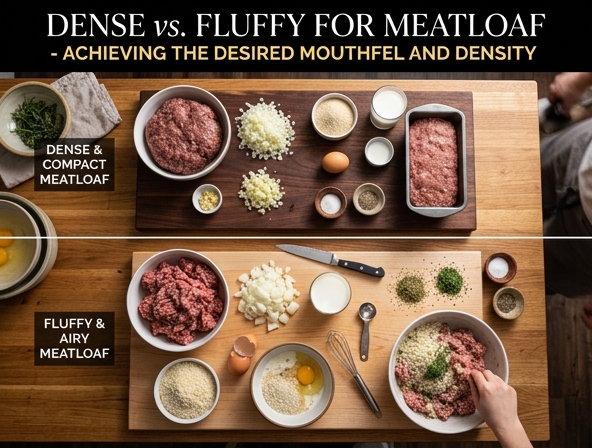
Many cooks struggle to achieve the perfect meatloaf consistency, often settling for either a dense, brick-like texture or a crumbly, structureless mess. While traditional recipes rely on standard binders like eggs and milk, consistent results remain elusive. Mastering the ideal mouthfeel requires balancing protein-to-fat ratios. Note that texture is chemistry; precision is mandatory. Variables like panko versus fresh breadcrumbs or fat percentages dictate success. This guide explores the culinary engineering behind achieving your preferred meatloaf density.
| Category | Summary Details |
|---|---|
| The Problem | Cooks frequently face inconsistent meatloaf textures, resulting in either a "brick-like" density or a structureless, crumbly mess. |
| Key Variables | Success depends on managing protein-to-fat ratios, selecting the right breadcrumb type (panko vs. fresh), and utilizing binders like eggs and milk. |
| Core Strategy | Achieving the ideal mouthfeel is a matter of culinary engineering; it requires precision and an understanding of the chemistry involved in the mixture. |
Dense vs. Fluffy For Meatloaf: Achieving The Desired Mouthfeel And Density
Meatloaf is arguably the most divisive comfort food in the culinary canon. To some, it is the ultimate "blue-plate" special: a dense, sturdy slab that holds its shape under a heavy ladle of gravy and provides a satisfying, hearty chew. To others, a dense meatloaf is a culinary tragedy-a dry, rubbery brick that feels more like an endurance test than a meal. They crave the "fluffy" loaf, one that is tender, moist, and practically melts away with the gentle pressure of a fork.
Achieving the perfect texture is not a matter of luck; it is a matter of science. Whether you lean toward the structural integrity of the "brick" or the ethereal lightness of the "cloud," understanding how your ingredients and techniques interact is the key to mastering your ideal meatloaf.
The Anatomy of Density: Why Meatloaf Becomes a Brick
When a meatloaf turns out dense or tough, it is usually the result of three specific factors: over-mixing, excessive binding, or improper fat ratios. Meat, at its core, is a network of proteins. When you mix ground meat vigorously, you begin to extract a protein called myosin. As you knead the mixture-much like kneading bread dough-these proteins align and bond, creating a sticky, tight matrix. Once cooked, this matrix turns into a firm, bouncy structure. If your goal is a light meatloaf, this is the enemy.
Furthermore, using too many binders (like excessive egg or dense breadcrumbs) without enough moisture-retaining agents creates a solid mass that shrinks as it cooks, squeezing out the moisture and resulting in a "hockey puck" texture.
The Art of Fluffiness: Introducing the Panade
If your goal is a tender, fluffy meatloaf, the most important tool in your arsenal is the panade. A panade is a mixture of starch (usually bread, cracker crumbs, or panko) and liquid (milk, cream, or stock). When these ingredients are soaked together before being incorporated into the meat, the starch molecules hydrate and swell, creating a soft, gel-like structure.
When this hydrated mixture is distributed throughout the meat, it acts as a physical barrier. It prevents the meat proteins from binding too tightly to each other, essentially "diluting" the density of the meat. As the loaf bakes, the water trapped within the panade turns into steam, creating tiny air pockets that keep the interior tender and succulent. To achieve maximum fluffiness, use a high ratio of panade to meat, and opt for white bread soaked in whole milk rather than dry, coarse breadcrumbs.
The Meat Ratio: Balancing Fat and Structure
The composition of your meat blend is the foundation of your loaf's texture. A 100% lean ground beef loaf will almost always be dry and crumbly, regardless of your binding techniques. Conversely, a mix that is too high in fat can become greasy and structurally unstable, leading to a "mushy" mouthfeel rather than a "fluffy" one.
The "Golden Trio"-beef, pork, and veal-is the gold standard for a reason.
- Beef (80/20): Provides the robust, savory flavor and the primary structure.
- Pork: Adds fat and moisture, which keeps the texture supple.
- Veal: Contains high levels of collagen, which contributes a silky mouthfeel and helps the loaf hold together without becoming overly dense.
Mixing Technique: The Gentle Touch
Regardless of whether you want dense or fluffy, the way you incorporate your ingredients dictates the outcome. The cardinal rule of meatloaf is: mix as little as possible.
Begin by combining all your non-meat ingredients-the panade, eggs, aromatics (onions, garlic, herbs), and seasonings-in a large bowl. Whisk them until they are uniform. Only then, add the meat. Use your hands to gently fold the mixture together until just combined. If you continue to mix once the meat is incorporated, you are actively developing the proteins that will lead to a dense, tough texture. Stop the moment the ingredients are evenly distributed.
Baking Environment and Moisture Control
How you bake the meatloaf matters just as much as what goes into it. Baking a loaf in a standard deep bread pan often leads to steam accumulation at the bottom, which can make the base of the loaf soggy while the top dries out. This creates an uneven, unpleasant mouthfeel.
For a consistent, airy texture, bake your meatloaf "freeform" on a rimmed baking sheet lined with parchment paper. This allows heat to circulate around all sides, creating a beautiful crust that seals in the juices. If you prefer a "dense" loaf, you may choose to use a loaf pan, as the contained environment encourages the meat to compress into a solid, uniform shape.
The Final Step: The Rest
Never skip the resting period. Even if you have achieved the perfect fluffy texture, cutting into a meatloaf immediately after it exits the oven will cause the internal juices to run out, leaving you with dry meat. Allowing the loaf to rest for 10 to 15 minutes allows the proteins to relax and the juices to redistribute throughout the meat. This ensures that every slice, whether dense or fluffy, is moist, flavorful, and perfectly textured.
By adjusting your panade ratios, minding your meat blend, and handling your mixture with a delicate touch, you can control the outcome of your meatloaf with the precision of a chef. Whether you're crafting a sturdy slice for a sandwich or a delicate piece for a Sunday dinner, the secret is in the science.
Disclaimer:
The information provided on Eateryn is for general educational and informational purposes only and is not intended as medical, nutritional, or healthcare advice. It should not be used to diagnose, treat, cure, or prevent any disease or medical condition.
Always consult a qualified physician, registered dietitian, or other certified healthcare professional before making changes to your diet, exercise routine, or lifestyle, or regarding any medical questions or concerns you may have. Never disregard or delay seeking professional medical advice because of something you have read on this website.