
Cornstarch Vs Flour For Buffalo Wings - Mastering The Crunch Factor
Cornstarch Vs Flour For Buffalo Wings: Mastering The Crunch Factor
Achieving the perfect Buffalo wing crunch remains a common challenge for home cooks. While traditional all-purpose flour provides a reliable, hearty coating, it often softens rapidly when exposed to hot sauce. Conversely, cornstarch offers a superior, moisture-resistant barrier, unlocking a distinctively shatter-like texture. Note that success depends on proper surface preparation and heat regulation. Like professional gastropub techniques, this method elevates your wings to restaurant-quality status. The following guide details the structural differences and optimal deployment strategies.
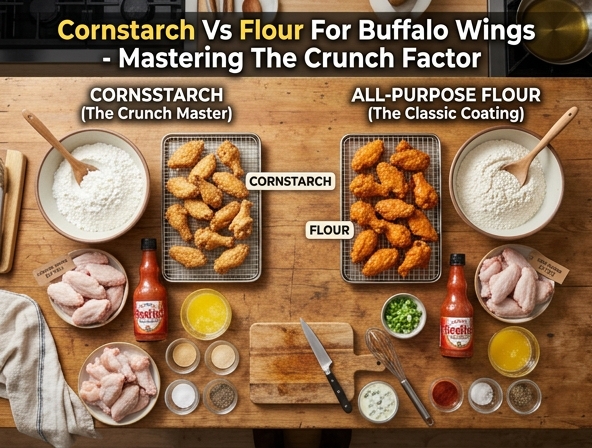
| Feature | All-Purpose Flour | Cornstarch |
|---|---|---|
| Texture | Hearty and reliable coating | Superior, shatter-like crunch |
| Sauce Performance | Softens rapidly when sauced | Moisture-resistant barrier |
| Best Results | Standard home-style wings | Restaurant-quality crispness |
| Key Success Factors | Proper surface preparation and precise heat regulation are essential for both methods. | |
Cornstarch Vs. Flour for Buffalo Wings: Mastering the Crunch Factor
The quest for the ultimate Buffalo wing is a pursuit defined by a single, elusive quality: the crunch. Nothing is more disappointing than biting into a wing expecting a satisfying snap, only to be met with a soggy, limp coating that slides off the meat. Whether you are hosting a Super Bowl party or simply indulging in a Friday night craving, the debate between cornstarch and flour as a dredging agent is a culinary divide that determines the fate of your wings.
The Science Behind the Crunch
To understand which coating reigns supreme, we must first look at the science of frying. When you coat chicken in flour or starch and submerge it in hot oil, you are essentially performing a hydration-dehydration balancing act. The goal is to remove the moisture from the surface of the chicken while replacing it with a crispy, golden-brown shell-a process heavily reliant on the Maillard reaction.
Flour, which contains both starch and protein (gluten), creates a hearty, crust-like exterior. Cornstarch, which is pure starch, creates a delicate, glass-like barrier. Knowing the difference between these two substrates is the first step toward mastering the texture of your Buffalo wings.
The Case for Cornstarch: The Gold Standard for Crispness
If your primary objective is a wing that stays crispy even after being tossed in a heavy, butter-laden hot sauce, cornstarch is your best friend. Because cornstarch is essentially a refined carbohydrate without the protein found in flour, it doesn't develop gluten when it hits the heat. This means it doesn't get chewy or "doughy."
Why cornstarch wins the crunch test:
- Less Moisture Retention: Cornstarch creates a thin, porous layer that sheds water rapidly in the fryer, resulting in a lighter, shatteringly crisp crust.
- Thermal Conductivity: It browns quickly and evenly, creating a protective barrier that prevents the chicken meat from drying out while simultaneously protecting the crust from becoming soft when sauced.
- Gluten-Free: It provides a superior texture while remaining accessible for those with gluten sensitivities.
However, cornstarch isn't without its pitfalls. Used alone, it can sometimes feel a bit "dusty" or lack the rich, deep-brown color that many associate with classic fried chicken. Furthermore, if the coating is too thick, it can become overly brittle, almost like a thin layer of candy that shatters unpleasantly.
The Case for Flour: The Comfort Coating
Flour-coated wings-often referred to as "Southern-style"-have a softer, more substantial mouthfeel. If you are a fan of wings that hold onto sauce like a sponge, flour is the superior choice. The protein in the flour creates a crust that is more substantial, providing a chewy, savory bite that feels more "homemade."
The pros and cons of using flour:
- Pro: Richer Flavor. Flour browns in a way that contributes a nutty, toasted flavor profile, which pairs beautifully with rich, spicy Buffalo sauce.
- Pro: Coating Stability. Flour is incredibly reliable; it creates a predictable, consistent crust that many diners recognize as "classic" fried chicken.
- Con: The Soggy Factor. Because flour absorbs moisture, it tends to get soft much faster once the sauce hits it. A flour-coated wing must be served immediately, or you risk the coating losing its integrity entirely.
The Hybrid Secret: The Best of Both Worlds
If you want to master the crunch factor once and for all, the secret often lies in not choosing at all. Many professional chefs utilize a hybrid approach, combining cornstarch and all-purpose flour in a specific ratio-typically 50/50 or 60% cornstarch to 40% flour.
By blending the two, you benefit from the "structural integrity" of the flour-which provides that deep, golden-brown color and flavor-while utilizing the cornstarch to inhibit the formation of excess gluten, ensuring the crust stays crispy under the weight of the sauce. This combination creates a coating that is substantial enough to feel like a "real" crust, but crisp enough to survive a tossing in Frank's RedHot without turning into a soggy mess.
Technique: The Hidden Variables
Regardless of whether you choose cornstarch, flour, or a blend, your coating is only as good as your technique. To truly maximize your crunch, consider these three pro-tips:
- The Baking Powder Hack: If you are baking your wings rather than frying them, add a teaspoon of baking powder (not baking soda!) to your flour/cornstarch mix. This creates tiny CO2 bubbles in the coating, which increases the surface area and results in an incredibly crispy texture that mimics deep-frying.
- The "Dry-Down" Rule: The enemy of crunch is moisture. Before you apply your dry rub or coating, pat your wings thoroughly dry with paper towels. Any excess surface moisture will create steam inside the crust, leading to sogginess before the wing even hits the oil.
- Double Frying: For the ultimate crispy wing, fry them twice. Fry at 325°F (160°C) until cooked through, remove them, let them rest, and then flash-fry them at 375°F (190°C) for the final minute. This method forces moisture out of the outer layer, resulting in an almost candy-like crunch.
Conclusion: The Verdict
So, which should you choose? If you are aiming for that restaurant-quality, "shatter-crisp" experience, reach for the cornstarch. It is the gold standard for resisting the softening effects of sauce and delivering the most dramatic texture contrast. If you prefer a traditional, comforting crust that clings to the meat with a savory, chewy bite, all-purpose flour is your best bet.
However, for the home cook looking to impress, the hybrid blend of equal parts cornstarch and flour is the undisputed champion. It allows for the perfect marriage of color, flavor, and crunch, ensuring that every bite is as satisfying as the first. Ultimately, the quest for the perfect Buffalo wing is about experimentation. Try the blend, focus on your frying technique, and don't be afraid to keep that sauce on the side until the very last second-your crunch factor depends on it.
Disclaimer:
The information provided on Eateryn is for general educational and informational purposes only and is not intended as medical, nutritional, or healthcare advice. It should not be used to diagnose, treat, cure, or prevent any disease or medical condition.
Always consult a qualified physician, registered dietitian, or other certified healthcare professional before making changes to your diet, exercise routine, or lifestyle, or regarding any medical questions or concerns you may have. Never disregard or delay seeking professional medical advice because of something you have read on this website.