
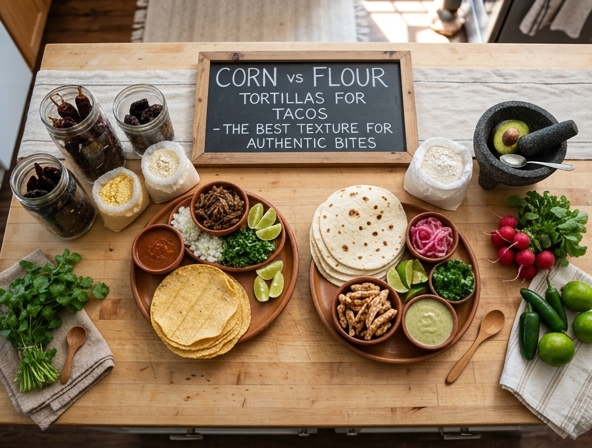
Corn vs Flour Tortillas for Tacos - The Best Texture for Authentic Bites
Corn vs. Flour: Mastering Your Taco Base
Many cooks struggle with tortillas that crack, undermining the taco experience. While standard grocery options remain accessible, they often lack sufficient structural integrity. Selecting the right base-such as nixtamalized corn or soft flour-grants your dish the essential consistency for the perfect bite. Note that corn requires proper heating for pliability. Whether serving al pastor or hearty beans, we explore the optimal textures and pairings required to achieve authentic, professional-grade results every time.
| Topic | Key Insights |
|---|---|
| The Challenge | Common grocery store tortillas often lack structural integrity, causing them to crack during consumption. |
| Recommended Bases | For an authentic texture, opt for nixtamalized corn tortillas or high-quality soft flour tortillas. |
| Preparation Tip | Corn tortillas must be heated properly to ensure they reach the necessary level of pliability for wrapping. |
| Culinary Goal | Selecting the right base improves the "bite" consistency, helping home cooks achieve professional, authentic taco results. |
Corn vs. Flour Tortillas for Tacos: The Best Texture for Authentic Bites
In the expansive and delicious world of Mexican cuisine, few debates stir as much passion as the choice between corn and flour tortillas. While some may view them as mere vessels for the star of the show-the meat, the salsa, or the cilantro-the truth is that the tortilla is the structural and flavor foundation of the taco. Choosing the right one isn't just about personal preference; it is about understanding how texture, flavor profile, and ingredient composition interact to create the perfect bite.
The Case for Corn: The Traditionalist's Foundation
Corn tortillas are the ancient soul of the taco. Dating back thousands of years to the civilizations of Mesoamerica, the process of making them begins with nixtamalization-soaking dried corn in an alkaline solution (usually lime water). This process transforms the corn, loosening the hulls and releasing essential nutrients like niacin, while also creating the chemical foundation for the tortilla's distinct, nutty, and slightly earthy flavor.
Texture Profile: A high-quality corn tortilla should be flexible yet firm. It offers a slight graininess, providing a satisfying "chew" that holds up against acidic salsas without turning into mush. When toasted correctly on a comal or a hot skillet, the surface of a corn tortilla develops a subtle, charred crust that adds a smoky complexity to the dish.
Best For: Corn tortillas are the gold standard for traditional street tacos. Because they are smaller in size and naturally gluten-free, they excel at highlighting the flavor of intensely seasoned meats. If you are serving al pastor (spit-roasted pork), carnitas (slow-cooked pork), or barbacoa, corn is your best friend. Their structured texture keeps the juices of the meat from soaking through the wrapper too quickly, ensuring that you can hold your taco with one hand without it disintegrating.
The Flour Tortilla: A Study in Softness and Strength
While corn dominates the center and south of Mexico, flour tortillas are the reigning monarchs of Northern Mexico and the American Southwest. Introduced after the arrival of wheat in the Americas, the flour tortilla is made from a simple dough of wheat flour, water, salt, and fat-typically lard or vegetable shortening. It is this addition of fat that gives the flour tortilla its signature characteristic: an incredible, pillowy elasticity.
Texture Profile: The flour tortilla is soft, pliable, and chewy. Unlike the rustic graininess of corn, flour offers a smooth, neutral canvas that allows other flavors to pop. It is significantly more durable than its corn counterpart, capable of holding heavier fillings, larger portions, and creamier sauces without tearing. It provides a comforting, "bread-like" quality that feels substantial in the hand.
Best For: Flour tortillas shine when the ingredients are either very heavy or require a "wrap" rather than a "fold." They are the essential choice for breakfast tacos, where eggs, cheese, and potatoes benefit from the soft, buttery texture. They are also superior for fish tacos featuring crispy, beer-battered cod or shrimp, where the delicate, pillowy bite of the flour complements the crunch of the seafood.
The "Which for Which" Guide: A Pairing Cheat Sheet
Understanding the chemistry of your ingredients is the key to choosing the right tortilla. Here is how to decide:
- For Bold, Intense Meats: Go with Corn. The earthiness of the corn balances the salt and spice of meats like carne asada or tongue.
- For Creamy or Crispy Fillings: Go with Flour. The mildness of flour doesn't compete with creamy avocado or Baja-style fried fish.
- For Heavy, Loaded Tacos: Go with Flour. If you are adding cheese, refried beans, or a mountain of guacamole, the strength of the wheat gluten is required to prevent a structural collapse.
- For the "Street Taco" Experience: Go with Corn. Double-layering two warm, small corn tortillas is the hallmark of an authentic street-side stand.
The Art of the Warm-Up: Texture is Everything
Regardless of your choice, a cold or room-temperature tortilla is a culinary tragedy. Warming a tortilla is not just about temperature; it is about activating the starches and fats to create the ideal texture.
For corn tortillas, a high-heat dry skillet or a direct flame is non-negotiable. You want to see those little brown spots-the "leopard print"-begin to appear. This charring adds a necessary depth of flavor. For flour tortillas, you want a medium heat. You aren't looking for a char as much as you are looking for the tortilla to puff up slightly, indicating that the fats have melted and the proteins have relaxed, resulting in maximum softness.
Final Verdict: Embracing the Best of Both Worlds
Ultimately, the "best" tortilla is the one that respects the integrity of your ingredients. If you are aiming for a taste of history and the rustic complexity of traditional Mexican street food, the corn tortilla remains unsurpassed. If you are looking for comfort, satiety, and a sturdy platform for fusion or heavily laden ingredients, the flour tortilla is a perfect tool.
Great tacos are defined by balance. The next time you find yourself at the stove, don't just grab the first package you see. Think about the moisture of your meat, the crunch of your onions, and the heat of your salsa. When you match those elements to the right tortilla, you stop just eating food and start experiencing the authentic, harmonious bite that makes the taco one of the world's greatest culinary inventions.
Disclaimer:
The information provided on Eateryn is for general educational and informational purposes only and is not intended as medical, nutritional, or healthcare advice. It should not be used to diagnose, treat, cure, or prevent any disease or medical condition.
Always consult a qualified physician, registered dietitian, or other certified healthcare professional before making changes to your diet, exercise routine, or lifestyle, or regarding any medical questions or concerns you may have. Never disregard or delay seeking professional medical advice because of something you have read on this website.