
Cold Weather vs. Warm Weather for Clam Chowder: Tracking Seasonal Consumption Trends
In the culinary world, few dishes evoke as much debate regarding their "proper" timing as New England clam chowder. Often categorized as the quintessential winter comfort food, its thick, creamy base and hearty potatoes are frequently associated with snow-covered streets and fireside dining. Yet, walk into any clam shack in Maine, Cape Cod, or Rhode Island during the peak of July, and you will find lines wrapping around the block for the very same dish. The tension between the thermodynamic logic of "cold weather soup" and the cultural tradition of "coastal summer dining" creates a fascinating study in food consumption trends.
The Thermodynamics of Comfort: The Case for Winter
From a biological and psychological standpoint, the preference for clam chowder during the colder months is easily explained. When temperatures plummet, the human body prioritizes internal heat regulation. Dense, calorie-rich, and fat-heavy foods-like those containing cream and flour-based roux-provide a sustained energy release that makes the body feel warmer. This "comfort food" phenomenon is deeply ingrained in the human psyche; the warmth of the bowl against the hands and the steaming broth provides a sensory anchor against the harshness of winter.
Furthermore, there is the tradition of the "winter stockpile." Historically, clams were harvested, shucked, and preserved, but the hearty nature of the chowder made it a staple for coastal communities throughout the lean, cold months when fresh vegetable harvests were scarce. This historical necessity has evolved into a modern craving: when the wind howls and the thermometer reads near freezing, the thick, velvety texture of a traditional chowder feels like a culinary hug.
The Coastal Paradox: Why We Eat Chowder in the Heat
Counter-intuitively, consumption data from seaside tourist hubs shows a massive spike in clam chowder sales during the summer months. How do we reconcile this with the "winter comfort" narrative? The answer lies in the "Vacation Effect." For many, clam chowder is less about the ambient temperature and more about the "sense of place."
When tourists flock to the coast, they are seeking an authentic regional experience. A bowl of clam chowder, eaten on a pier or a picnic table overlooking the Atlantic, is as much a part of the seaside itinerary as swimming or sunbathing. In this context, the chowder is not a source of winter warmth, but a vessel for local identity. The "shack experience"-where the breeze off the ocean tempers the heat of the afternoon-creates a unique environment where a hot, creamy soup feels surprisingly refreshing against the salt-air backdrop.
Industry Trends: The Shift in Grocery and Restaurant Sales
Market analytics reveal a fascinating "bimodal" distribution in consumption. Retail data for canned and pre-packaged clam chowder shows a sharp increase in sales from October through February, aligning with the "winter comfort" theory. These sales are largely driven by home consumption, where families stock their pantries for easy, warming mid-week meals.
Conversely, food service data from hospitality groups in the Northeast shows an opposite trend. Restaurant sales peak between June and August. This creates a supply chain paradox: distributors must balance heavy inventory demand for retail during the winter and high volume "on-premise" demand for restaurants during the summer. This seasonal flip forces chefs and suppliers to remain agile, often adjusting ingredient quality-such as using flash-frozen clams during the winter months versus fresh-shucked catch during the summer-to satisfy the evolving expectations of the consumer.
Evolving the Recipe: Lighter Takes for Warmer Days
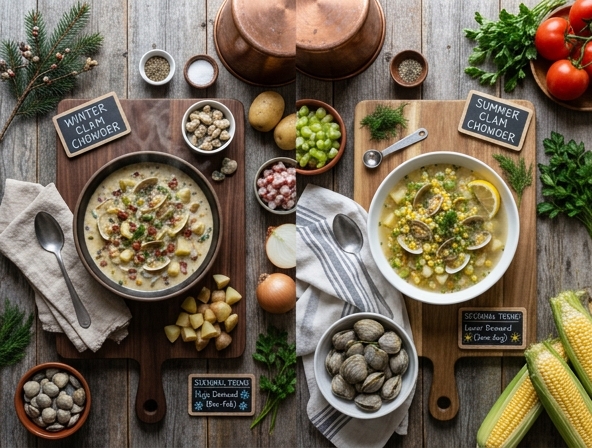
To bridge the gap between these seasons, contemporary chefs have begun experimenting with "seasonal chowders." While the traditional New England white chowder remains the standard-bearer, we are seeing a rise in "summery" adaptations. These versions often feature a lighter, broth-based approach (closer to a clear Rhode Island-style chowder) or incorporate fresh seasonal herbs like dill, chives, and even hints of lemon zest to cut through the richness of the cream.
By adjusting the viscosity and profile of the dish, restaurants are successfully navigating the seasonal divide. A heavy, flour-thickened chowder might feel oppressive on a 90-degree day, but a thinner, herb-forward version can capture the essence of a clam bake without the physical heaviness, allowing the dish to remain relevant year-round.
Conclusion: A Dish for All Reasons
Ultimately, the debate between cold weather and warm weather consumption of clam chowder is a false dichotomy. The data proves that we do not have to choose one or the other. We consume clam chowder in the winter for its restorative, warming properties, and we consume it in the summer for its cultural significance and connection to the coastal landscape.
Whether it is served in a bread bowl in a cozy tavern during a blizzard or in a paper cup on a sun-drenched dock in July, clam chowder remains one of the few dishes that has successfully transcended the constraints of seasonality. Its durability as a menu staple is a testament to its versatility, proving that no matter the weather, there is always a craving for the briny, comforting taste of a well-made chowder.
As market trends continue to shift toward "experiential eating," expect to see more chefs blurring these seasonal lines, finding new ways to make the humble clam chowder feel like the right choice, no matter what the thermometer says.