
Cold Oil vs Hot Oil Start for Fried Chicken - A Modern Culinary Debate
The Fried Chicken Paradox: Cold vs. Hot Oil
Achieving perfectly crisp chicken is often elusive, resulting in greasy skins or uneven cooking. While traditional dogma mandates a hot-oil start, modern methods challenge this orthodoxy. Mastering the cold-oil technique guarantees superior fat rendering and texture, provided you respect the precise, slower thermodynamic process. Used by top culinary experts to ensure consistent results, this approach changes the baseline for frying. This guide evaluates the science, specific methodology, and optimal applications for both frying approaches.
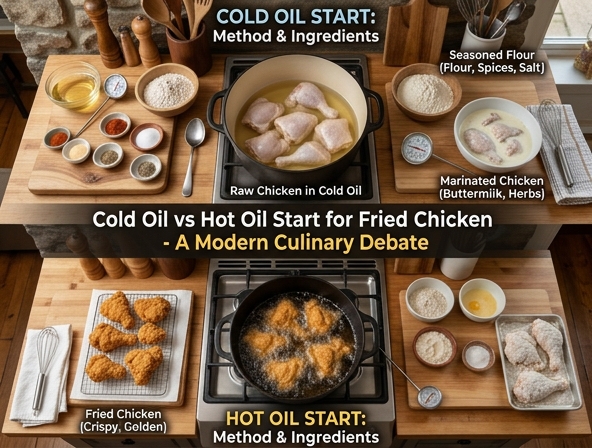
| Comparison Factor | Cold-Oil Start | Hot-Oil Start (Traditional) |
|---|---|---|
| Methodology | Gradual heating through a slower thermodynamic process. | Immediate immersion in high-temperature oil. |
| Primary Benefit | Superior fat rendering and consistent texture. | Standard, fast-frying approach. |
| Common Challenges | Requires precise temperature management. | Potential for greasy skins or uneven cooking. |
| Culinary Status | Modern method favored by experts. | Traditional culinary dogma. |
Cold Oil vs. Hot Oil Start: The Fried Chicken Debate
For generations, the gospel of fried chicken was written in absolute terms: oil must be shimmering, the thermometer must read 350°F (175°C), and the moment the floured bird hit the fat, a violent, aggressive sizzle was the sound of perfection. This was the traditional "Hot Oil Start." It was a method rooted in culinary physics-the immediate searing of the crust creating an impenetrable barrier that locked in moisture while the Maillard reaction raced to create a deep, golden mahogany exterior.
But in the modern era, culinary experimentation has challenged this dogma. Enter the "Cold Oil Start"-a technique that sounds counterintuitive, even dangerous, to the seasoned home cook. By placing raw, breaded chicken into a pot of room-temperature oil and slowly bringing the heat up, proponents argue that we can achieve a crust more delicate and uniform than ever before. But is this modern method a revolution, or just a shortcut to a greasy disappointment? To understand this debate, we must look at the science behind the crust.
The Case for the Traditional Hot Oil Start
The traditional method is about speed and intensity. When you drop chicken into oil already heated to 350°F, you are initiating a rapid thermal reaction. The water content on the surface of the flour coating evaporates almost instantly, creating a pressurized steam environment that pushes against the oil. This prevents the oil from penetrating too deeply into the batter, resulting in a crisp, dry exterior.
Furthermore, high heat is essential for preventing the chicken from becoming a sponge. If the oil is too cold, the breading spends too much time submerged in fat before the proteins have a chance to set. By starting hot, the protein coagulation happens in seconds, locking the breading to the meat. For those seeking the iconic "crunch" associated with Southern-style fried chicken, the high-heat start remains the gold standard. It is a method of control-you are dictating the terms of the environment from the very first second.
The Cold Oil Revolution: A Slow-Motion Transformation
The cold oil method, popularized by culinary scientists like J. Kenji López-Alt, changes the trajectory of the cooking process entirely. By starting with the oil at room temperature, the chicken heats up in tandem with the fat. The theory is that as the oil warms, the fat in the chicken skin renders out slowly, effectively "basting" the crust from the inside out.
One of the primary benefits of the cold start is the reduction of "thermal shock." In a hot oil start, the outside of the chicken can sometimes burn before the thickest part of the meat reaches a safe internal temperature, especially with bone-in pieces. A cold start allows the heat to penetrate the bird gradually. As the oil slowly rises to the target temperature, the breading undergoes a dehydration process that is remarkably uniform. The result is a crust that is often described as more glass-like and less prone to "shattering" in an oily way; it is lighter, airier, and-according to many home cooks-less prone to falling off the bird.
Comparative Analysis: Crust, Texture, and Greasiness
When comparing the two, the primary metric is often oil absorption. A common misconception is that cold-starting chicken makes it greasier. In fact, if managed correctly, a cold start can lead to a less oily product. Because the chicken and the oil reach their peak temperature together, there is less of the sudden, erratic bubbling that can sometimes trap oil pockets in the jagged nooks and crannies of the crust.
However, the trade-off is time and texture. The hot oil start produces a crust that is distinctly "fried"-it is thicker, more rustic, and offers that aggressive crunch that many crave. The cold oil start produces a crust that is more refined and "cracker-like." It lacks the depth of color that a 350°F blast provides, meaning that if you are looking for that dark, bronzed look, you may find the cold start a bit visually underwhelming.
Pros and Cons Summary
- Hot Oil Start (Traditional):
- Pros: Superior crunch, classic deep-brown color, faster overall cook time.
- Cons: Risk of uneven cooking, prone to burning the crust if heat is too high.
- Cold Oil Start (Modern):
- Pros: Perfectly even cooking, superior rendering of skin fat, lighter and airier crust.
- Cons: Requires careful monitoring of temperature rise, lacks the aggressive "shatter" of traditional methods.
The Verdict: Which Method Should You Choose?
If you are a purist aiming for the nostalgic, heavy-duty crunch of a classic fried chicken shack, stick to the hot oil method. The aggression of the heat is exactly what the recipe requires to create that specific texture. Ensure your oil is between 350°F and 375°F and don't overcrowd the pot, as the temperature drop when adding the chicken is your biggest enemy.
If, however, you are cooking at home and struggle with the common problems of uneven cooking-burnt crusts and undercooked centers-the cold oil method is a game-changer. It is a more forgiving, scientific approach that rewards patience. It allows the cook to walk away from the stove for a few minutes without the constant fear of scorching the flour.
Ultimately, both methods are tools in a cook's arsenal. The culinary world is no longer binary; it is experimental. We have moved past the era where there is only one "right" way to cook a bird. Whether you choose the violent sear of the hot oil start or the slow, calculated rise of the cold oil start, the secret to the perfect fried chicken remains the same: a high-quality bird, a well-seasoned dredge, and a digital thermometer that never lies.
So, the next time you find yourself with a tray of buttermilk-soaked chicken, don't feel tethered to the traditions of the past. Try the cold start. You might find that the modern culinary debate has actually provided the best possible solution for the home kitchen.
Disclaimer:
The information provided on Eateryn is for general educational and informational purposes only and is not intended as medical, nutritional, or healthcare advice. It should not be used to diagnose, treat, cure, or prevent any disease or medical condition.
Always consult a qualified physician, registered dietitian, or other certified healthcare professional before making changes to your diet, exercise routine, or lifestyle, or regarding any medical questions or concerns you may have. Never disregard or delay seeking professional medical advice because of something you have read on this website.