
Cold Butter vs Room Temperature Butter for Apple Pie - The Secret to Laminating Layers
Many bakers struggle to achieve that elusive, shatteringly flaky apple pie crust. While standard recipes often suggest softened butter for convenience, relying on room-temperature fats frequently results in dense, greasy pastry. The secret lies in fat temperature: cold butter creates vital steam pockets, guaranteeing structural lift. Success requires precise, minimal handling to maintain these essential solids. Professional patisseries prioritize cold, pea-sized butter for distinct, professional-grade lamination. This guide analyzes how temperature control dictates crust texture for perfect results.
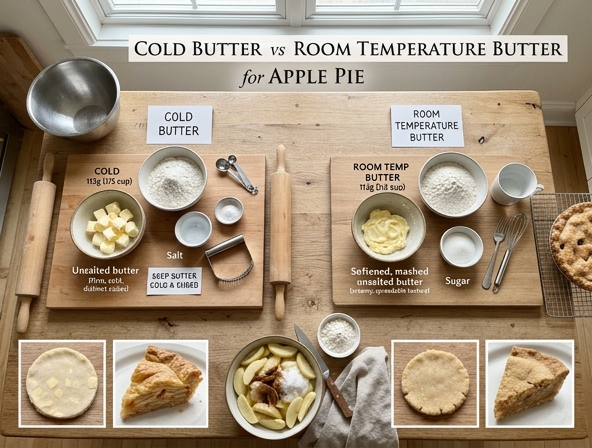
| Aspect | Recommendation/Detail | Impact on Crust |
|---|---|---|
| Butter Temperature | Must be kept cold; use pea-sized pieces. | Prevents grease and promotes structural lift. |
| Common Pitfall | Avoid using room-temperature butter. | Results in a dense, greasy, and non-flaky texture. |
| The Science | Cold fat creates steam pockets during baking. | Creates a shatteringly flaky, professional-grade crust. |
| Handling Technique | Prioritize minimal handling of the dough. | Ensures butter remains solid for optimal lamination. |
The Science of the Shatter: Why Cold Butter is Non-Negotiable for the Perfect Apple Pie
There is perhaps no culinary experience quite as satisfying as the first bite of a perfectly executed apple pie. The interplay between the tender, spiced fruit filling and a crust that shatters at the touch of a fork is the hallmark of a master baker. Yet, for many home cooks, achieving that elusive, flaky texture remains a source of frustration. While recipes often suggest simple ingredients-flour, salt, fat, and water-the real secret to a bakery-quality crust lies not in a secret ingredient, but in the temperature of your fat.
The Mechanics of Lamination: Creating Layers
To understand why butter temperature matters, we must first look at the science of lamination. In the world of pastry, lamination refers to the process of alternating layers of fat and dough. When a pie crust is baked, the water contained within the butter (and the water used to hydrate the flour) turns into steam. This steam pushes the layers of dough apart, creating the delicate, paper-thin sheets we associate with a "flaky" crust.
If your butter is too warm, the magic fails. Instead of remaining as distinct, solid pebbles of fat surrounded by flour, warm butter begins to melt and coat the flour proteins. This leads to a process called "emulsification," where the fat is absorbed into the dough. The result is not a flaky, layered crust, but one that is greasy, dense, and "short"-more like a sugar cookie than a pie crust.
The Case for Cold Butter
Cold butter is the gold standard for a reason. By keeping the butter at or below 65°F (18°C), you ensure that the fat remains in solid, discrete chunks throughout the mixing and rolling process. When you incorporate these cold, pea-sized pieces of butter into your flour, you are effectively creating "pockets" of solid fat.
As the crust enters the high-heat environment of a 400°F oven, the cold butter hits its smoke point gradually. Because it is solid, it resists blending into the flour for as long as possible. As the edges of these butter chunks begin to soften, the water content within the butter creates mini-bursts of steam. These steam pockets are trapped by the surrounding flour-and-gluten structure, physically lifting the dough and forcing it into thin, crisp layers. If the butter was already soft or near-liquid when it went into the oven, there is no physical structure to trap that steam, and the crust simply remains flat and heavy.
Why Room Temperature Butter Fails the Apple Pie Test
There is a pervasive myth that room temperature butter, often used in cake baking for aeration, is interchangeable for pie dough. This is a culinary disaster. When butter is at room temperature, it is soft and pliable. When you attempt to "cut" this butter into your flour, it doesn't create pea-sized bits; it smears. This smearing creates a homogenous, doughy mixture.
Furthermore, room temperature butter promotes gluten development more readily. Pie crust is a balancing act-you want just enough gluten to hold the crust together, but not so much that it becomes tough or chewy. Warm butter acts as a lubricant that encourages the flour to hydrate quickly, leading to an over-developed gluten network that results in a crust that is difficult to roll and tough to chew.
The Masterclass Technique: How to Maintain the Chill
Mastering the temperature of your butter requires more than just pulling a stick out of the fridge five minutes before you start. Here are the professional techniques for maintaining that essential "chill factor":
- The Grater Method: For the most consistent results, freeze your sticks of butter for at least an hour before you begin. Use a box grater to shred the frozen butter directly into your flour. The resulting small, cold shards are easily coated in flour, which prevents them from clumping together and ensures perfectly even distribution.
- Ice-Water Hydration: It is not enough to have cold butter; your liquid must be cold as well. Keep a bowl of ice water on the counter and measure your water from that, ensuring it is as close to freezing as possible. This prevents the heat of the water from melting the butter as you bring the dough together.
- The Fridge Reset: If at any point during the mixing, rolling, or crimping process you feel the dough getting soft or see the butter beginning to streak and look "oily," stop immediately. Wrap the dough in plastic wrap and place it in the refrigerator for at least 30 minutes. This "reset" allows the gluten to relax and, more importantly, allows the fat to re-solidify.
The Final Verdict
When you are preparing an apple pie, the filling is only as good as its vessel. The tart, sweet juices of the apples need a sturdy, flaky, and buttery crust to contain them. By choosing to prioritize cold butter, you are choosing to prioritize the chemistry that makes pastry work.
Next time you prepare to roll out your dough, think of your butter as a technical component rather than a simple ingredient. Keep it cold, handle it with care, and embrace the brief, frantic process of mixing while the butter is still firm. The result-a crust that shatters perfectly upon the first bite, holding the essence of your apple filling in a delicate, buttery embrace-will be your reward for respecting the science of the chill.
Remember: In the battle between cold butter and room temperature butter for apple pie, cold is not just a preference; it is the fundamental secret to the perfect bake. Keep your kitchen cool, your tools chilled, and your butter straight from the fridge. Your pies will never be the same again.
Disclaimer:
The information provided on Eateryn is for general educational and informational purposes only and is not intended as medical, nutritional, or healthcare advice. It should not be used to diagnose, treat, cure, or prevent any disease or medical condition.
Always consult a qualified physician, registered dietitian, or other certified healthcare professional before making changes to your diet, exercise routine, or lifestyle, or regarding any medical questions or concerns you may have. Never disregard or delay seeking professional medical advice because of something you have read on this website.