
Classic vs Sourdough Base for Grilled Cheese Sandwich - Evaluating Overall Crust Quality
Achieving the perfect grilled cheese crunch remains an elusive goal for many home cooks. While standard white bread is the default choice, understanding base mechanics elevates the experience. Selecting the right foundation significantly impacts structural integrity and golden-brown uniformity. Note: This analysis assumes consistent fat application across both varieties. By comparing the mild crumb of a classic pullman loaf against the robust structure of artisanal sourdough, we determine optimal results. The following evaluation explores heat tolerance and textural crispness.
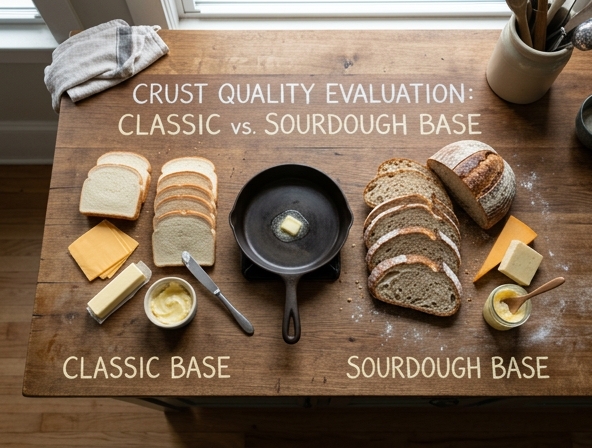
| Evaluation Metric | Classic Pullman Loaf | Artisanal Sourdough |
|---|---|---|
| Structural Integrity | Uniform, mild crumb; standard foundation. | Robust; provides a superior, stable frame. |
| Heat Tolerance | Standard; browns at a predictable rate. | High; handles extended heat for deeper crusting. |
| Textural Crispness | Consistent, subtle crunch. | Enhanced; offers a more complex, distinct texture. |
| Overall Conclusion | Reliable for a traditional grilled cheese experience. | Optimal for those prioritizing structural integrity and crust quality. |
The Crucible of Crunch: Evaluating the Classic vs. Sourdough Base for the Ultimate Grilled Cheese
The grilled cheese sandwich is a study in deceptive simplicity. At its core, it is merely bread, fat, and heat applied to a core of melting dairy. Yet, within this minimalist framework lies a fierce culinary debate that has polarized lunch counters and home kitchens for generations: what constitutes the ideal bread base? While the internal components of the cheese-its meltability, fat content, and salinity-are vital, the structural integrity and crust quality of the bread are what elevate a sandwich from a soggy snack to a transcendent experience.
To evaluate the crust quality between a classic white sandwich loaf and a hearty artisan sourdough, we must first define the anatomy of the grilled crust. It is a dual-layered transformation: the exterior must reach the Maillard reaction point, creating a caramelized, brittle barrier, while the interior must remain protected, acting as a soft, steamed cushion for the cheese. Let us dissect the two contenders.
The Classic Contender: The Pullman or White Loaf
The "classic" base-typically a standard, finely-milled white bread or a buttery Pullman loaf-is designed for uniformity. Its tight crumb structure and higher sugar content (often derived from added milk or sweeteners) make it a formidable opponent in the pursuit of the perfect crust.
The Maillard Advantage: Because these loaves often contain small amounts of sugar or milk solids, they are predisposed to rapid, even browning. When butter hits a hot skillet, the sugars in the classic loaf caramelize almost instantly. The result is a golden-brown, aesthetically pleasing exterior that feels nostalgic and comforting.
Texture and Integrity: The density of a classic loaf is low, meaning it lacks the structural rigidity of a fermented artisan bread. While this creates a soft, almost cloud-like interior, it presents a challenge for the crust. As the cheese melts, the bread can occasionally struggle to hold the structural weight, leading to a softer bite. The "crunch" is crisp and thin, almost like a wafer, rather than the deep, percussive sound one might associate with a more rustic loaf.
The Sourdough Challenger: The Artisan Standard
Sourdough is defined by its long fermentation and the presence of wild yeast and lactic acid bacteria. This creates a bread that is structurally superior, characterized by a larger, uneven crumb and a robust, chewy character. When this bread hits the skillet, the results are fundamentally different.
The Architecture of Crunch: The crust of a high-quality sourdough is thicker and more irregular than its mass-produced counterpart. When grilled, this irregular surface creates a landscape of texture. Some parts of the crust become deeply, darkly caramelized, providing a sharp, shattering crunch, while other areas maintain a slight, satisfying chew. The acidity in the sourdough also reacts uniquely with the fat, cutting through the richness of the melted cheese.
Structural Reliability: A sourdough base is the superior choice for those who pack their sandwiches with heavy cheeses, cured meats, or thick tomato slices. The structure holds up against internal heat and moisture, ensuring that the crust stays "alive" and crunchy, even as the sandwich sits for a minute or two on the plate. However, this density requires patience; if the heat is too high, the surface will char before the cheese has sufficiently melted, creating a risk of a burnt outer shell with a cold, unmelted center.
Comparative Analysis: The Physics of Frying
When we evaluate these two bases side-by-side, we must look at how they interact with the medium of heat transfer: the butter or mayonnaise.
- Fat Absorption: White bread acts like a sponge, soaking up butter and creating a uniform, fried-dough effect. Sourdough, being denser, acts more like a grill plate, holding the fat on the surface for a more pronounced "toasting" rather than a "frying" effect.
- Flavor Profile: The classic white bread is a neutral slate. It provides a sweet, mellow backdrop that allows the cheese to take center stage. Sourdough, conversely, provides a complex, tangy dialogue with the cheese, pairing exceptionally well with sharp cheddars or creamy gruyères where the funk of the bread matches the funk of the cheese.
- The "Shatter" Test: When bitten, the classic bread provides a soft, uniform yield. The sourdough provides a multi-stage crunch: first the crisp surface, then the resilient chew of the crumb, then the molten interior.
The Verdict: Choosing Your Vessel
The choice between classic white and sourdough is ultimately a choice of the desired sensory experience. If you are looking for the "grilled cheese of your childhood"-a sandwich that offers pure, unadulterated comfort with a thin, buttery, golden crust-the classic white loaf remains undefeated. Its ability to create a consistent, sugary-sweet crust that shatters perfectly on impact is a feat of simple chemistry.
However, for the discerning eater who views a grilled cheese as a gourmet endeavor, sourdough is the indisputable winner in terms of quality. The depth of flavor, the structural integrity, and the varied, multi-dimensional texture of the crust elevate the sandwich into a meal that demands attention. A well-grilled sourdough sandwich is not just a snack; it is an exercise in textural architecture.
For the best results with either base, the key is heat management. Use a medium-low heat to allow the bread to dehydrate and toast slowly, ensuring the crust reaches its peak potential without burning. Whether you opt for the nostalgic charm of white bread or the sophisticated crunch of sourdough, remember that the crust is the guardian of the molten treasure within. Respect the crust, and the sandwich will always satisfy.
Disclaimer:
The information provided on Eateryn is for general educational and informational purposes only and is not intended as medical, nutritional, or healthcare advice. It should not be used to diagnose, treat, cure, or prevent any disease or medical condition.
Always consult a qualified physician, registered dietitian, or other certified healthcare professional before making changes to your diet, exercise routine, or lifestyle, or regarding any medical questions or concerns you may have. Never disregard or delay seeking professional medical advice because of something you have read on this website.