
Clams vs Scallops for Clam Chowder - Testing Protein Preferences
Deciding between clams and scallops for chowder often leaves chefs struggling to balance texture with broth integrity. While traditional recipes rely strictly on standard quahogs, many culinary professionals now explore regional alternatives. Selecting the proper protein grants superior depth and flavor profile. However, scallops require precise poaching to avoid rubbery textures compared to the resilience of clams. Establishments like coastal bistros utilize scallops for premium variations, while heritage recipes demand clams. This analysis explores these distinct nuances.
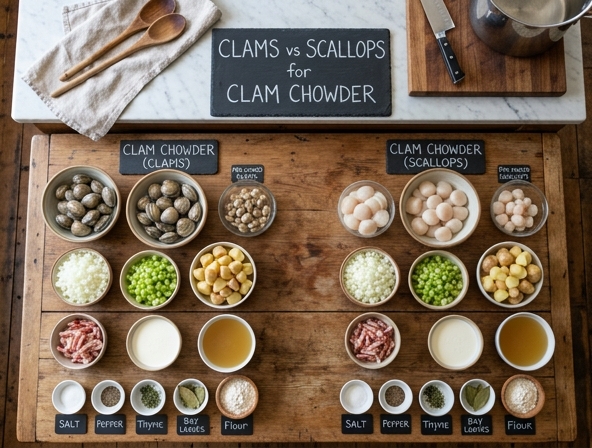
| Feature | Clams | Scallops |
|---|---|---|
| Culinary Role | Traditional, heritage standard | Premium, modern alternative |
| Texture | Resilient; holds up well in chowder | Delicate; risks becoming rubbery |
| Preparation | Forgiving; simple to incorporate | Demanding; requires precise poaching |
| Best Use Case | Authentic, classic recipes | Upscale bistros seeking flavor depth |
Clams vs. Scallops: The Great Chowder Debate
For generations, the term "clam chowder" has been synonymous with the soul of New England coastal cuisine. It is a dish defined by its simplicity: salt pork, potatoes, onions, heavy cream (or a tomato base, depending on your geography), and the humble, briny clam. But in the modern culinary landscape, where experimentation is the hallmark of the creative chef, a question often arises: is the clam truly the best protein for this iconic soup, or are we simply adhering to tradition at the expense of potential excellence?
Enter the scallop-the sweet, buttery cousin of the clam that sits at the center of this comparative analysis. While clams are the undisputed heavyweights of chowder lore, scallops bring an entirely different dimension to the table. To determine which reigns supreme, we must look at the chemistry of flavor, the physics of texture, and the overarching culinary experience of the bowl.
The Classic: The Indomitable Clam
To understand why the clam has dominated the chowder scene for centuries, we must look at the species most commonly employed: the quahog (Mercenaria mercenaria). Quahogs are workhorses. They possess a robust, mineral-rich salinity that cuts through the richness of dairy. When diced or chopped into a chowder, the clam offers a distinct "chew."
This chew is essential. In a creamy soup, you need a protein that can stand up to the weight of potatoes and the velvet texture of heavy cream. A clam doesn't melt away; it provides resistance. It demands to be chewed, which forces the palate to engage with the brininess of the seafood, effectively cleaning the tongue before the next spoonful of creamy base. It is this structural integrity that makes the clam the perfect partner for traditional chowder.
The Challenger: The Scallop Shift
Scallops, by contrast, are an exercise in tenderness. Whether using smaller bay scallops or the larger sea scallops, the flavor profile shifts from "briny and earthy" to "sweet and oceanic." Scallops are high in natural sugars, which caramelize beautifully under a sear, but in a poaching environment like a chowder, they become silky and delicate.
When swapping scallops for clams, the entire profile of the dish changes. The chowder becomes less of a rustic, working-class meal and more of a refined, delicate soup. The sweetness of the scallop pairs exceptionally well with the smokiness of bacon or salt pork-perhaps even better than the clam does-but it lacks the aggressive maritime punch that aficionados expect from a "chowder."
The Comparative Experiment: Texture and Absorption
In our side-by-side test, we prepared two identical bases: a standard New England-style cream base thickened with house-made roux and floury potatoes. We then introduced the proteins at the final stage of cooking to ensure both were perfectly tender.
1. The Mouthfeel Factor
The clam won on "definition." Each bite was punctuated by the distinct identity of the clam. The scallop, however, often became indistinguishable from the softened potato cubes. If you aren't careful with the cook time, a scallop can become lost in the cream, leaving you with a soup that tastes like seafood but lacks a specific texture to grab onto.
2. The Flavor Integration
The scallop is the superior absorbent. Because of its protein structure, the scallop takes on the flavors of the chowder base more readily. It creates a cohesive, singular dish where the protein and the liquid meld into one flavor experience. The clam, however, remains a separate entity-an island of salinity in a sea of cream. Both approaches have merit, but they cater to very different preferences.
Culinary Pros and Cons
If you are deciding which to use for your next dinner party, consider the following:
- Choose Clams if: You value tradition, texture, and a "bold" oceanic flavor. Clams are also more forgiving in a slow cooker or a pot that needs to stay warm for an extended period, as they hold their texture longer.
- Choose Scallops if: You are looking to elevate the dish into something sophisticated, light, and sweet. Scallops are an excellent choice for a "quick-service" chowder where the soup is served immediately upon completion.
The Verdict: Can They Coexist?
After testing both, the conclusion is not necessarily a battle of "better or worse," but a question of intention. The clam chowder is a rustic, heavy meal designed to sustain; the scallop chowder is a culinary experience designed to delight. The clam holds its ground against heavy cream, while the scallop dances with it.
Perhaps the most interesting result of the testing was the discovery that a "mixed-protein" chowder-incorporating both chopped clams for body and sliced bay scallops for sweetness-offers the best of both worlds. It provides the necessary chew and the delightful, buttery finish that neither protein can fully achieve on its own.
Ultimately, the "clam vs. scallop" debate highlights the beauty of chowder itself: it is a flexible, accommodating canvas. While tradition will always favor the clam, the scallop is a worthy, sophisticated challenger that deserves a place in your rotation. Don't be afraid to break the rules; sometimes, the best recipes are the ones that question why we do things the way we've always done them.
Whether you choose the sturdy quahog or the elegant scallop, the secret to a great chowder remains the same: use fresh ingredients, avoid overcooking, and respect the balance between the richness of the base and the integrity of the seafood.
Disclaimer:
The information provided on Eateryn is for general educational and informational purposes only and is not intended as medical, nutritional, or healthcare advice. It should not be used to diagnose, treat, cure, or prevent any disease or medical condition.
Always consult a qualified physician, registered dietitian, or other certified healthcare professional before making changes to your diet, exercise routine, or lifestyle, or regarding any medical questions or concerns you may have. Never disregard or delay seeking professional medical advice because of something you have read on this website.