
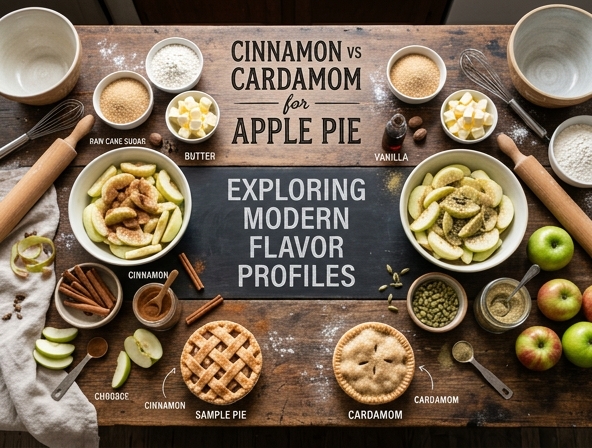
Cinnamon vs Cardamom for Apple Pie - Exploring Modern Flavor Profiles
Bakers often feel confined to the standard cinnamon-only approach, fearing deviation may ruin a classic staple. While traditional culinary texts advocate for cinnamon as the foundational spice, modern palates crave complexity. Introducing cardamom elevates the flavor profile, transforming a pedestrian dessert into a sophisticated experience. Note that success requires precise balance, as cardamom's floral intensity can overwhelm delicate fruit. Pairing green cardamom with Granny Smith apples offers a vibrant finish. The following analysis explores these characteristics.
| Feature | Cinnamon (Traditional) | Cardamom (Modern) |
|---|---|---|
| Role | The standard, foundational spice for classic apple pie. | A sophisticated, complex alternative for a modern twist. |
| Flavor Profile | Warm, familiar, and consistent. | Floral and intense; elevates the dessert profile. |
| Usage Tip | Safe and widely accepted. | Requires precise balancing to avoid overpowering fruit. |
| Best Pairing | Versatile with most apple varieties. | Green cardamom paired specifically with Granny Smith apples. |
Cinnamon vs. Cardamom: Elevating the Modern Apple Pie
The aroma of baking apple pie is arguably the most evocative scent in the culinary world. For generations, the recipe has remained largely immutable: tart apples, a buttery crust, a handful of sugar, and that indispensable dusting of ground cinnamon. It is a flavor profile rooted in deep nostalgia, providing a warm, woody sweetness that defines "home." Yet, in the landscape of modern pastry, where chefs and home bakers alike are increasingly drawn to complex, layered flavor profiles, the status quo is being challenged. Enter cardamom-the sophisticated, citrus-forward, and aromatically floral cousin to our traditional warming spices.
But does this modern challenger truly threaten the throne of the cinnamon stick, or is there a more nuanced path forward for our favorite autumnal dessert? To understand the shift, we must first look at what these spices bring to the table.
The Cinnamon Legacy: Why We Love the Classic
Cinnamon, derived from the inner bark of trees from the Cinnamomum genus, provides the backbone of traditional apple pie. Its primary chemical component, cinnamaldehyde, offers a sharp, spicy, and woody profile that complements the natural sugars of a baked apple. When apples cook, they release pectin and natural acids; cinnamon acts as a bridge, grounding these acidic notes with a deep, earthy intensity.
There is also a psychological component to cinnamon. It is intrinsically linked to hearth and home, triggering a comfort response that is difficult to replicate. When we think of "Apple Pie," we are almost always thinking of a cinnamon-scented pie. It is the baseline against which all other fruit-based desserts are measured.
The Cardamom Evolution: The Case for Brightness
Cardamom, often referred to as the "Queen of Spices," offers a entirely different sensory experience. Whether using the vibrant green pods or the darker, smokier black variety, cardamom is defined by its complexity. It contains high levels of limonene and cineole, providing a flavor profile that is simultaneously floral, citrusy, slightly eucalyptus-like, and profoundly warm.
In a modern apple pie, cardamom serves to "wake up" the apples. While cinnamon can sometimes cloak the delicate floral notes of a variety like a Honeycrisp or a Pink Lady, cardamom enhances them. It provides a bright, lifted top note that makes the fruit taste more like fruit and less like a sugary syrup. For those seeking a pie that feels lighter, more sophisticated, or "scandi-chic," cardamom is the undisputed champion.
Comparative Flavor Profiles: A Culinary Breakdown
| Feature | Cinnamon | Cardamom |
|---|---|---|
| Primary Character | Woody, spicy, sweet | Floral, citrusy, piney |
| Effect on Fruit | Mellows and deepens | Brightens and highlights |
| Kitchen Association | Traditional, Americana | Nordic, Middle Eastern, Fusion |
| Intensity | Bold, lingering | Aromatic, subtle |
The Case for the "Hybrid Pie"
The most exciting developments in modern baking aren't about choosing one over the other; they are about understanding the synergy between them. The true "modern" apple pie often utilizes a blend. By using a ratio of 3:1 cinnamon to cardamom, the baker achieves the best of both worlds: the familiar comfort of the woody spice providing the base, and the bright, floral lift of the cardamom providing the complexity.
Consider the structure of the pie. If you are creating a classic lattice-top pie with heavy caramel, cinnamon is your friend. However, if you are making an apple galette-where the fruit-to-pastry ratio is higher and the crust is crisp-cardamom becomes the superior choice. Its ability to cut through the richness of high-butter-fat crusts makes for a more balanced bite.
Practical Tips for Experimentation
- Freshness is Non-Negotiable: Cardamom loses its volatile oils rapidly once ground. For the best experience, purchase whole green cardamom pods, remove the seeds, and grind them with a mortar and pestle just before adding to your apple toss.
- Adjusting for Apple Varieties: If using a sweeter, milder apple (like Golden Delicious), stick to a hint of cinnamon. If using a tart, firm variety (like Granny Smith), go bolder with cardamom to counteract the acidity.
- Pairing with Other Ingredients: Cinnamon pairs perfectly with walnuts and brown sugar. Cardamom finds its best friends in pistachios, almond flour crusts, and even a hint of sea salt or rose water.
Conclusion: Trusting Your Palate
The debate between cinnamon and cardamom is not a war, but an invitation to explore. While cinnamon will likely remain the standard-bearer for traditional apple pie for years to come, the incorporation of cardamom marks a maturing palate in home baking. It encourages us to look at our ingredients not as static requirements, but as variables in a delicious equation.
Next time you find yourself peeling a pile of apples for a weekend bake, pause before reaching for the standard jar of cinnamon. Experiment with a dash of freshly ground cardamom. You might find that the modern flavor profile you've been seeking isn't just about changing the recipe-it's about waking up the fruit.
Disclaimer:
The information provided on Eateryn is for general educational and informational purposes only and is not intended as medical, nutritional, or healthcare advice. It should not be used to diagnose, treat, cure, or prevent any disease or medical condition.
Always consult a qualified physician, registered dietitian, or other certified healthcare professional before making changes to your diet, exercise routine, or lifestyle, or regarding any medical questions or concerns you may have. Never disregard or delay seeking professional medical advice because of something you have read on this website.