
Chorizo vs Ground Beef for Tacos - Comparing Spiced Intensity in Meat
Chorizo vs. Ground Beef for Tacos: Comparing Spiced Intensity
Many home cooks struggle to balance flavor when selecting taco meat. While ground beef serves as a reliable, neutral foundation, it often requires heavy seasoning to achieve complexity. Our comparison explores how authentic chorizo-rich in paprika and garlic-elevates recipes beyond basic beef. We analyze fat ratios, spice profiles, and cooking techniques to provide you with the professional insight necessary to master your next taco night and achieve the perfect flavor intensity.
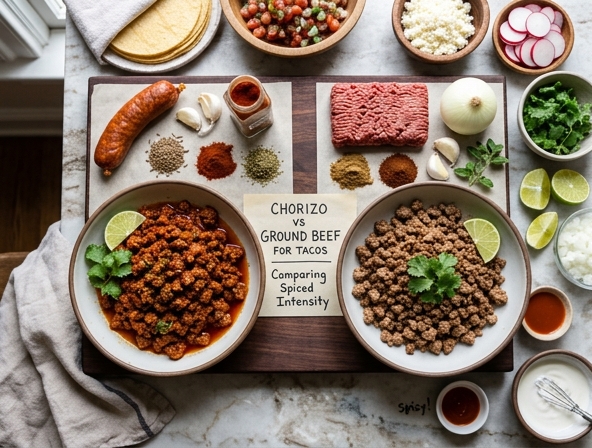
| Comparison Factor | Ground Beef | Chorizo |
|---|---|---|
| Flavor Profile | Neutral and mild | Intense, bold, and complex |
| Seasoning Needs | Requires heavy manual seasoning | Pre-seasoned and ready to use |
| Key Ingredients | Basic, unseasoned meat | Paprika, garlic, and signature spices |
| Culinary Role | A reliable, versatile foundation | Used to elevate recipes with spice |
| Mastery Focus | Requires building flavor from scratch | Focuses on balancing spice intensity |
The Great Taco Showdown: Chorizo vs. Ground Beef
For many, "Taco Night" is more than just a meal; it is a sacred culinary ritual. It is the moment when the week's stresses are set aside in favor of warm tortillas, vibrant salsas, and, most importantly, the meat. While there are countless fillings-from slow-roasted carnitas to grilled mahi-mahi-the two titans of the home kitchen remain ground beef and chorizo. On the surface, they are both convenient, flavorful options for the frying pan, but when you dig into the science of spice intensity and flavor profiles, they are worlds apart.
The Blank Canvas: The Case for Ground Beef
Ground beef is the reliable protagonist of the taco world. Its popularity stems from its neutrality. It is a "blank canvas" meat, which makes it the perfect vehicle for a wide array of flavors. When you use ground beef, the "spiced intensity" is entirely dictated by the chef. Whether you are using a pre-packaged taco seasoning mix heavy on cumin and chili powder or crafting a bespoke rub with smoked paprika, onion powder, and crushed coriander, you are in total control.
The texture of ground beef-typically sourced at an 80/20 lean-to-fat ratio for the best results-provides a meaty, chewy mouthfeel that serves as a sturdy foundation for toppings. Because the meat itself is relatively mild, it acts as a counterbalance to acidic salsas or sharp, raw onions. You aren't just eating the meat; you are eating the seasoning, the beef juices, and the texture combined.
The Firecracker: The Complexity of Chorizo
If ground beef is the canvas, chorizo is the painting already in progress. To understand the spice intensity of chorizo, one must first distinguish between the two primary varieties found in the taco world: Spanish and Mexican. For the purposes of taco night, we are almost exclusively talking about Mexican Chorizo-raw, highly seasoned, fresh sausage that releases a deep, vibrant red oil as it cooks.
The intensity here comes from a complex marriage of ingredients. Mexican chorizo is typically made with ground pork, but it is the marinade that defines it. Dried chili peppers (usually guajillo or ancho), garlic, cinnamon, clove, oregano, and crucially, vinegar, come together to create a flavor profile that is bold, tangy, and deeply earthy. When this hits the hot pan, the rendered fat captures the spices, creating an aromatic explosion that coats every morsel of the meat. It doesn't just taste like "taco meat"; it tastes like a curated, fermented, and expertly spiced tradition.
The Showdown: Comparing Spiced Intensity
When comparing the two, the difference in "spiced intensity" can be summarized by one word: *Depth*.
- Linear vs. Multi-dimensional: Ground beef seasoning is linear. If you add chili powder, you taste chili powder. Chorizo seasoning is multi-dimensional. The acidity of the vinegar cuts through the richness of the pork, while the warmth of the cinnamon and clove provides an undertone that keeps the palate interested long after the initial bite of heat.
- The Heat Factor: While ground beef *can* be made spicy, chorizo *is* spicy. The heat in chorizo is integrated into the fat, meaning the spiciness lingers on the tongue, creating a lasting "burn" that pairs beautifully with cooling elements like sour cream or avocado.
- Fat-Driven Flavor: In ground beef, the fat provides juiciness. In chorizo, the fat *is* the flavor carrier. That signature orange-red oil is where the majority of the spice profile lives. If you drain that fat away, you lose the soul of the chorizo; if you drain the fat from ground beef, you simply lose a bit of moisture.
Culinary Pairings and Balancing Acts
Because of these differences, your choice of accompaniments should shift accordingly.
For Ground Beef, think "amplification." Because the base is mild, you want to add brightness and texture. A heavy hand with pickled jalapeños, a sharp cheddar cheese, and a crunchy slaw helps elevate the beef. The beef is a stable base, so you can afford to go aggressive with the toppings.
For Chorizo, think "moderation." The meat is already doing the heavy lifting. You don't need a complex spice blend or a heavy cheese. Instead, go for cooling, fresh elements. A dollop of Greek yogurt or sour cream, fresh cilantro, diced white onion, and a squeeze of lime are all you need. The lime juice, in particular, is the perfect partner for chorizo; the acidity highlights the pork's natural sweetness while mellowing the intense spice heat.
The Hybrid Approach: The Best of Both Worlds
If you find yourself torn between the two, there is a middle ground that many professional taqueros use: the 50/50 blend. By combining ground beef and chorizo, you inherit the sturdy texture of the beef while gaining the complex, spice-forward profile of the chorizo. This hybrid approach solves the issue of chorizo potentially being "too greasy" for some diners while ensuring that your ground beef doesn't fall flat on the plate.
To execute this, brown the chorizo first, allowing the fat to render completely. Then, add the ground beef to the same pan. As the beef cooks, it will absorb the spiced, seasoned oil from the chorizo, essentially "marinating" the beef from the inside out during the cooking process. The result is a taco filling that hits every mark: meaty, complex, spicy, and perfectly balanced.
Final Thoughts
Choosing between ground beef and chorizo isn't about which is "better"-it's about understanding what you want your taco to say. If you want a comfortable, customizable meal where you can play with different spices and styles, ground beef is your trusty sidekick. If you want a punch of flavor that transports you directly to the vibrant streets of a Mexican night market, reach for the chorizo.
Ultimately, both meats belong in the rotation. The beauty of the taco lies in its versatility, and by understanding how these two ingredients interact with your palate, you can master the art of the perfect taco, one spice-filled bite at a time.
Disclaimer:
The information provided on Eateryn is for general educational and informational purposes only and is not intended as medical, nutritional, or healthcare advice. It should not be used to diagnose, treat, cure, or prevent any disease or medical condition.
Always consult a qualified physician, registered dietitian, or other certified healthcare professional before making changes to your diet, exercise routine, or lifestyle, or regarding any medical questions or concerns you may have. Never disregard or delay seeking professional medical advice because of something you have read on this website.