
Chive vs Scallion for Bagel - Selecting the best cream cheese mix
Chives vs. Scallions: Selecting the Perfect Schmear
Navigating the menu between chive and scallion cream cheese is a common dilemma. While most shops offer both, these alliums are not interchangeable. Distinguishing their unique flavor profiles is essential for elevating your bagel experience. Note that personal preference and ingredient freshness dictate the final result. For instance, chives impart a subtle, grassy sophistication, whereas scallions deliver a pungent, onion-heavy bite. This guide compares these profiles to help you optimize your next breakfast selection.
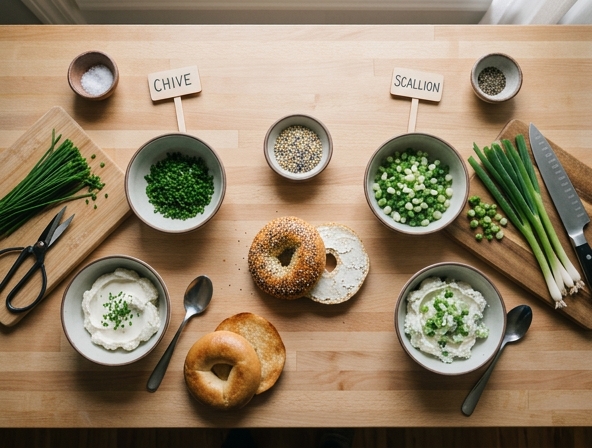
| Feature | Chive Cream Cheese | Scallion Cream Cheese |
|---|---|---|
| Flavor Profile | Subtle and grassy | Pungent and onion-heavy |
| Intensity | Sophisticated and mild | Bold and sharp |
| Usage Note | Not interchangeable; depends on personal preference and ingredient freshness. | Not interchangeable; depends on personal preference and ingredient freshness. |
The Great Schmear Debate: Chives vs. Scallions for Your Perfect Bagel
There is perhaps no morning ritual as sacred as the application of cream cheese to a freshly toasted bagel. It is a moment of breakfast zen, a culinary architecture project where the schmear serves as the foundation. Yet, beneath the surface of this creamy delight lies a long-standing, often heated debate among bagel aficionados: should you reach for the delicate, grassy notes of the chive, or the robust, onion-forward punch of the scallion?
While the terms are often used interchangeably in casual conversation, the distinction between chives and scallions-and how they interact with the high fat content of cream cheese-is significant. Choosing the right allium is not just a matter of preference; it is a matter of elevating your bagel experience from standard to extraordinary.
The Botany of the Schmear: Understanding the Alliums
To understand the flavor profile, one must first look at the biology. Both chives (Allium schoenoprasum) and scallions (Allium fistulosum, also known as green onions) belong to the same genus, sharing the characteristic sulfurous compounds that give onions their signature bite. However, they occupy different niches in the kitchen.
The Case for Chives: Sophistication and Subtlety
Chives are the smallest members of the onion family. They offer a refined, mild flavor that leans closer to garlic than to a sharp white onion. Because they are thin, hollow, and tubular, they provide a very light crunch that doesn't overpower the palate.
When mixed into cream cheese, chives act as a bridge. Their flavor is subtle enough to let the tang of the cultured cream shine through, rather than masking it. If you are pairing your bagel with premium smoked salmon (lox), capers, or cucumber, chives are the superior choice. They harmonize with delicate ingredients, adding a layer of savory sophistication without demanding the spotlight.
The Case for Scallions: The Structural Powerhouse
Scallions are a different beast entirely. They possess a distinct white bulb and a long, fibrous green top. The white part is pungent, spicy, and crunchier; the green part is milder but still significantly more assertive than a chive. When chopped, scallions provide a structural texture that persists even after being folded into whipped cream cheese.
For those who love an "Everything" bagel or a toasted onion bagel, scallions are often the necessary accompaniment. They cut through the heavy, fatty density of a dense, chewy New York-style bagel. If your bagel is the star-perhaps a heavy, salt-crusted variety-you need an allium that can stand up to it. Scallions provide that assertive "zing" that keeps your palate awake.
The Chemistry of the Mix
Why do these herbs pair so well with cream cheese? It comes down to chemistry and temperature. Cream cheese is essentially a fat-delivery system. The butterfat coats your tongue, which can lead to "flavor fatigue" if the spread is too one-dimensional. The sulfurous notes in alliums are lipophilic; they bind to the fat in the cream cheese, which helps distribute the flavor evenly across your taste buds.
However, the way you prep these herbs changes everything:
- The Fine Mince: Whether you choose chives or scallions, the precision of your knife work is vital. Large chunks create an uneven experience. A sharp knife is essential to avoid bruising the herbs, which leads to a bitter, oxidized flavor.
- The "Rest" Period: Once mixed, let the cream cheese sit in the refrigerator for at least 30 minutes. This allows the onion oils to migrate into the dairy, resulting in a more cohesive, flavorful spread.
- Dried vs. Fresh: While dried chives are a staple in some pantries, they lack the vibrant, herbal aromatics required for a top-tier bagel. Fresh is non-negotiable.
Selecting the Best Partner for Your Bagel Type
Not every bagel deserves the same treatment. The key to the perfect schmear is balance.
1. The Plain Bagel
Winner: Scallion. Since the canvas is blank, you want a schmear with personality. The scallion's bold, savory bite transforms a plain bagel into a full-fledged meal.
2. The "Everything" Bagel
Winner: Chive. An everything bagel is already chaotic with garlic, onion, poppy seeds, and salt. Adding a pungent scallion cream cheese can create "flavor fatigue." Chive cream cheese adds a fresh, green brightness that balances the heavy garlic/onion presence of the bagel itself.
3. The Lox Bagel
Winner: Chive. Smoked salmon is oily and delicate. A scallion's intensity can overpower the subtle smoke and salt of the fish. Chives provide a clean finish that makes every bite of lox pop.
The Verdict: Can You Have Both?
If you find yourself torn, you are not alone. Many artisan bagel shops are now moving toward a "Green Schmear," a blend that utilizes both the subtle, floral notes of fresh chives and the sharper, crunchier bits of scallion greens. By combining them, you capture the best of both worlds: the initial aroma of the chive and the satisfying, savory finish of the scallion.
Ultimately, the "best" choice depends on your mood and your bagel of choice. Are you looking for a subtle, elegant morning, or a robust, savory kickstart to your day? The beauty of the bagel ritual is that there is no wrong answer-only the opportunity to experiment with the ratio of green to white, and herb to cream. So, the next time you are standing at the deli counter or preparing your spread at home, take a moment to consider the herb. It is the silent hero of your breakfast, the green garnish that turns a piece of toasted dough into a work of culinary art.
Pro-Tip: If you want to take your homemade scallion cream cheese to the next level, toast the white parts of the scallions in a dry pan for 30 seconds before folding them in. This mellows the raw bite and brings out a subtle sweetness that pairs perfectly with the lactic tang of high-quality cream cheese.
Disclaimer:
The information provided on Eateryn is for general educational and informational purposes only and is not intended as medical, nutritional, or healthcare advice. It should not be used to diagnose, treat, cure, or prevent any disease or medical condition.
Always consult a qualified physician, registered dietitian, or other certified healthcare professional before making changes to your diet, exercise routine, or lifestyle, or regarding any medical questions or concerns you may have. Never disregard or delay seeking professional medical advice because of something you have read on this website.