
Chicken vs Beef for Philly Cheesesteak - Comparing Classic Protein Choices
Chicken vs. Beef for Philly Cheesesteak: Comparing Classic Protein Choices
Deciding between traditional beef and modern chicken for a Philly cheesesteak often causes culinary hesitation. While standard deli practices dictate ribeye, today's market demands versatility. The choice fundamentally alters the flavor profile; note, however, that preparation techniques must adjust to the lean nature of poultry. Premium ribeye offers a classic, fatty richness, whereas chicken breast provides a lighter alternative. This analysis evaluates the distinct culinary implications of both proteins to guide your menu selection.
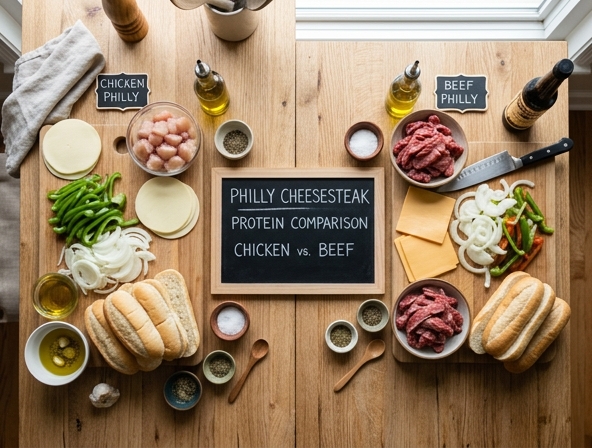
| Protein Choice | Key Characteristic | Culinary Profile |
|---|---|---|
| Beef (Ribeye) | Traditional | Offers a classic, fatty richness synonymous with the authentic Philly cheesesteak experience. |
| Chicken (Breast) | Modern / Lean | Provides a lighter alternative; requires specific preparation adjustments due to its lower fat content. |
Chicken vs. Beef for Philly Cheesesteak: Comparing Classic Protein Choices
The Philly cheesesteak is more than just a sandwich; it is a cultural icon, a culinary rite of passage, and a point of heated debate in Philadelphia and beyond. While purists will tell you that the true cheesesteak is forged in iron and beef, the modern evolution of this street-food staple has opened the doors for a formidable challenger: the chicken cheesesteak. But how do these two proteins truly compare, and does swapping the classic ribeye for poultry change the soul of the sandwich?
The Case for Beef: The Traditional Titan
When most people envision a Philly cheesesteak, they are picturing thinly sliced ribeye steak. There is a reason for this: fat is flavor. The ribeye is prized for its extensive marbling-intramuscular fat that renders down during the high-heat cooking process on a flattop griddle. This fat bastes the meat as it sizzles, creating a rich, savory foundation that pairs perfectly with the sharpness of melted cheese and the sweetness of sautéed onions.
The Importance of the Cut
The secret to a great beef cheesesteak lies in the technique. Chefs often partially freeze the ribeye before slicing it paper-thin. This ensures that when the meat hits the scorching-hot griddle, it cooks almost instantly, locking in juices while developing a beautiful, dark crust through the Maillard reaction. The beef is robust enough to hold its own against heavy accompaniments like Cheese Whiz or sharp provolone, providing that iconic "chewy-but-tender" texture that defines the classic experience.
The Rise of the Chicken Cheesesteak
In recent decades, the chicken cheesesteak has moved from a "menu alternative" to a genuine crowd favorite. For those who find beef too heavy or prefer a leaner protein, chicken offers a clean, versatile canvas. However, cooking with chicken requires a different culinary approach to maintain the integrity of the sandwich.
Breast vs. Thigh: A Flavor Debate
The biggest challenge with chicken is moisture. While chicken breast is the default choice for health-conscious diners, it can dry out quickly under the intensity of a griddle. To combat this, many top-tier sandwich shops have shifted toward using chicken thigh meat. Thighs possess a higher fat content and a deeper flavor profile, allowing them to better mimic the succulence of beef. When properly seasoned with garlic powder, onion powder, and a touch of black pepper, chicken transforms into an incredibly savory protein that absorbs the flavors of its toppings exceptionally well.
Comparing the Flavor Profiles and Seasoning
The primary difference between the two lies in their interaction with the "supporting cast" of the sandwich. Beef is bold. It has a heavy, mineral quality that demands aggressive seasoning and salty cheeses. It is earthy and persistent. Chicken, by contrast, is subtle. Because chicken is naturally more neutral, it acts as a flavor sponge. This makes it an ideal candidate for variations that might overwhelm beef-such as the addition of buffalo sauce, ranch, or even peppers and onions with a heavier balsamic glaze.
The Griddle Technique: The Great Equalizer
Regardless of whether you choose beef or chicken, the "Philadelphia method" is the great equalizer. The meat must be chopped aggressively with a spatula while cooking. This chopping process is crucial for two reasons: first, it ensures that every bite contains a mix of meat, cheese, and aromatics; second, it increases the surface area of the meat, allowing more edges to crisp up against the metal. Whether it is ribeye or thigh meat, the goal is to achieve that perfect intersection of caramelized crust and tender center.
Which Cheese Pairs Best?
The cheese choice is often dictated by the protein. For beef, the salty, processed tang of Cheese Whiz is the traditional choice, as it cuts through the richness of the fat. Provolone is the second favorite, providing a sharper, more sophisticated contrast. For chicken, however, American cheese or a mild provolone is often preferred. Because chicken is less "fat-forward" than beef, a heavy, pungent cheese can sometimes overpower the delicate poultry. A meltier, milder cheese helps bind the chicken together without masking its lighter flavor.
The Bread: The Final Verdict
Both proteins rely heavily on the vessel that carries them: the long, crusty, yet soft-centered Italian roll (ideally an Amoroso roll). The bread provides the necessary structural integrity to hold the juices of the meat and the drip of the cheese. Whether you choose beef or chicken, the bread must be toasted just enough to provide a slight crunch on the outside while remaining pillowy on the inside to soak up those savory drippings.
Conclusion: Is There a Winner?
If you are looking for the historical, soul-warming experience that built the reputation of Philadelphia street food, beef ribeye remains the undisputed champion. It is the original, the classic, and the standard against which all other sandwiches are measured. It offers a depth of flavor that is difficult to replicate with any other protein.
However, the chicken cheesesteak should not be dismissed as a mere substitute. It is a modern classic in its own right-lighter, more versatile, and capable of taking on bold flavor profiles that beef might hide. Ultimately, the "best" protein is a matter of preference. Whether you crave the deep, rich intensity of seared ribeye or the lighter, tender bite of seasoned chicken, both offer a masterclass in the art of the griddle. In the world of the Philly cheesesteak, the only wrong choice is the one you don't enjoy.
Disclaimer:
The information provided on Eateryn is for general educational and informational purposes only and is not intended as medical, nutritional, or healthcare advice. It should not be used to diagnose, treat, cure, or prevent any disease or medical condition.
Always consult a qualified physician, registered dietitian, or other certified healthcare professional before making changes to your diet, exercise routine, or lifestyle, or regarding any medical questions or concerns you may have. Never disregard or delay seeking professional medical advice because of something you have read on this website.