
Chicken Thighs vs Breast for Fried Chicken - Maximizing Juiciness And Flavor
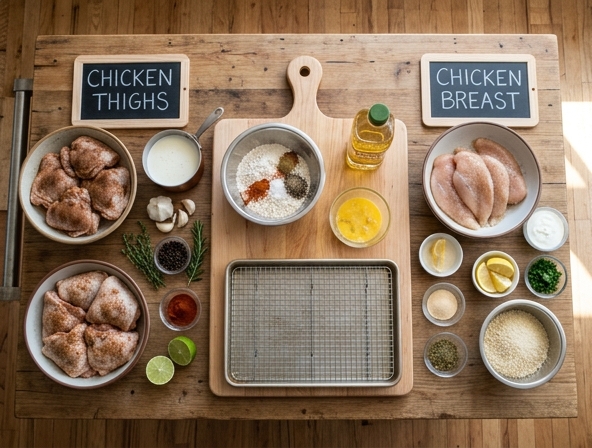
Many home cooks struggle to achieve the perfect balance of a succulent interior and a crisp exterior, often resulting in dry, unappealing meat. While standard frying recipes frequently default to lean breast meat, the choice of cut fundamentally dictates your results. Prioritizing chicken thighs grants superior moisture retention and depth of flavor. Unlike lean breasts, the higher fat content in thighs provides natural self-basting during the frying process. We will examine how these biological differences optimize your results.
| Comparison Factor | Chicken Breast | Chicken Thighs |
|---|---|---|
| Fat Content | Low (Lean) | High |
| Moisture Retention | Low; prone to drying out | High; natural self-basting |
| Flavor Profile | Mild | Deep and rich |
| Frying Outcome | Often results in dry, unappealing meat | Superior succulence and crispness |
Chicken Thighs vs. Breast for Fried Chicken: Maximizing Juiciness and Flavor
The fried chicken debate is as old as the dish itself: which part of the bird reigns supreme? When you walk into a top-tier fried chicken establishment, you are often presented with a choice between the lean, pristine white meat of the breast or the succulent, flavor-packed dark meat of the thigh. While both have their dedicated camps, understanding the science behind these cuts is the key to elevating your home cooking from "acceptable" to "transcendent."
The Anatomy of Flavor: Why Thighs Win on Texture
To understand why thighs are often the preferred choice for enthusiasts, one must look at the biology of the chicken. The thigh is a working muscle, rich in myoglobin-the protein that stores oxygen in the muscle tissue-which gives it its characteristic dark color and deep, savory profile. More importantly, thighs contain a higher concentration of intramuscular fat and connective tissue.
When frying, this fat is a culinary superpower. As the chicken reaches high temperatures, the fat renders, effectively basting the meat from the inside out. This makes the thigh incredibly forgiving. If you accidentally leave a chicken thigh in the fryer for an extra minute or two, it remains tender and juicy. The connective tissue also softens during the frying process, creating a luxurious, silky mouthfeel that lean breast meat simply cannot replicate.
The Challenge of the Breast: The Search for Moisture
Conversely, the chicken breast is the "blank canvas" of the poultry world. It is lean, consisting almost entirely of muscle fibers with very little fat. While this makes it a darling of the health-conscious, it presents a significant challenge for the fry-cook. Because there is so little fat to protect the fibers, the breast is notoriously prone to drying out.
The "window of perfection" for a fried chicken breast is razor-thin. If the internal temperature pushes just a few degrees past the 165°F (74°C) mark, the protein fibers contract, squeezing out their moisture and resulting in a dry, stringy texture that is often salvaged only by copious amounts of dipping sauce. However, when treated correctly, the mild flavor and firm, clean bite of the breast offer a refined fried chicken experience that feels lighter and less indulgent than the thigh.
Bridging the Gap: Techniques to Elevate Both Cuts
Regardless of your preference, proper preparation is the great equalizer. Here is how you can ensure either cut ends up juicy and flavorful:
1. The Magic of the Buttermilk Brine
For breasts, a buttermilk brine is non-negotiable. The lactic acid in the buttermilk acts as a mild tenderizer, gently breaking down the protein structures without turning the meat to mush. Simultaneously, the salt in the brine denatures the proteins, allowing them to hold onto more moisture during the high-heat frying process. Ideally, leave the chicken in a brine for at least 4 to 8 hours.
2. Strategic Sizing
When working with breasts, consider cutting them into uniform strips or "tenders" to ensure faster, more even cooking. This reduces the amount of time the outer crust spends in the oil, lowering the risk of burning the breading before the center is cooked through. For thighs, bone-in is often preferred to slow down the cooking process slightly, allowing the flavor of the bone marrow to permeate the meat.
3. Managing the Fry Temperature
A common mistake is frying at temperatures that are either too high or too low. Aim for a consistent 350°F (175°C). If the oil is too cold, the chicken will absorb excess fat, leading to a greasy exterior. If it is too hot, the crust will darken before the interior is safe to eat. Use an instant-read thermometer to pull the breast at exactly 160°F-it will carry over to 165°F while resting.
Which Cut Should You Choose?
The decision ultimately comes down to the style of fried chicken you are aiming to create:
- Choose Thighs for: A "comfort food" experience. If you are making classic, bone-in southern-style chicken where the goal is maximum flavor, richness, and a "fall-off-the-bone" tenderness, the thigh is objectively superior. It is the best choice for beginners, as its high fat content protects you from the common pitfalls of overcooking.
- Choose Breasts for: Sandwiches and quick bites. Because the breast has a flat, uniform shape, it is perfect for fried chicken sandwiches. Its mild flavor also makes it an excellent vehicle for heavily spiced batters or bold sauces, as it won't clash with the seasonings.
Final Verdict: The Connoisseur's Approach
If you find yourself torn, consider the "Mixed Batch" approach. When hosting a gathering, serve a platter featuring both. The thighs will satisfy the cravings for deep, savory, juicy indulgence, while the breasts provide that clean, meaty satisfaction that pairs perfectly with a tangy coleslaw or pickles.
Ultimately, the "best" fried chicken isn't defined by the cut, but by the relationship between the crust and the core. By respecting the anatomical differences of the bird-giving the breast the extra moisture it craves and letting the thigh lean into its natural richness-you can achieve a standard of fried chicken that puts fast-food chains to shame. Grab your thermometer, heat the oil, and start experimenting; the path to the perfect bite is paved with a little bit of butter, a lot of salt, and a dash of patience.
Disclaimer:
The information provided on Eateryn is for general educational and informational purposes only and is not intended as medical, nutritional, or healthcare advice. It should not be used to diagnose, treat, cure, or prevent any disease or medical condition.
Always consult a qualified physician, registered dietitian, or other certified healthcare professional before making changes to your diet, exercise routine, or lifestyle, or regarding any medical questions or concerns you may have. Never disregard or delay seeking professional medical advice because of something you have read on this website.