
Charcoal Vs. Gas Grill For Burger - Optimal Cooking Method
Achieving a restaurant-quality burger crust often proves frustrating for home chefs. While many rely on the convenience of standard gas grills, they frequently miss the intense flavor profiles found in professional kitchens. Charcoal grilling offers a distinct smoky edge and superior searing capability that gas simply cannot match. However, successful results depend on precise temperature management. Whether using a classic Weber kettle or a high-end gas setup, this guide details optimal techniques to elevate your burger game.
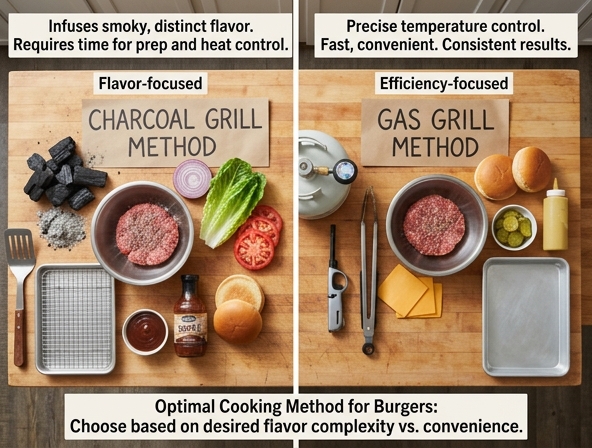
| Feature | Charcoal Grill | Gas Grill |
|---|---|---|
| Flavor Profile | Distinct smoky, charred edge | Standard, neutral flavor |
| Searing Capability | Superior; ideal for restaurant-quality crust | Good, but less intense |
| Convenience | Lower; requires more preparation time | High; quick to ignite and ready to use |
| Temperature Control | Requires precise, active management | High; easier to regulate heat levels |
| Best For | Achieving professional-grade crusts | Home chefs prioritizing efficiency |
The Great Grilling Debate: Charcoal vs. Gas for the Perfect Burger
The backyard burger is more than just a quick meal; it is a culinary institution. Whether it is a sun-drenched Saturday afternoon or a casual weeknight dinner, the method by which you cook that patty often defines the final outcome. The age-old debate between charcoal and gas enthusiasts is as heated as the grills themselves, and when it comes to the humble hamburger, the stakes are high. Both fuel sources offer distinct advantages, altering the flavor, texture, and overall experience of your burger. To determine the optimal cooking method, we must look beyond the convenience factor and dive into the science of heat, smoke, and fat.
The Case for Charcoal: Flavor and Alchemy
For purists, charcoal is the only way to grill. The argument for charcoal starts with one undeniable factor: flavor. When you cook over charcoal-whether lump or briquette-you are introducing a complex layer of carbonized, smoky depth that gas simply cannot replicate. As the fat from your burger patty drips onto the hot coals, it vaporizes, sending flavorful smoke back up into the meat. This is the essence of the "grilled" taste that most people associate with authentic outdoor cooking.
Beyond flavor, charcoal excels at reaching extreme temperatures. To achieve the perfect burger, you want a hard, crusty sear (the Maillard reaction) while keeping the interior juicy and pink. Charcoal can easily reach temperatures upwards of 700°F (371°C) in a concentrated sear zone, allowing you to create that deep, dark exterior crust in under a minute without overcooking the center of the patty. It is a more involved, ritualistic process, but for those who view grilling as a craft, the work is part of the reward.
The Case for Gas: Precision and Consistency
If charcoal is the artisan's tool, gas is the surgeon's scalpel. The primary advantage of a gas grill is control. Grilling a burger requires managing the delicate balance between rendering the fat and achieving a nice color before the meat turns into a hockey puck. With a gas grill, you can dial in your exact temperature with the turn of a knob. If you find your patties are browning too quickly, you can adjust the heat instantly-a luxury you do not have with a bed of smoldering coals.
Gas grills also offer superior consistency. Because you aren't dealing with fuel management, you can focus entirely on the timing of your cook. For those who frequently host larger gatherings, gas grills are often more forgiving. They provide a predictable, even heating surface that makes it easier to cook six, eight, or twelve burgers simultaneously without worrying about hot spots or a fading fire. For the weeknight griller who wants a professional result in twenty minutes or less, gas is the undisputed champion of utility.
Technical Comparison: Which One Delivers the Best Burger?
To determine the optimal method, we must consider the anatomy of the burger:
- Fat Rendering: A great burger requires an 80/20 lean-to-fat ratio. The flare-ups caused by dripping fat on a charcoal grill can be dangerous, but they also provide that signature kiss of smoke. Gas grills, especially those with "flavorizer bars," attempt to mimic this, but they lack the intense, direct heat of burning embers.
- Crust Development: Charcoal wins here. The radiant heat of glowing coals provides a more intense sear than the conductive/convective heat of most gas burners.
- Clean-up and Speed: Gas wins handily. A gas grill is ready in 10 minutes and requires minimal post-cook cleanup, whereas charcoal requires ash disposal and significant cool-down time.
The Chef's Secret: It's Not Just the Fuel
While the fuel source plays a role, the "optimal" method actually lies in the technique you employ once the grill is hot. Regardless of whether you use gas or charcoal, consider these three rules for the perfect burger:
- Keep it Cold: Keep your patties in the refrigerator until the very moment they hit the grates. This prevents the fat from rendering too early, which keeps the inside of the burger moist.
- Don't Over-Handle: The more you work the meat, the tougher the burger becomes. Use a light hand when forming your patties and create a slight dimple in the center to prevent them from puffing up into a sphere.
- Resting is Essential: Just like a steak, a burger needs to rest for at least three to five minutes. This allows the juices to redistribute throughout the patty, ensuring every bite is as succulent as the first.
The Verdict: Choosing Your Path
So, which is the optimal cooking method? The answer depends on your priorities.
If your goal is culinary perfection and flavor complexity-the kind of burger that guests talk about for weeks-charcoal is the clear winner. The added work is a small price to pay for the depth of smoke and the superior sear that charcoal provides. It turns the act of cooking into a sensory experience.
However, if your goal is reliability, convenience, and perfection on demand, then a gas grill is the superior choice. Most modern gas grills, when equipped with quality grates (like cast iron), can get close enough to charcoal-level searing that most diners won't notice the difference. With the ease of turning a dial, you are far less likely to overcook your meat, which is often the biggest "sin" of burger grilling.
Ultimately, the "best" burger is the one you are comfortable cooking with confidence. Whether you're a fan of the charcoal ritual or the gas-powered precision, the true optimal method is knowing your equipment and mastering the heat. Once you understand the behavior of your grill, you will find that a perfectly executed burger is within reach, no matter the fuel source.
Disclaimer:
The information provided on Eateryn is for general educational and informational purposes only and is not intended as medical, nutritional, or healthcare advice. It should not be used to diagnose, treat, cure, or prevent any disease or medical condition.
Always consult a qualified physician, registered dietitian, or other certified healthcare professional before making changes to your diet, exercise routine, or lifestyle, or regarding any medical questions or concerns you may have. Never disregard or delay seeking professional medical advice because of something you have read on this website.