
Charcoal Grill vs Gas Grill for Barbecue Ribs - Mastering The Smoky Flavor
Achieving authentic, competition-style bark on ribs often feels elusive for home cooks. While charcoal and gas grills are the standard tools, they yield vastly different culinary results. Mastering heat management grants you total control over flavor and tenderness. Note that charcoal demands patience, whereas gas offers convenience. By comparing the rich smoke of hickory-fired charcoal against the precise stability of gas, this guide will help you select the optimal method for your next barbecue.
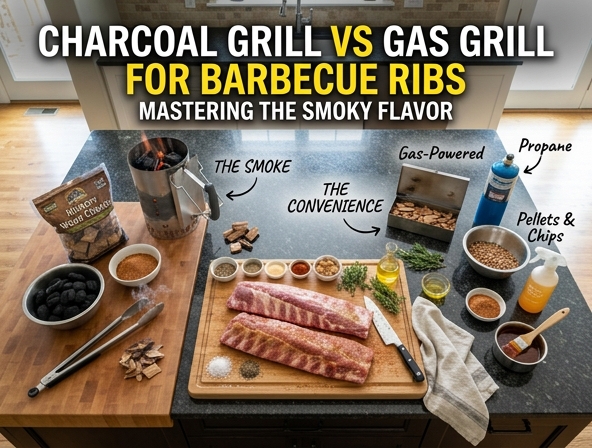
| Feature | Charcoal Grill | Gas Grill |
|---|---|---|
| Flavor Profile | Rich, authentic smoky flavor (especially with hickory). | Subtle; lacks traditional wood-fire complexity. |
| Convenience | Low; requires patience and manual effort. | High; offers quick startup and ease of use. |
| Heat Control | Requires active management. | Highly precise and stable. |
| Resulting Bark | Authentic, competition-style bark. | Consistent, tender, but less pronounced bark. |
Charcoal Grill vs Gas Grill for Barbecue Ribs: Mastering the Smoky Flavor
For the dedicated barbecue enthusiast, the rack of ribs is the ultimate litmus test. It is a dish that balances chemistry, patience, and intuition. Whether you are aiming for that perfect "pull-off-the-bone" tenderness or a slight, satisfying bite, the equipment you choose acts as the foundation of your craft. The debate between charcoal and gas is as old as the backyard barbecue itself, and when it comes to ribs, each side brings a radically different approach to flavor, texture, and the all-important smoke profile.
The Charcoal Grill: The Purist's Crucible
There is an undeniable romance associated with the charcoal grill. For many, barbecue is not just about the finished product; it is about the ritual-the pouring of the briquettes, the careful arrangement of the fire, and the precise management of airflow. When cooking ribs on charcoal, you are not merely applying heat; you are engaging in a traditional, multi-sensory cooking experience.
The Flavor Profile
Charcoal excels in providing the authentic, complex flavor profile that defines classic barbecue. When fat drips onto hot coals, it creates a savory steam that infuses the meat with a signature aroma that gas grills struggle to replicate. Furthermore, charcoal grills allow for the easy integration of wood chunks-hickory, oak, apple, or cherry-which smolder directly over the heat source. This produces a consistent, dense smoke that permeates the collagen-rich structure of pork ribs over several hours, resulting in that coveted "smoke ring."
The Learning Curve
The trade-off for this depth of flavor is complexity. Managing a charcoal fire requires constant vigilance. You must master the art of the "two-zone" fire-placing your ribs over indirect heat to ensure they cook through without burning the exterior. You are constantly adjusting vents to maintain a steady temperature of 225°F to 250°F. For the beginner, this can lead to fluctuations that result in unevenly cooked meat. However, for the pitmaster, this level of engagement is precisely the reward.
The Gas Grill: Precision and Convenience
Often maligned by purists, the gas grill is a powerhouse of efficiency. In the modern world, where time is a luxury, the ability to turn a knob and reach a stable temperature in minutes is a significant advantage. If you want to master ribs but lack the three-hour window required to light and babysit a charcoal fire, gas is your best friend.
Consistency is Key
Ribs are notoriously temperamental. A temperature spike can toughen the meat, while a dip can stall the process for hours. Gas grills offer precise temperature control. By manipulating individual burners, you can create a perfectly stable indirect heat environment that stays locked at your target temperature for as long as needed. This consistency allows the cook to focus on the rub, the mop, and the timing of the "3-2-1" method rather than worrying about fuel management.
Creating Smoke on a Gas Grill
The primary critique of gas grilling is the lack of smoke. However, this is easily remedied with a smoke box or a simple DIY wood chip packet. By wrapping wood chips in heavy-duty aluminum foil and poking a few holes in the top, you can create a concentrated source of smoke on your grates. While it may not be as robust as a charcoal bed, a well-executed wood packet can produce enough high-quality smoke to give your ribs that professional, mahogany-colored finish.
Techniques for Mastering Smoky Ribs
Regardless of your choice of fuel, the key to great ribs lies in the technique. The following methods apply to both charcoal and gas aficionados:
- The 3-2-1 Method: This is the gold standard for beginners. Smoke the ribs uncovered for 3 hours, wrap them in foil (with a splash of apple juice or cider vinegar) for 2 hours to tenderize, and finish them unwrapped for 1 hour with your favorite sauce to set the glaze.
- Managing Moisture: Use a water pan in your grill regardless of the fuel type. This keeps the environment humid, preventing the ribs from drying out during the long cook time and helping smoke particles adhere to the meat surface.
- Temperature Discipline: Aim for that "low and slow" window of 225°F to 250°F. Anything hotter will render the fat too quickly; anything cooler will result in a prolonged cook that dries out the meat.
- The Rub and Rest: Apply a dry rub at least an hour before cooking to allow flavors to penetrate. Once the ribs are finished, always let them rest for at least 15 minutes. This allows the juices to redistribute, ensuring every bite is succulent.
The Verdict: Which Should You Choose?
If your goal is to immerse yourself in the culinary heritage of barbecue and you prioritize that deep, layered, wood-fired flavor, the charcoal grill is the superior choice. It turns a meal into an event and forces you to develop the instincts that separate casual grillers from true pitmasters.
If you value consistency, ease of use, and the ability to turn out world-class ribs on a busy weeknight, the gas grill is an incredibly capable tool. With the right technique-using high-quality rubs, wood packets, and a disciplined approach to indirect heat-you can produce ribs that stand up to any charcoal-cooked contender.
Ultimately, the "mastery" of ribs is not found in the grill itself, but in the hands of the person operating it. Whether you are breathing in the aroma of hardwood smoke from a charcoal chimney or monitoring the clean, steady heat of a gas manifold, the result should be the same: tender, flavorful meat that brings friends and family to the table. Choose the method that allows you to cook with confidence, and the smoky perfection will follow.
Disclaimer:
The information provided on Eateryn is for general educational and informational purposes only and is not intended as medical, nutritional, or healthcare advice. It should not be used to diagnose, treat, cure, or prevent any disease or medical condition.
Always consult a qualified physician, registered dietitian, or other certified healthcare professional before making changes to your diet, exercise routine, or lifestyle, or regarding any medical questions or concerns you may have. Never disregard or delay seeking professional medical advice because of something you have read on this website.