
Ceramic vs Metal Pans for Apple Pie - Heat Conductivity and Crust Coloration
Struggling with consistently pale or soggy bottom crusts is a frequent obstacle for bakers seeking a professional finish. While culinary conventions often default to ceramic or glass, successful execution hinges on understanding material density. Mastering thermal conductivity grants you total control over the Maillard reaction. Stipulation: Ceramic retains heat for gentle baking, whereas anodized aluminum accelerates conductivity for a crisp, darkened base. This guide evaluates how your choice of pan fundamentally dictates the structural integrity and golden coloration of your pie.
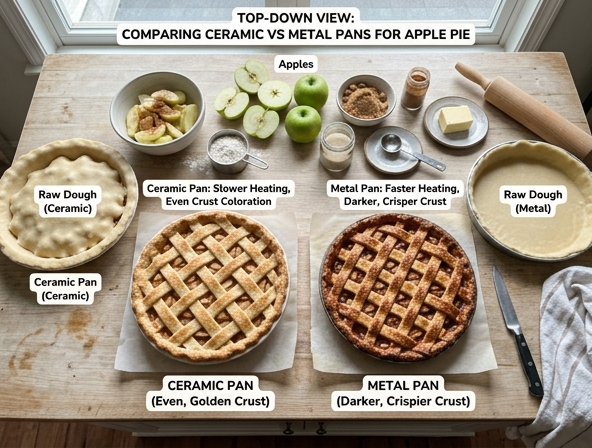
| Pan Material | Thermal Properties | Effect on Crust |
|---|---|---|
| Ceramic / Glass | Retains heat; provides gentle, even baking. | Best for slow cooking; higher risk of pale or soggy bottom crusts. |
| Anodized Aluminum | High thermal conductivity; accelerates heat transfer. | Promotes a strong Maillard reaction; ideal for achieving a crisp, golden-brown base. |
The Science of the Bake: Choosing Between Ceramic and Metal for Your Apple Pie
In the culinary world, few debates are as persistent as the choice of vessel for baking the quintessential apple pie. While home cooks often focus on the quality of the Granny Smith apples, the spice blend, or the architecture of the lattice top, the pan itself is arguably the most influential variable in the equation. When choosing between ceramic and metal, you are not merely picking an aesthetic-you are choosing how thermal energy interacts with your pastry and filling.
The Physics of Heat Transfer: Conductivity vs. Thermal Mass
To understand why a pie turns out differently in a heavy ceramic dish versus a thin metal tin, one must look at the physics of heat transfer. Metals-particularly aluminum and aluminized steel-possess high thermal conductivity. This means they are highly efficient at moving heat from the oven's atmosphere directly into the dough. When a metal pan enters a hot oven, it begins to heat up almost immediately, creating an aggressive sear on the bottom crust.
Ceramic, by contrast, is a thermal insulator. It has high thermal mass, meaning it takes a considerable amount of energy to warm up. Once it does get hot, however, it stays hot. Ceramic acts as a thermal buffer, smoothing out the fluctuations of an oven's heat. While a metal pan reacts instantly to the environment, a ceramic pan provides a slow, steady, and gentle climb in temperature.
Metal Pans: The Professional's Choice for Crispness
For those obsessed with a perfectly crisp, deeply browned bottom crust, metal is almost always the superior choice. Because metal conducts heat so rapidly, it triggers the Maillard reaction-the chemical process responsible for browning and flavor development-at the very point where the dough touches the pan surface. This is critical for apple pies, which contain high amounts of moisture and sugar. The faster the bottom crust sets and browns, the less time there is for the apple juices to soak into the dough, preventing the dreaded "soggy bottom."
Dark-colored metal pans, such as those with non-stick coatings, go a step further. Dark surfaces absorb radiant heat more efficiently than shiny surfaces, often resulting in a darker, toastier crust. However, bakers must exercise caution; with dark metal, the risk of over-browning the edges before the center of the pie is fully set is significantly higher. Using a pie shield or a ring of aluminum foil around the edges during the final stage of baking is a standard remedy for this.
Ceramic Pans: The Aesthetic and Steady Performer
Ceramic dishes offer a different set of advantages, primarily centered around consistency and presentation. Because ceramic heats slowly, it prevents the edges of the crust from scorching before the heart of the pie has achieved its necessary temperature. If your apple pie recipe calls for a particularly long bake time to ensure the apples reach the right consistency, ceramic is an excellent companion. It protects the integrity of the pastry over the duration of a longer stint in the oven.
Furthermore, ceramic pie dishes are often designed to go directly from the oven to the dining table. They hold heat effectively, ensuring that the pie stays warm for second helpings. For many, the visual appeal of a fluted ceramic dish is part of the tradition of home-baked comfort food. However, the trade-off is the potential for a softer crust. Because ceramic does not "sear" the dough, the bottom crust is more susceptible to absorbing the syrupy juices of the pie, leading to a softer, more delicate base rather than a crunchy one.
The Apple Pie Dilemma: Managing Moisture
The specific nature of an apple pie adds a layer of complexity to this choice. Apples release a massive amount of water as they break down. When combined with sugar, this creates a potent, acidic syrup that acts as a solvent for flour. If the bottom crust is not protected or if the pan doesn't supply enough heat to set the flour proteins quickly, the liquid will migrate into the dough.
If you prefer a ceramic dish but still want a crisp crust, professional bakers suggest a few "hacks":
- Preheating the Pan: Place your empty ceramic dish on a preheated pizza stone or baking steel in the oven. This artificially boosts the thermal mass of the ceramic, allowing it to start the browning process the moment the dough touches the surface.
- Blind Baking: Partially bake the bottom crust with pie weights before adding the filling. This sets the structure of the dough, making it far more resistant to moisture migration.
- The Egg Wash Barrier: Brushing the bottom crust with a light layer of egg white before adding the filling creates a thin, protein-based seal that helps prevent liquids from seeping into the raw dough.
Verdict: Choosing Your Tool
The "best" pan depends entirely on your definition of a perfect apple pie:
Choose Metal if: You prioritize a shatteringly crisp bottom crust, you are baking in a conventional oven where you want to minimize bake times, or you are a perfectionist regarding even, golden-brown coloration. It is the workhorse of the kitchen and the best safeguard against the sogginess inherent in high-moisture fruit pies.
Choose Ceramic if: You value the aesthetic presentation of the pie, you prefer a softer, more tender crust, or you are baking a pie that requires a long, slow bake to ensure the filling is cooked through without burning the exterior. It is an excellent choice for a leisurely dessert where the pie is served directly from the dish.
Ultimately, the pan is an extension of the baker's intent. By understanding the conductivity of your metal pans and the thermal retention of your ceramic dishes, you gain control over the two most important elements of a great pie: texture and temperature. Whether you aim for the sharp snap of a metal-baked crust or the warm, home-spun elegance of a ceramic-baked slice, the right choice ensures that your apple pie is not just a dish, but a triumph of engineering.
Disclaimer:
The information provided on Eateryn is for general educational and informational purposes only and is not intended as medical, nutritional, or healthcare advice. It should not be used to diagnose, treat, cure, or prevent any disease or medical condition.
Always consult a qualified physician, registered dietitian, or other certified healthcare professional before making changes to your diet, exercise routine, or lifestyle, or regarding any medical questions or concerns you may have. Never disregard or delay seeking professional medical advice because of something you have read on this website.