
Celery vs Carrots for Clam Chowder - Examining Vegetable Integration Choices
Celery vs. Carrots for Clam Chowder
Many home cooks struggle to balance aromatics in clam chowder, debating the inclusion of celery versus carrots. While standard culinary norms often rely on traditional mirepoix, professional kitchens frequently adjust these ratios. Selecting the optimal profile enhances the broth's briny integrity. Stipulation: Analysis assumes a cream-based foundation. Examples range from traditional New England styles, prioritizing onion and potato, to modern iterations utilizing carrot sweetness. This guide evaluates how each choice dictates flavor complexity and texture.
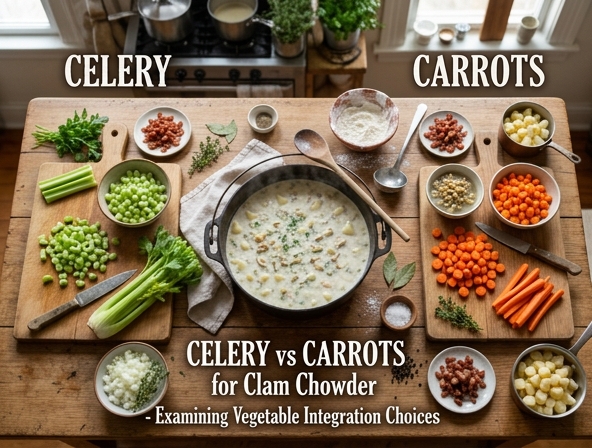
| Feature | Celery | Carrots |
|---|---|---|
| Flavor Profile | Earthy and savory; highlights the natural brininess of the clams. | Adds a subtle sweetness that balances the richness of a cream base. |
| Culinary Tradition | Standard component of traditional mirepoix for chowders. | Modern addition used to evolve traditional flavor profiles. |
| Impact on Dish | Maintains the integrity of classic New England style recipes. | Introduces complexity and visual contrast to the soup. |
| Strategic Use | Best for those seeking a crisp, classic aromatic foundation. | Best for cooks looking to experiment with sweetness and color. |
Celery vs. Carrots for Clam Chowder: Examining Vegetable Integration Choices
In the expansive and often contentious world of soup-making, few dishes hold as much cultural weight as clam chowder. Whether you are a purist defending the snowy, cream-laden peaks of New England or a devotee to the tomato-tinted tang of the Manhattan variety, the foundation of your chowder-its aromatic base-is the secret to its success. Among the ingredients frequently debated by home cooks and professional chefs alike, the inclusion of celery versus carrots stands out as a fundamental fork in the culinary road.
The Mirepoix Legacy and the Role of Aromatics
To understand the clam chowder debate, we must first acknowledge the French mirepoix: that classic trifecta of onions, carrots, and celery that serves as the bedrock for countless stocks, sauces, and stews. In the context of clam chowder, however, this holy trinity is often dismantled. The clams themselves provide an aggressive, briny salinity that requires a delicate hand when selecting secondary vegetables. The goal is to provide depth without overshadowing the oceanic sweetness of the bivalves.
The Case for Celery: The "Green" Anchor
Celery is, by most traditional standards, the "correct" choice for a classic New England Clam Chowder. Its primary contribution is not necessarily a bold flavor, but rather a structural freshness. Celery possesses a distinct, peppery bitterness and a high water content that helps bridge the gap between the heavy cream (or milk) and the salinity of the clams.
- Flavor Interaction: The subtle earthiness of celery cuts through the richness of heavy cream. It acts as a palate cleanser within the spoon, preventing the soup from feeling "one-note" or overly fatty.
- Textural Harmony: When finely diced (a technique known as brunoise), celery maintains a slight, crisp snap even after simmering. This textural contrast against the soft potato and tender clam is vital for a well-rounded mouthfeel.
- Tradition: Historically, New England recipes prioritized ingredients that were readily available and provided aromatics without altering the color of the final product. Celery's pale green hue preserves the desired porcelain aesthetic of a creamy chowder.
The Case for Carrots: The Sweetness Counterpoint
While often excluded from the strictest traditional recipes, carrots have found a significant home in Manhattan-style chowders and modern reinterpretations. Carrots introduce a natural, candy-like sweetness that interacts differently with the soup's components.
- The Sugar-Salt Dynamic: Carrots contain natural sugars that caramelize slightly during the initial sauté. This sweetness provides a necessary counterpoint to the sharp, briny kick of the clams, rounding out the flavor profile.
- The Visual Appeal: In Manhattan clam chowder, where the base is tomato-forward, carrots blend seamlessly into the reddish hue. They add vibrant color and visual interest that makes a bowl of soup look hearty and farmhouse-fresh.
- Complexity: For those who find traditional chowder too monochromatic, the addition of carrots introduces a subtle earthy depth that makes the dish feel like a complete meal rather than just a seafood starter.
The Scientific Interaction: Chemistry in the Pot
When choosing between these two, consider the interaction between the vegetables and your primary cooking fat. If using bacon or salt pork-a common starting point for chowder-the rendered fat acts as a flavor vehicle. Celery absorbs this fat, becoming a tender, savory vessel that "pops" when bitten. Carrots, due to their denser cellular structure, tend to retain their structural integrity for longer periods, providing a more substantive chew.
Furthermore, consider the salt levels. Clams are naturally high in sodium. Celery, which also has a naturally high sodium content compared to other vegetables, can push a soup toward "over-salted" territory if the chef is not careful. Carrots, being lower in sodium and higher in carbohydrates, can actually help buffer a chowder that is trending toward the too-salty side.
The Verdict: When to Use Which?
The choice between celery and carrots ultimately depends on your stylistic goals for the dish:
Choose Celery If:
You are crafting a traditional, creamy New England chowder. You want the clams to be the star, and you prioritize a "clean" finish that highlights the delicate, sweet nature of the seafood. It is the sophisticated choice for those who value tradition and textural contrast without added sweetness.
Choose Carrots If:
You are making a Manhattan-style or a "garden-style" chowder. If you find standard cream-based chowder too heavy or one-dimensional, the brightness of the carrot is your best friend. It is also an excellent addition for chowders that incorporate other root vegetables like parsnips or sweet potatoes, creating a more complex, harvest-focused soup.
The Compromise: The "Chef's Approach"
If you find yourself torn, consider the ratio. A "secret" used by many professional kitchens is to use a 3:1 ratio in favor of celery, or to use carrots strictly for the initial flavor base (finely diced and cooked down until almost dissolved) while keeping celery as the visible, textural element. By sautéing the carrots until they are soft and then adding the celery halfway through the process, you can achieve the sweetness of the former and the structural integrity of the latter.
Ultimately, the clam chowder is a dish defined by its locality and the preferences of those eating it. Whether you lean into the crisp, green bite of celery or the earthy, golden sweetness of the carrot, the key remains the same: treat your aromatics with respect. Dice them finely, sauté them patiently in quality fat, and let them serve their ultimate purpose-enhancing, rather than masking, the glorious flavor of the sea.
Disclaimer:
The information provided on Eateryn is for general educational and informational purposes only and is not intended as medical, nutritional, or healthcare advice. It should not be used to diagnose, treat, cure, or prevent any disease or medical condition.
Always consult a qualified physician, registered dietitian, or other certified healthcare professional before making changes to your diet, exercise routine, or lifestyle, or regarding any medical questions or concerns you may have. Never disregard or delay seeking professional medical advice because of something you have read on this website.