
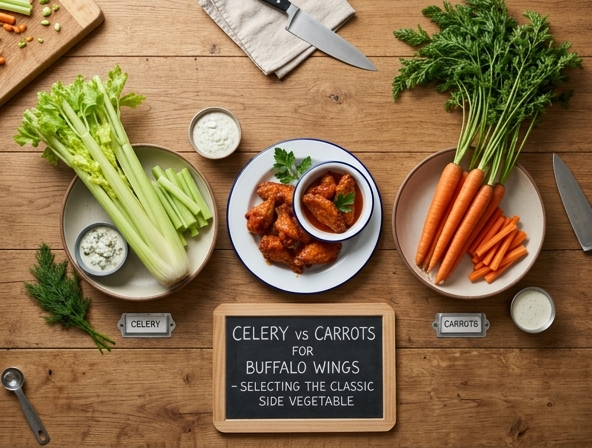
Celery Vs Carrots For Buffalo Wings - Selecting The Classic Side Vegetable
Selecting the ideal accompaniment for Buffalo wings is a common culinary dilemma. While ranch and blue cheese are the industry standard, the vegetable pairing often feels overlooked. Celery grants a refreshing, hydrating crunch, whereas carrots offer a subtle sweetness that effectively tempers intense capsaicin heat. Note that both are acceptable provided they prioritize garden-fresh crispness, a hallmark of classic establishments like Anchor Bar. This guide explores the distinct textures and nutritional benefits of each to elevate your serving.
| Vegetable | Key Characteristic | Primary Culinary Benefit |
|---|---|---|
| Celery | Refreshing and hydrating | Provides a satisfying, crisp crunch to balance the meal. |
| Carrots | Subtle sweetness | Acts as an effective palate cleanser to temper intense capsaicin heat. |
| Note: Regardless of choice, prioritizing garden-fresh crispness is the hallmark of a high-quality wing establishment. | ||
Celery Vs. Carrots For Buffalo Wings: Selecting The Classic Side Vegetable
In the culinary landscape of American comfort food, few pairings are as iconic as a basket of steaming, vinegar-drenched Buffalo wings alongside a handful of crisp, cool vegetables. This humble duo-celery sticks and carrot coins-has become the gold standard, a mandatory accompaniment that feels as essential to the experience as the Frank's RedHot sauce itself. But have you ever stopped to consider why these two specific vegetables hold such a tight monopoly on our poultry-heavy nights? And more importantly, if you were forced to choose only one, which should you reach for first?
The Historical Necessity: Why These Two?
To understand the rivalry, we must look to the birthplace of the Buffalo wing: The Anchor Bar in Buffalo, New York. In 1964, Teressa Bellissimo served the first batch of deep-fried, sauce-tossed wings to her son and his friends. According to local lore, the wings were served with celery and blue cheese dressing simply because that was what she had on hand. Celery was an inexpensive, crunchy vegetable that could be bought in bulk and required minimal preparation. The carrot, being another staple of the "mirepoix" triumvirate-the holy trinity of vegetables used in soups and stocks-was readily available in any commercial kitchen. It wasn't a calculated choice based on gourmet profile; it was a matter of logistics. Yet, over the decades, this logistical convenience morphed into a ritual.
The Case for Celery: The Ultimate Palate Cleanser
For purists, celery is the undisputed king of the Buffalo wing plate. From a culinary perspective, celery's primary attribute is its water content. Composed of approximately 95% water, celery acts as a physiological palate cleanser. When you are consuming wings tossed in a sauce heavy with cayenne, vinegar, and butter, the capsaicin builds up on the tongue with every bite. The mild, watery fiber of a crisp celery stick effectively "rinses" the palate, neutralizing the spice and cooling the mouth just enough for you to dive back into the basket.
Furthermore, celery provides a textural contrast that is arguably superior to carrots. The "snap" of a celery stalk is unmistakable. It breaks cleanly, offering a fibrous crunch that provides a much-needed break from the tender, fatty texture of chicken skin. When paired with a thick, pungent blue cheese dressing, the celery acts as a sturdy, edible spoon, designed to carry the maximum amount of dip to your mouth without breaking under the weight.
The Case for Carrots: The Sweet, Crunchy Alternative
On the other side of the aisle, the carrot offers a profile that celery simply cannot touch: sweetness. While celery is earthy and neutral, carrots bring a subtle, natural sugar to the plate. In the heat of a spicy wing, this sweetness provides a sophisticated counterpoint to the salt and acid of the Buffalo sauce. Many diners find that the vegetal sweetness of a raw carrot complements the savory notes of the chicken more effectively than the slightly bitter, herbaceous quality of celery.
Carrots are also more structurally dense. If you are a fan of heavy dipping, a carrot coin is less likely to collapse. It's a denser crunch that lasts longer on the tongue, allowing you to savor the interaction between the cold, creamy dressing and the earthy vegetable. For many, the carrot is the "reward" at the bottom of the basket-the slightly sweet finish to an otherwise intense, spicy meal.
The Science of the Duo: Why Not Choose?
There is a biological reason why we have come to expect both. Nutritionists and culinary scientists often point to the "cooling effect" provided by high-fiber vegetables paired with spicy foods. Capsaicin, the compound that makes chili peppers hot, is oil-soluble, not water-soluble. However, the sheer moisture content of these vegetables helps to hydrate the mouth, providing a sensory distraction from the burn. By providing two different vegetables, the plate creates a "flavor fatigue" buffer. If the celery starts to feel too bitter, the carrot brings in sweetness. If the carrot feels too sweet, the celery brings in a refreshing, watery crispness. They are not merely garnishes; they are tools of sensory management.
Modern Trends and the "Sacred Duo"
In recent years, some trendy gastro-pubs have begun experimenting with replacements for the classic side. Pickled cucumber spears, jicama, and even slices of radish have made appearances on wing platters. While these additions offer a bright, acidic punch, they rarely achieve the same level of satisfaction as the original duo. Why? Because the celery-carrot pairing has become a subconscious trigger. When we see that specific arrangement, our brains signal that it is time to indulge. It is a Pavlovian response built on decades of sports bars, Super Bowl parties, and Friday night takeout.
The Verdict: A Matter of Strategy
So, which is superior? If you are a fan of the heat and want a constant reset for your tongue, the celery is your best ally. Its high-water content is built for the marathon-the long, spicy session of working through a dozen wings. If you are looking for balance, texture, and a sweeter finish to cut through the heavy salt of the buffalo sauce, the carrot is the winner.
Ultimately, the beauty of the Buffalo wing basket is that you never actually have to choose. The magic of the pairing is the interaction between the two. The celery provides the cooling, the carrot provides the sweet, and the blue cheese or ranch provides the bridge. Whether you are a "celery-first" strategist or a "save the carrots for last" purist, the next time you order a basket, take a moment to appreciate the science behind these humble side vegetables. They are the unsung heroes that make the spice not only tolerable but truly enjoyable.
Disclaimer:
The information provided on Eateryn is for general educational and informational purposes only and is not intended as medical, nutritional, or healthcare advice. It should not be used to diagnose, treat, cure, or prevent any disease or medical condition.
Always consult a qualified physician, registered dietitian, or other certified healthcare professional before making changes to your diet, exercise routine, or lifestyle, or regarding any medical questions or concerns you may have. Never disregard or delay seeking professional medical advice because of something you have read on this website.