
Cayenne Pepper Vs Habanero For Buffalo Wings - Balancing Heat Levels For Maximum Enjoyment
Many home cooks struggle to achieve the perfect balance of heat and flavor in buffalo wings. While standard cayenne blends are common, achieving professional nuance often requires precise ingredient selection. Mastering these distinct capsicum profiles unlocks superior culinary control.
Stipulation: Perceived heat varies by individual tolerance. For example, cayenne provides familiar, approachable warmth, while habanero offers fruity complexity. The following guide evaluates how to calibrate these specific peppers to elevate your wing preparation.
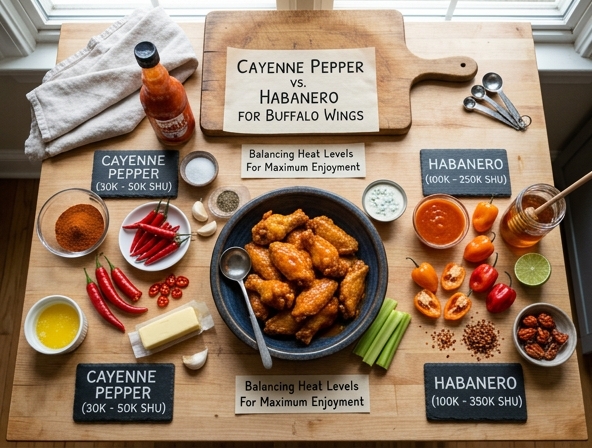
| Feature | Cayenne Pepper | Habanero Pepper |
|---|---|---|
| Heat Level | Moderate; approachable and familiar warmth. | Higher intensity; sharper and more potent. |
| Flavor Profile | Classic, savory, and neutral. | Distinct, fruity, and complex. |
| Culinary Goal | Provides a reliable, standard buffalo heat. | Adds professional nuance and flavor depth. |
| Best For | Traditionalists seeking consistent, steady heat. | Cooks looking to elevate wings with unique character. |
Cayenne Pepper Vs Habanero For Buffalo Wings: Balancing Heat Levels For Maximum Enjoyment
The pursuit of the perfect Buffalo wing is, for many, a lifelong culinary obsession. It is a delicate equilibrium: a sauce that must possess enough acidity to cut through the richness of fried skin, enough viscosity to cling to the meat, and-most importantly-the precise level of heat to stimulate the palate without numbing it into submission. While the culinary world is awash with exotic pepper varieties, the battle for the crown of "best wing sauce" usually comes down to two titans: the classic Cayenne and the vibrant, aggressive Habanero.
The Classic Foundation: Understanding Cayenne Pepper
To understand the Buffalo wing, one must pay homage to the Cayenne pepper. If you have ever ordered a standard order of "Hot" wings at a sports bar, you have likely encountered the distinct, sharp signature of the Cayenne. Typically registering between 30,000 and 50,000 Scoville Heat Units (SHU), the Cayenne is the backbone of the traditional Buffalo sauce-the kind popularized by the legendary Frank's RedHot.
The beauty of the Cayenne lies in its accessibility. It offers a "front-loaded" heat that hits the tongue quickly, dissipates relatively fast, and pairs beautifully with the tangy bite of distilled white vinegar. It doesn't try to mask the flavor of the chicken or the butter; instead, it enhances them. For those who want the quintessential Buffalo experience-a manageable, creeping warmth that complements a cold beer and some blue cheese dressing-Cayenne remains the gold standard.
The Modern Challenger: Embracing the Habanero
Enter the Habanero. While the Cayenne is the comfortable, familiar choice, the Habanero is the wild child. Sitting significantly higher on the heat scale, typically ranging from 100,000 to 350,000 SHU, it introduces a level of intensity that separates the casual snacker from the "heat-seeker."
However, characterizing the Habanero solely by its heat is a disservice to its flavor profile. Unlike the dry, peppery nature of the Cayenne, the Habanero is inherently fruity, floral, and almost citrusy. When blended into a wing sauce, it adds an incredible depth of flavor that can transform a mundane chicken wing into a complex, gourmet experience. The challenge, of course, is the "burn." Habanero heat is lingering and cumulative. It tends to travel to the back of the throat, building with every wing until you realize you've bitten off more than you can chew.
The Art of the Balancing Act
If you are looking to elevate your homemade sauce, the secret isn't necessarily choosing one over the other-it's about balancing them to suit your target audience. If you are cooking for a crowd, a pure Habanero sauce can be polarizing. A pure Cayenne sauce, while safe, can feel a bit predictable. The solution is a strategic blend.
1. The "Gateway" Fusion
A great way to introduce Habanero heat to a traditional crowd is to use a 75/25 ratio of Cayenne-based sauce to fresh or fermented Habanero mash. The Cayenne provides the base volume and the familiar vinegar-forward profile, while the Habanero adds a "high note" of floral fruitiness and a sharper, more modern sting.
2. Managing the Emulsion
No matter which pepper you choose, the heat must be tempered by fat. Buffalo sauce is essentially an emulsion of pepper sauce and butter. The fat in the butter encapsulates the capsaicin molecules, which helps to coat the tongue and provide a slight barrier against the immediate spike of the heat. If you are using Habaneros, don't be afraid to up your butter ratio. Adding a tablespoon of heavy cream or even a touch of honey can bridge the gap between the sharpness of the pepper and the savory chicken skin.
3. The Role of Acid and Sweetness
Habaneros shine when paired with sweet elements. If you decide to go heavy on the Habanero, consider adding apricot preserves, mango nectar, or even a touch of agave syrup to your sauce. The sweetness counteracts the intense capsaicin sting, making the wings not just spicy, but "deliciously spicy." Cayenne, conversely, prefers the brightness of cider vinegar or a splash of lime juice to keep the flavors punchy.
Which Should You Choose?
Ultimately, the choice depends on the "vibe" of your meal.
- Choose Cayenne if: You are hosting a casual gathering, pairing with plenty of beer, and want to stick to the classic Buffalo wing experience. It is consistent, crowd-pleasing, and allows for the wing itself to remain the star of the show.
- Choose Habanero if: You are looking to impress adventurous eaters or creating a "signature" wing sauce that demands attention. Use it when you want the heat to be a featured character rather than just a background element.
Final Thoughts on Maximum Enjoyment
The perfect Buffalo wing isn't just about how much pain you can withstand-it's about the narrative of the flavor. A well-balanced sauce starts with a bright, acidic punch, transitions into a savory, buttery middle, and finishes with a heat that invites the next bite rather than forcing you to reach for a glass of milk.
Don't be afraid to experiment. Start with a classic Cayenne base and add one minced, de-seeded Habanero. Taste, adjust, and add another if you dare. By treating these peppers as tools in your culinary arsenal rather than opposing forces, you can achieve a level of balance that makes the store-bought bottles pale in comparison. After all, the best Buffalo wing is the one that keeps you coming back, one sticky, spicy bite at a time.
Disclaimer:
The information provided on Eateryn is for general educational and informational purposes only and is not intended as medical, nutritional, or healthcare advice. It should not be used to diagnose, treat, cure, or prevent any disease or medical condition.
Always consult a qualified physician, registered dietitian, or other certified healthcare professional before making changes to your diet, exercise routine, or lifestyle, or regarding any medical questions or concerns you may have. Never disregard or delay seeking professional medical advice because of something you have read on this website.