
Cast Iron Vs. Open Flame For Burger - Professional Cooking Styles
Achieving the perfect burger crust often feels inconsistent for culinary professionals. While open-flame gas grilling is the standard industry method, shifting to cast iron offers distinct advantages. Mastering these thermodynamics grants you unparalleled control over texture and flavor development. Stipulation: success requires diligent heat management to avoid overcooking the center. Consider the intense Maillard reaction of a seasoned flat-top versus the complex smoky infusion of charcoal. This guide explores both techniques to elevate your burger preparation.
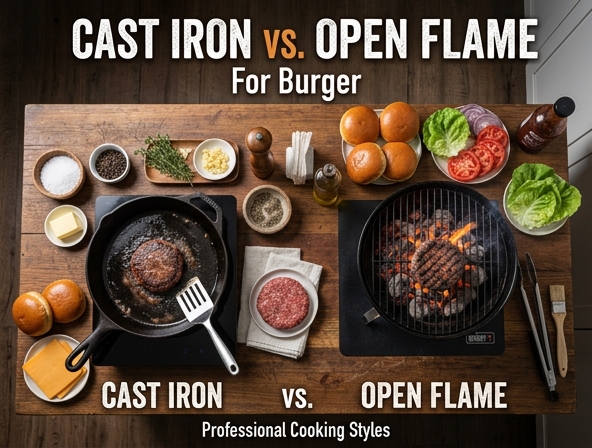
| Cooking Method | Key Characteristics | Primary Benefit | Professional Consideration |
|---|---|---|---|
| Cast Iron / Flat-Top | Surface-to-surface heat transfer | Intense Maillard reaction for superior crust | Provides unparalleled control over texture and flavor |
| Open Flame (Gas/Charcoal) | Direct exposure to thermal radiation | Signature smoky infusion (especially with charcoal) | Industry standard; requires high skill to avoid overcooking the center |
The Great Debate: Cast Iron versus Open Flame in Professional Burger Craft
The quest for the "perfect" burger is a culinary obsession that transcends simple home cooking. It is a debate that has divided backyard grill masters and Michelin-starred chefs alike: is the superior burger born from the intense, direct heat of an open flame, or the relentless, uniform sear of a heavy-duty cast iron skillet? To understand the answer, we must move beyond personal preference and look at the physics of heat transfer, the chemistry of the Maillard reaction, and the fundamental behavior of rendered beef fat.
The Cast Iron Philosophy: The Science of the Crust
Professional chefs who prefer cast iron often cite one primary objective: the Maillard reaction. This chemical reaction between amino acids and reducing sugars is what gives browned food its distinctive flavor. When you place a high-fat ground beef patty onto a preheated, heavy cast iron pan, the metal acts as a massive thermal battery. Unlike a grill grate, which only contacts a small percentage of the patty's surface, a flat cast iron surface provides 100% contact area.
The "Pan-Sear" Advantage:
- Total Searing: Because the entire surface of the patty is in contact with the hot iron, you achieve a continuous, mahogany-colored crust that acts as a flavorful seal.
- Self-Basting: As the fat renders, the burger essentially fries in its own juices. This allows for a level of moisture retention that is difficult to replicate over an open flame, where rendering fat drips away into the fire.
- Temperature Control: Cast iron allows for precise heat management. You can maintain a steady temperature that develops a deep crust without burning the exterior before the center reaches your desired doneness.
The Open Flame Philosophy: The Essence of Smoke
While the cast iron approach prioritizes crust and texture, the open flame approach prioritizes the aromatic complexity of wood or charcoal smoke. When beef fat hits white-hot coals, it vaporizes, sending smoke back up to coat the meat. This is a flavor profile that no skillet can replicate-a savory, rustic "char" that speaks to the primal nature of cooking.
The "Grill Master" Advantage:
- Vaporized Flavor: The flare-ups caused by dripping fat are not just a nuisance; they are a flavor engine. The combustion of these fats creates carbon-based aromatic compounds that cling to the burger.
- Texture Contrast: The "grill marks" provide a subtle textural variance, alternating between the slight crunch of charred protein and the tender, smoky interior.
- The "Clean" Finish: Because much of the fat renders off and drips into the coals, grilled burgers often feel lighter on the palate compared to their pan-seared counterparts, which retain more of the rendered fat within the patty.
Structural Integrity: Which Method for Which Burger?
Not all burgers are created equal, and professional chefs choose their tools based on the specific composition of the meat. If you are preparing a thin, loose-packed "smash burger," cast iron is non-negotiable. The high-heat surface is required to instantly sear the patty into a crispy, lacy-edged disc before it has a chance to fall apart. Without the flat surface of a skillet, a smash burger would simply crumble into the fire.
Conversely, for a thick, steakhouse-style burger-perhaps one with a high-quality blend of brisket, short rib, and chuck-the grill is often preferred. A thicker patty requires a longer cook time, and the indirect heat management of a grill allows you to bring the center to a perfect medium-rare while the exterior develops that characteristic fire-kissed flavor.
Professional Trade-offs and Best Practices
The biggest challenge in the cast iron versus grill debate is the issue of moisture loss. Many home cooks make the mistake of pressing down on a burger while it's on the grill; this is a cardinal sin that forces the "liquid gold" (the rendered fat and juice) into the flames, resulting in a dry, hockey-puck burger. On a cast iron skillet, however, the juices stay with the meat, keeping it succulent.
To master the cast iron method, professional chefs recommend using a high-smoke-point oil (like avocado or grapeseed) and ensuring the skillet is smoking hot before the meat hits it. For the grill, the secret lies in the heat zones: maintain a "hot side" for the initial sear and a "cool side" for finishing the cook, ensuring the internal temperature is reached without charring the outside to bitterness.
The Verdict: It's About the Intended Experience
If you are looking for the ultimate "diner-style" burger-one with a crust so deep and flavorful it stands up to American cheese and special sauce-cast iron is the clear winner. It is the scientific choice for texture and richness.
However, if your goal is the quintessential "backyard BBQ" experience, where the flavor profile is dominated by the woody, smoky perfume of charred beef, the open flame remains king. It is the sensory choice for depth and nostalgia.
Ultimately, the professional chef doesn't choose one over the other based on bias, but rather based on the end result they wish to achieve. The best approach for the home cook? Master both. Use your cast iron for the crispy, indulgent comfort of a smash burger on a Tuesday night, and save the grill for the thick, juicy, smoky patties that define a weekend celebration. By understanding the physics of your equipment, you turn cooking from a chore into a precise, delicious craft.
Disclaimer:
The information provided on Eateryn is for general educational and informational purposes only and is not intended as medical, nutritional, or healthcare advice. It should not be used to diagnose, treat, cure, or prevent any disease or medical condition.
Always consult a qualified physician, registered dietitian, or other certified healthcare professional before making changes to your diet, exercise routine, or lifestyle, or regarding any medical questions or concerns you may have. Never disregard or delay seeking professional medical advice because of something you have read on this website.