
Cast Iron vs Nonstick Skillet for Grilled Cheese Sandwich - Optimizing Even Heat Distribution
Struggling with charred edges while the cheese remains stubbornly cold is a common frustration for home cooks. While standard techniques-like precise heat control and fat selection-are crucial, the pan's material is the true catalyst for success. Mastering thermal mass ensures a flawless, golden-brown crust without internal compromise. However, while cast iron excels in heat retention, nonstick offers unmatched convenience. This analysis compares these two tools to determine which best optimizes even heat distribution for your ideal sandwich.
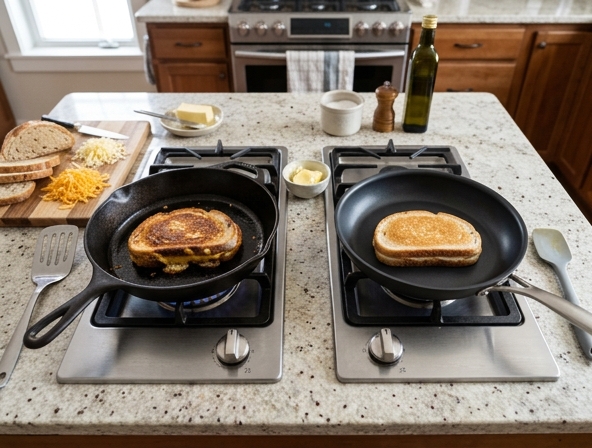
| Comparison Factor | Cast Iron Skillet | Nonstick Skillet |
|---|---|---|
| Core Strength | High thermal mass for superior heat retention | Unmatched convenience and ease of use |
| Heat Distribution | Excellent for consistent, even browning | Heats up quickly; functional but less uniform |
| Resulting Crust | Flawless, golden-brown finish | Variable; may require more careful heat management |
| Primary Benefit | Best for achieving professional-level crust | Best for quick meals and effortless cleanup |
The Ultimate Grilled Cheese Showdown: Cast Iron vs. Nonstick for the Perfect Crust
The grilled cheese sandwich is a masterclass in culinary simplicity. With only three primary components-bread, cheese, and fat-there is nowhere for poor technique to hide. While the quality of your ingredients is paramount, the vessel you choose to grill your sandwich in is arguably the most critical variable in achieving that elusive, golden-brown exterior and perfectly molten interior. When debating the merits of a cast iron skillet versus a nonstick pan, we aren't just talking about cleanup-we are talking about the physics of heat distribution, thermal mass, and the chemistry of the Maillard reaction.
The Cast Iron Advantage: Thermal Mass and Crust Development
Cast iron is the traditionalist's choice, and for good reason. The primary benefit of cast iron is its sheer thermal mass. Because cast iron is a dense material, it holds onto heat remarkably well. Once a cast iron skillet reaches your desired cooking temperature, it acts as a heat battery, resisting the temperature drop that occurs the moment you place a room-temperature (or refrigerator-cold) sandwich into the pan.
This stability is vital for achieving a deep, mahogany crust. To get the perfect grilled cheese, you need to initiate the Maillard reaction-the chemical reaction between amino acids and reducing sugars that gives browned food its distinctive flavor. Cast iron provides the consistent, high-heat environment necessary to brown the bread quickly without drying out the interior. Furthermore, a well-seasoned cast iron skillet develops a natural, nonstick patina over time. While it lacks the "slickness" of a factory-made nonstick coating, it offers a textured surface that can help distribute butter evenly across the bread's surface, resulting in a more complex, crispier texture.
However, cast iron requires patience. It takes longer to preheat, and because it is slow to respond to changes in stove settings, it can be unforgiving. If your heat is too high, the bread may scorch before the cheese has had a chance to melt-a classic grilled cheese catastrophe.
The Nonstick Precision: Uniformity and Low-Maintenance Cooking
In contrast, the modern nonstick skillet (typically made of aluminum with a PTFE or ceramic coating) offers a completely different set of performance characteristics. Nonstick pans are usually thinner and conduct heat much faster than cast iron. This makes them incredibly responsive; if you notice your crust darkening too quickly, a quick adjustment of the burner dial results in an almost immediate change in pan temperature.
For those who prefer a "low and slow" approach to grilled cheese, nonstick is a formidable ally. By maintaining a gentle, consistent heat, you can ensure that the cheese reaches a perfectly gooey, stretchable state before the bread reaches its limit. The uniform heat distribution of aluminum-based nonstick pans ensures that there are no "hot spots" that might lead to an unevenly browned sandwich.
The obvious advantage here is the release. You can use significantly less fat-butter or mayonnaise-than you would in a cast iron skillet, and the sandwich will still glide across the surface. This is perfect for those who want a lighter sandwich or are working with delicate bread that might stick to the microscopic pores of a less-perfectly seasoned iron pan.
The Physics of Heat Distribution: Why It Matters
To optimize your grilled cheese, you must understand how your chosen metal handles heat. Cast iron is a relatively poor conductor compared to aluminum, meaning it doesn't move heat from the flame to the bread rapidly. Instead, it "soaks" the heat up. This prevents localized scorching. When you place a sandwich in a nonstick pan, you are relying on the pan's ability to distribute heat across its thin base. If your burner is smaller than the pan, you will inevitably have an outer ring of raw bread and a center of burnt bread.
The "Sweet Spot" for your grilled cheese is a pan that maintains a steady temperature of roughly 350°F (175°C). Cast iron makes reaching this temperature easier to maintain for multiple sandwiches in a row, whereas a nonstick pan will lose heat faster, requiring you to wait a minute or two between batches to allow the pan to recover its thermal energy.
Pro-Tips for Mastery
1. The Fat Choice: Butter vs. Mayonnaise
Whether you choose cast iron or nonstick, the fat matters. While butter provides the classic flavor, mayonnaise has a higher smoke point and contains egg proteins that contribute to a superior, even browning. If you are struggling with burning on cast iron, try a thin layer of mayonnaise instead.
2. The Lid Technique
Regardless of the pan material, if your cheese isn't melting fast enough, place a lid over the skillet for the last 60 seconds of cooking. This traps ambient steam, creating a mini-oven effect that accelerates the melting process without further browning the bread.
3. The Pre-Heat Ritual
Never start a grilled cheese in a cold pan. For cast iron, preheat on medium-low for at least five to seven minutes. For nonstick, two minutes is sufficient. The sizzle you hear when the bread hits the pan is the sound of success; it indicates that the surface temperature is high enough to begin the browning process immediately, preventing the bread from soaking up excess grease.
Final Verdict: Which Should You Choose?
If you are looking for the "restaurant-quality" grilled cheese-one with a shatteringly crisp, deep-brown crust and a rich, toasted flavor-cast iron is the winner. Its ability to retain heat and create a robust crust is unmatched, provided you have the patience to manage the temperature.
If your priority is convenience, uniform browning, or if you are preparing grilled cheese for a group and need to crank them out quickly without constant monitoring, a high-quality nonstick skillet is the superior tool. It offers the precision and forgiveness that allows for a consistently perfect, albeit slightly less "rustic," sandwich every time.
Ultimately, the best tool is the one you are most comfortable controlling. Master your heat source, respect the fat, and you will find that both materials are more than capable of elevating your grilled cheese from a simple snack to a comfort food masterpiece.
Disclaimer:
The information provided on Eateryn is for general educational and informational purposes only and is not intended as medical, nutritional, or healthcare advice. It should not be used to diagnose, treat, cure, or prevent any disease or medical condition.
Always consult a qualified physician, registered dietitian, or other certified healthcare professional before making changes to your diet, exercise routine, or lifestyle, or regarding any medical questions or concerns you may have. Never disregard or delay seeking professional medical advice because of something you have read on this website.