
Cast Iron vs Glass Dish for Macaroni and Cheese - Analyzing Heat Distribution
Cast Iron vs. Glass Dish for Macaroni and Cheese
Achieving a perfectly crisp crust on macaroni and cheese without drying the center is a common challenge. While standard glass dishes are the culinary default, they often fail to provide consistent thermal intensity. Transitioning to cast iron offers unparalleled thermal mass, promoting superior browning and even heat distribution. Note, however, that iron demands precise temperature control to avoid overcooking. Whether using a seasoned skillet for a classic sear or glass for a gentle bake, this analysis clarifies your best choice.
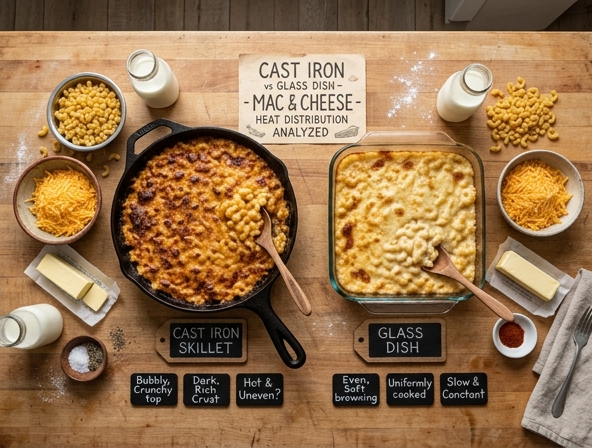
| Feature | Cast Iron Skillet | Glass Dish |
|---|---|---|
| Thermal Mass | High (retains and distributes heat effectively) | Low (gentler, less intense heat) |
| Browning/Crust | Superior; achieves a perfectly crisp crust | Moderate; offers a softer, more traditional bake |
| Heat Distribution | Even and intense | Consistent but less thermal intensity |
| Ease of Use | Requires precise temperature control | Standard; easy for gentle baking |
| Ideal For | Those seeking a deep sear and crispy edges | Those preferring a gentle, standard bake |
The Great Vessel Debate: Cast Iron vs. Glass for Macaroni and Cheese
Macaroni and cheese is more than just a dish; for many, it is the ultimate culinary comfort. Yet, beyond the choice of cheese blend, the ratio of milk to roux, or the specific noodle shape, there exists a fundamental equipment choice that alters the very physics of your final product: the baking vessel. When choosing between the rustic, heavy-duty utility of a cast iron skillet and the transparent, clinical elegance of a glass baking dish, you are not merely choosing a container-you are choosing a thermal environment that will dictate the texture, crust, and flavor profile of your meal.
The Physics of Heat Distribution
To understand why your mac and cheese turns out differently in these two vessels, we must look at thermal conductivity. Cast iron is a metal alloy with high thermal conductivity. It excels at taking heat from the oven and transferring it rapidly and evenly throughout the entire body of the pan. Because iron has high thermal mass, once it gets hot, it stays hot, providing a consistent, radiant heat that permeates the pasta from all sides.
Glass, conversely, is an insulator. While borosilicate glass is designed to withstand thermal shock, it is objectively poor at conducting heat compared to metal. When placed in a 375°F oven, a glass dish takes significantly longer to reach the target temperature. It doesn't "conduct" the heat so much as it "accumulates" it. Once it is hot, however, glass retains that heat for a remarkable amount of time. This difference in behavior creates distinct culinary outcomes.
The Cast Iron Experience: The Maillard Powerhouse
The primary argument for using cast iron for macaroni and cheese is the pursuit of the perfect crust. Because cast iron is a high-conductor, the edges of the pan become searingly hot much faster than the center. This creates a distinct, golden-brown ring of crispy pasta-a textural contrast that many mac and cheese aficionados consider the "holy grail."
Furthermore, cast iron allows for a seamless transition from stovetop to oven. You can whisk your béchamel, fold in your sharp cheddar, and stir in your parboiled noodles all in the same pan before sliding it into the oven. This retains the emulsion of the sauce, preventing the pasta from cooling down too much before the baking process begins. The "seasoning" of a well-maintained cast iron skillet also imparts a subtle depth of flavor that is non-existent in glass, contributing to the rustic, heirloom quality of the dish.
However, cast iron is not without its pitfalls. If not properly seasoned, the acidity of certain cheese sauces (especially if you add mustard or wine to your base) can lead to a slightly metallic tang. Additionally, the extreme heat retention of cast iron means that if you aren't careful, the edges can progress from "crispy" to "burnt" quite rapidly. It requires a watchful eye.
The Glass Experience: The Window to Consistency
Glass dishes offer a different set of advantages, centered largely on visual feedback and chemical neutrality. Because glass is transparent, you can observe the "bubbling" of the sauce at the sides and the bottom of the dish. This allows you to judge exactly how much of the sauce has thickened and whether the pasta has reached the desired level of tenderness without disturbing the crust.
Chemically, glass is inert. It will never impart a metallic flavor to your dish, no matter how much sharp cheddar or acidic sharp-tasting ingredients you incorporate. For those who prioritize a creamy, uniform texture over a scorched-edge crust, glass is often the superior choice. Because it heats up slowly, it provides a gentle, gradual bake that keeps the cheese sauce fluid and luscious, rather than potentially splitting the fats which can happen in a scorching-hot iron skillet.
The downside of glass is its lack of "browning power." You will rarely achieve that deeply caramelized, crispy edge in a glass dish unless you crank the heat significantly or use the broiler, which risks drying out the center of the dish. Glass also requires a transfer: you must boil the pasta, make the sauce in a pot, and then pour it into the glass dish, meaning the pasta has more time to cool down and absorb excess moisture, potentially leading to a softer, more "mushy" consistency.
Comparative Analysis: Choosing Your Tool
To determine the right vessel for your specific recipe, consider the "Mac and Cheese Philosophy" you subscribe to:
- The Crispy Edges Enthusiast: If your goal is a deep, browned, crunch-heavy crust that contrasts sharply with a molten center, the cast iron skillet is your only choice. It is the vessel of the "stovetop-to-oven" method and rewards those who enjoy the complex, nutty flavors of Maillard-reacted cheese.
- The Creamy-Comfort Purist: If you are aiming for a classic, velvety, scoopable macaroni and cheese where the sauce is the star and the texture is consistent from edge to center, opt for the glass dish. It provides a steady, even heat that prevents the sauce from breaking or the edges from turning into tough crackers.
Conclusion: The Tactical Approach
Ultimately, the battle between cast iron and glass is not about which material is "better," but which is better suited to your specific culinary goal. If you are hosting a dinner party where you want to serve the mac and cheese directly in the pan for that rustic, home-cooked aesthetic, cast iron adds a dramatic, heavy presence to the table. If you are preparing a large batch for a potluck or a family meal where you want the dish to stay warm for a long period on the counter, the thermal mass of a large glass casserole dish is an undeniable benefit.
When in doubt, use your oven's broiler as an equalizer. If you prefer the ease and creaminess of the glass dish but crave a bit of that cast-iron crust, don't hesitate to finish your glass-baked mac and cheese under the broiler for the final two minutes. By understanding the thermodynamic properties of your cookware, you move from being a follower of recipes to a master of your own kitchen's physics.
Disclaimer:
The information provided on Eateryn is for general educational and informational purposes only and is not intended as medical, nutritional, or healthcare advice. It should not be used to diagnose, treat, cure, or prevent any disease or medical condition.
Always consult a qualified physician, registered dietitian, or other certified healthcare professional before making changes to your diet, exercise routine, or lifestyle, or regarding any medical questions or concerns you may have. Never disregard or delay seeking professional medical advice because of something you have read on this website.