
Cast Iron vs Baking Sheet for Pizza - Mastering the Crispy Bottom Crust
Struggling with a soggy bottom crust is the most common frustration for home pizza makers. While most rely on standard aluminum baking sheets, achieving professional-grade char requires superior thermal management. Leveraging a preheated cast iron skillet grants intense conductive heat, transforming simple dough into a crispy, pizzeria-quality foundation. While iron excels at searing, results depend heavily on proper technique. Below, we compare the thermal dynamics of a Lodge skillet against a standard Nordic Ware sheet to optimize your workflow.
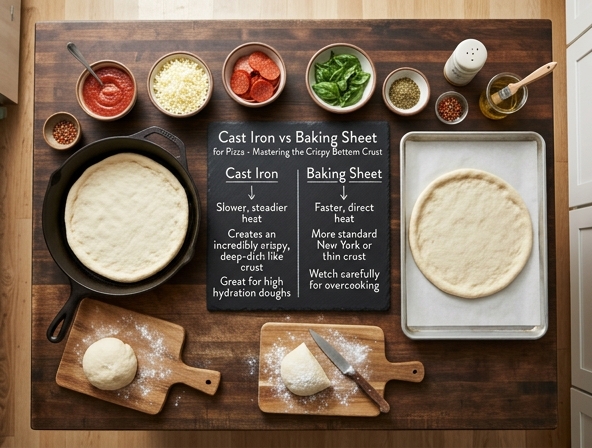
| Feature | Cast Iron Skillet | Baking Sheet |
|---|---|---|
| Heat Transfer | High; provides intense, conductive heat for searing. | Moderate; standard thermal distribution. |
| Crust Result | Pizzeria-quality, crispy, and well-charred. | Prone to a soggy bottom crust. |
| Technique | Requires careful preheating for optimal results. | Easier, standard baking workflow. |
| Best For | Achieving professional-grade crispy bottoms. | Convenient, casual home baking. |
The Great Pizza Debate: Cast Iron Skillet vs. The Humble Baking Sheet
There is a holy grail in home pizza making: that elusive, perfectly crispy bottom crust. We've all been there-excitedly pulling a homemade pizza from the oven, only to lift a slice and find the center limp, soggy, and sad. The battle for the ultimate crust is usually fought on the battlefield of hardware. Do you reach for the heavy-duty, heat-retaining cast iron skillet, or do you rely on the reliable, ubiquitous baking sheet? Both tools can produce a stellar pizza, but they operate on fundamentally different principles of thermodynamics and moisture management.
The Physics of a Crispy Crust
Before diving into the equipment, it is important to understand what makes a crust "crispy" rather than "chewy" or "soggy." A crispy bottom is the result of rapid heat transfer. When your dough hits a scorching hot surface, the water on the surface of the dough evaporates almost instantly, creating a structural crust that locks in the remaining moisture inside. If the surface isn't hot enough, or if the heat transfer is too slow, the dough simply absorbs the moisture from the sauce and toppings, resulting in that dreaded "soggy bottom."
The Cast Iron Skillet: The King of Thermal Mass
The cast iron skillet is the darling of the "pan pizza" movement. Its primary advantage is thermal mass. Once cast iron gets hot, it stays hot. It acts as a massive heat battery, delivering an intense blast of energy directly into the dough the moment it touches the pan.
Why it works:
- The Shallow Fry Effect: When you generously grease a cast iron skillet with olive oil or butter, you are essentially shallow-frying the outer layer of the dough. This creates an incredibly crispy, almost golden-brown finish that is impossible to replicate on a dry surface.
- Heat Retention: Because the metal is so thick, it doesn't lose its temperature when you place room-temperature dough into it. This keeps the initial rise (the "oven spring") aggressive and consistent.
The Downside: The limitations of cast iron are purely geometric. You are confined to the shape and size of your skillet, usually 10 to 12 inches. It's perfect for a thick, Chicago-style or Detroit-style deep dish, but if you are trying to feed a crowd or want that wide, foldable New York-style slice, the skillet falls short.
The Baking Sheet: The Versatile Workhorse
Don't underestimate the standard aluminum baking sheet (or rimmed sheet pan). While it lacks the heft of cast iron, it is a master of versatility. Many home cooks struggle with soggy sheet-pan pizzas because they fail to modify their technique. If you treat a baking sheet like a pizza stone, you can achieve remarkable results.
Techniques for Success:
- The Pre-Heat: Never start with a cold pan. Place your baking sheet in the oven while it pre-heats to the maximum temperature your oven allows. When you slide your dough onto the already-scorching metal, you simulate the deck-oven effect of a professional pizzeria.
- Rack Placement: Move your oven rack to the lowest position. This puts the dough in direct proximity to the heating element, ensuring the bottom cooks faster than the top.
- Par-baking: If you are nervous about a soggy center, roll out your dough and bake it by itself for 3–5 minutes before adding your sauce and toppings. This "locks in" the bottom crust.
The Advantage: The baking sheet allows for much more surface area. You can stretch dough to the edges, creating a thin, crisp crust that stretches across the entire rectangular footprint of the oven. It is the best choice for thin-crust lovers who crave that "snap" rather than a bready "crunch."
Comparison: Which One Should You Choose?
| Feature | Cast Iron | Baking Sheet |
|---|---|---|
| Crust Style | Thick, buttery, fried bottom | Thin, crispy, cracker-like |
| Ease of Use | Moderate (heavy, hard to turn) | Easy (light, manageable) |
| Best For | Pan Pizza / Deep Dish | Thin Crust / Party Pizzas |
Pro-Tips for Any Method
Regardless of the tool you choose, the secret to a crispy bottom often lies in the prep:
- Hydration Matters: While high-hydration doughs are trendy, a lower-hydration dough (around 60–65%) is generally easier to get crispy in a home oven.
- Dry Your Toppings: Excess moisture from fresh mozzarella or wet vegetables is the enemy of a crisp crust. Pat your ingredients dry with a paper towel before they go near the dough.
- The Oil Barrier: A light brush of olive oil on the bottom of your stretched dough before it hits the hot pan or sheet acts as an insulator, promoting browning and crisping rather than steaming.
- Don't Overload: We all love a loaded pizza, but too many toppings create a "moisture blanket" that traps steam. Keep your topping layers thin if you want that bottom to shatter when you bite into it.
The Verdict
The choice between cast iron and a baking sheet ultimately comes down to the style of pizza you crave. If you want a tall, airy, decadent crust with edges that are fried to a golden crisp, the cast iron skillet is non-negotiable. It provides a level of heat intensity that is difficult to match. However, if you are a fan of thin, crispy, tavern-style pizza-the kind where you can eat three slices without feeling weighed down-the baking sheet is your best friend.
Mastering these tools is less about owning expensive equipment and more about understanding how heat interacts with your dough. Experiment with rack positions, play with your oven's temperature, and don't be afraid to pre-heat your pans. Once you unlock the timing and the temperature, you'll find that the best pizza parlor in town is actually located right in your own kitchen.
Disclaimer:
The information provided on Eateryn is for general educational and informational purposes only and is not intended as medical, nutritional, or healthcare advice. It should not be used to diagnose, treat, cure, or prevent any disease or medical condition.
Always consult a qualified physician, registered dietitian, or other certified healthcare professional before making changes to your diet, exercise routine, or lifestyle, or regarding any medical questions or concerns you may have. Never disregard or delay seeking professional medical advice because of something you have read on this website.