
Buttermilk vs Brine for Fried Chicken - Which Creates A Crispier Crust
| Aspect | Summary Details |
|---|---|
| Objective | Achieving a professional-quality, crispy crust on fried chicken. |
| The Problem | Standard flour dredging often results in a texture that lacks the desired audible crunch. |
| Scientific Basis | The process relies on protein denaturation to improve the structure and texture of the crust. |
| Critical Success Factor | Precise oil temperature management is essential, regardless of the marination method used. |
| Expert Validation | Techniques supported by industry standards, such as those used by Hattie B's. |
| Core Comparison | Evaluation of buttermilk versus traditional brining for optimal crust development. |
The Great Fried Chicken Debate: Buttermilk vs. Brine
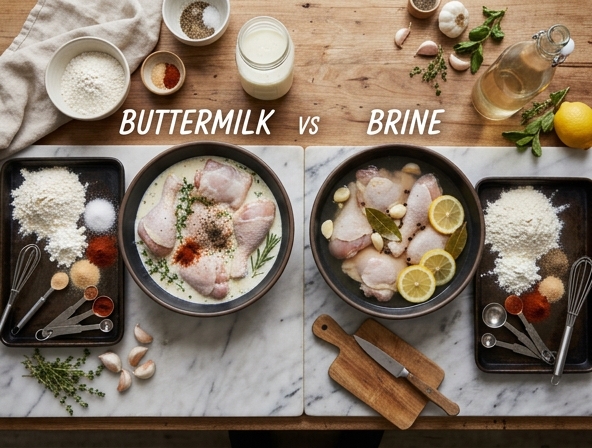
If you have ever embarked on the quest to replicate the perfect fried chicken at home-the kind with a golden, shattered-glass crust and meat so tender it pulls away with a gentle tug-you have inevitably encountered the great divide. Should you soak your bird in a salt-heavy brine, or should you indulge in the classic, tang-inducing buttermilk soak? Both methods are legendary, both are championed by professional chefs, and both offer distinct advantages. But when the primary objective is that elusive, long-lasting crunch, which technique truly reigns supreme?
The Science of the Brine: Mastering Moisture
To understand the brine, we must understand the chemistry of salt. A brine is essentially a solution of water and salt (sometimes with aromatics like peppercorns, garlic, or bay leaves) designed to submerge the chicken for several hours or even overnight. The mechanism at play is osmosis and protein denaturation.
When chicken sits in a salt brine, the salt ions penetrate the muscle fibers. This alters the structure of the proteins, allowing them to hold onto more water even as the bird undergoes the intense heat of the deep fryer. The result is a piece of fried chicken that is fundamentally "juicier." However, there is a catch: brined chicken introduces a significant amount of surface moisture. Unless you are meticulously diligent about drying the chicken before dredging it in flour, that excess water can lead to a crust that separates from the meat or becomes soggy prematurely.
The Case for Buttermilk: The Secret of Tang and Adhesion
If the brine is a masterclass in moisture retention, the buttermilk marinade is a masterclass in texture and flavor. Buttermilk is mildly acidic, containing lactic acid. This acidity acts as a gentle tenderizer, breaking down the tough proteins in the chicken much more effectively than a standard salt brine. But the real magic of buttermilk lies in its viscosity.
Buttermilk is thick. When you pull a piece of chicken from a buttermilk bath and drop it into your seasoned flour dredge, that thick, viscous liquid acts as an incredible glue. It traps more flour and spices on the surface of the skin, which-when fried-creates a thicker, craggier, more structurally sound crust. This "nooks and crannies" effect is exactly what many fried chicken enthusiasts associate with the best, most satisfying crunch.
The "Crispy" Factor: Busting the Myth
Now, let us address the core question: which creates a crispier crust? The honest answer is that neither a brine nor a buttermilk bath is, in itself, the primary driver of crispiness. Crispiness in fried chicken is a product of three variables: the moisture content of the surface, the heat of the oil, and the starch composition of the breading.
If your goal is absolute, rigid crispiness, the brine is technically superior for the meat, but it poses a risk to the crust. If you brine, you must ensure the exterior is bone-dry before coating. If you skip this, the steam generated by the surface moisture will fight the crust from the inside out, causing it to soften as it cools.
Buttermilk, on the other hand, creates a sturdier structure. The thickness of the coating it facilitates allows for a more robust crust that can withstand the steam release from the meat. If you want a crust that has high definition and a "shatter" quality, the buttermilk method provides the mechanical advantage needed to build that crust.
The Hybrid Approach: The Pro Chef's Secret
The best fried chicken is rarely the result of a single technique. If you want to achieve the best of both worlds, stop choosing between the two and start combining them.
Step 1: The Dry Brine
Forget the bucket of salt water. Dry brining-salting the chicken liberally and letting it sit in the refrigerator uncovered for 4 to 24 hours-achieves the same protein denaturation as a wet brine but without the excess moisture. The refrigerator's air will also help dry out the skin, which is exactly what we want for a crispy crust.
Step 2: The Buttermilk Quick-Dip
After the dry brine has done its work, move the chicken into a buttermilk soak for just 30 to 60 minutes before frying. This gives you the lactic acid tenderization and the "glue" for your breading without soaking the bird in unnecessary water for hours. This method ensures the meat is flavorful and juicy, while the surface remains perfectly prepared to accept a thick, crispy, and durable coating.
Final Verdict
If you are forced to choose one, choose based on your priorities:
- Choose Brining if: Your chicken is prone to drying out (e.g., using breast meat), and you have the time to properly air-dry the exterior before breading.
- Choose Buttermilk if: You are after that iconic, craggy, "Southern-style" crust that clings to the meat and holds up for longer periods after leaving the fryer.
However, for the pinnacle of fried chicken-the kind that creates a symphony of sound when you take the first bite-the dry-brine-plus-buttermilk-dip hybrid is the undisputed champion. It eliminates the moisture-related pitfalls of the wet brine while utilizing the structural adhesive properties of buttermilk, providing the perfect foundation for a crust that is as crispy as it is delicious.
Disclaimer:
The information provided on Eateryn is for general educational and informational purposes only and is not intended as medical, nutritional, or healthcare advice. It should not be used to diagnose, treat, cure, or prevent any disease or medical condition.
Always consult a qualified physician, registered dietitian, or other certified healthcare professional before making changes to your diet, exercise routine, or lifestyle, or regarding any medical questions or concerns you may have. Never disregard or delay seeking professional medical advice because of something you have read on this website.