
Buttermilk vs Almond Milk for Pancakes - The Texture Difference
Achieving a perfect, fluffy pancake texture remains a frequent culinary challenge. While many home recipes rely on standard dairy, this default often lacks the necessary structural depth. Understanding how your liquid base influences chemistry-specifically acidity and protein-transforms your batter from basic to exceptional. Buttermilk activates leavening agents for airy height, whereas almond milk yields a subtle, delicate crumb. We will now examine the specific technical differences that dictate your final pancake's texture and overall quality.
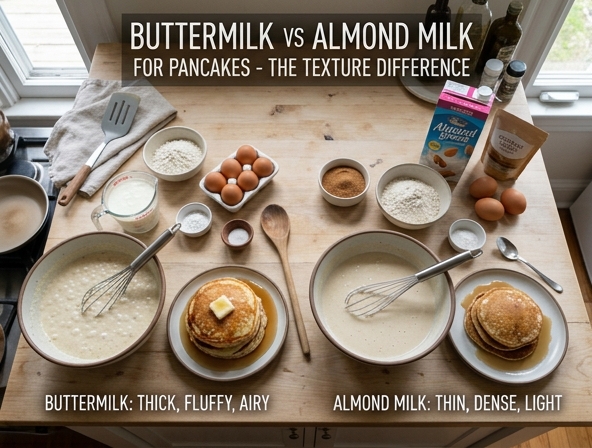
| Feature | Buttermilk | Almond Milk |
|---|---|---|
| Chemical Interaction | High acidity activates leavening agents. | Neutral base; lacks leavening-activating acidity. |
| Resulting Texture | Airy, fluffy, and provides structural depth. | Delicate, subtle, and light crumb. |
| Best Used For | High-rise, substantial pancakes. | Light, thinner, or delicate pancake styles. |
Buttermilk vs. Almond Milk for Pancakes: The Texture Difference
The pursuit of the perfect pancake is a culinary rite of passage. Whether you are a weekend brunch enthusiast or a weekday breakfast warrior, the foundation of your pancake-the liquid component-is arguably the most critical variable in the equation. While the classic choice has long been buttermilk, the rise of plant-based diets has brought almond milk to the forefront of many home kitchens. But how do these two liquids, so vastly different in their molecular makeup, affect the texture of your stack? To understand the difference, we must dive into the science of baking and the structural integrity of the pancake crumb.
The Science of Buttermilk: The Gold Standard for Fluffiness
Buttermilk is not merely a liquid for hydration; it is an active ingredient in the chemical leavening process. Historically, buttermilk was the liquid left over after churning butter, containing small amounts of butterfat and beneficial bacteria. Today, most commercial buttermilk is cultured, meaning it has been treated with lactic acid bacteria. This acidity is the "secret sauce" for the iconic pancake texture.
When you combine buttermilk with baking soda (sodium bicarbonate), a chemical reaction occurs. The acidity of the buttermilk reacts with the alkaline baking soda to produce carbon dioxide gas. This reaction begins the moment the batter is mixed and continues as it hits the hot griddle, creating thousands of tiny, microscopic bubbles within the batter. The result is a pancake with a light, airy, and open crumb-the hallmark of a "fluffy" pancake. Furthermore, the proteins in buttermilk help to tenderize the gluten in the flour, ensuring that even a thick, hearty pancake remains soft rather than chewy or tough.
The Almond Milk Challenge: Dealing with a Neutral Medium
Almond milk, by contrast, is a plant-based emulsion. It is essentially water mixed with finely ground almonds and, depending on the brand, various thickeners and emulsifiers. Unlike buttermilk, almond milk is generally neutral in pH. Because it lacks the natural lactic acid found in cultured dairy, it does not trigger a leavening reaction with baking soda on its own.
If you simply swap almond milk for buttermilk in a standard recipe, you will likely notice a significant shift in texture. The pancake will be thinner, denser, and less "bouncy." Without that initial aeration from the acid-base reaction, the batter relies entirely on baking powder (which contains its own acidic component) for rise. Consequently, the crumb is tighter, and the overall mouthfeel is more delicate-less of a cloud-like structure and more of a classic, flat crêpe-style pancake.
The Texture Showdown: Crumb, Crust, and Structure
The differences extend beyond the internal crumb. Let's look at the three pillars of pancake texture:
- Internal Crumb: Buttermilk provides a "cakey" interior. The gas bubbles created by the lactic acid create pockets of air that result in a soft, moist texture. Almond milk pancakes often result in a more uniform, fine-grained crumb that feels slightly more like a standard quick bread or even a pancake-crêpe hybrid.
- Structural Integrity: Buttermilk pancakes are structurally robust. They can hold their own against heavy toppings like maple syrup, butter, and fruit without becoming soggy. Almond milk pancakes are more fragile. Because they lack the density provided by milk proteins and fats, they can sometimes tear or lose their shape when flipping, especially if the batter hasn't been properly stabilized.
- The Crust: Here is a surprising detail: browning. Buttermilk contains natural milk sugars (lactose), which caramelize beautifully under heat. This results in a deep, golden-brown exterior. Almond milk, depending on the added sugars, may brown more slowly or unevenly. You might find yourself cooking them longer to achieve that aesthetic color, which risks drying out the interior.
Can You Bridge the Gap? Pro Tips for Success
If you prefer the health benefits or dietary necessity of almond milk but crave the texture of buttermilk, all is not lost. You can mimic the properties of buttermilk with a few simple adjustments:
1. The "Vegan Buttermilk" Hack: To create an acidic environment for your almond milk, add one tablespoon of apple cider vinegar or fresh lemon juice to one cup of almond milk. Let it sit for about five to ten minutes until it curdles slightly. This "soured" almond milk will react with the baking soda in your recipe, providing that much-needed lift and fluffiness.
2. Boost the Fat Content: Part of buttermilk's charm is the subtle fat content that coats the flour particles, preventing excessive gluten development and keeping things tender. Since almond milk is quite thin, consider adding an extra tablespoon of melted butter (or a plant-based alternative) or even a splash of Greek-style yogurt to the batter to add the richness that thin almond milk lacks.
3. Monitor Your Mixing: Because almond milk pancakes are more prone to becoming tough if over-mixed (due to the lack of tenderizing fats), it is vital to fold your dry ingredients into your wet ingredients until just combined. Leave a few lumps in the batter. This is true for both milk types, but it is a critical safeguard for the plant-based version.
Final Verdict: Which Should You Choose?
The choice between buttermilk and almond milk comes down to your priorities. If you are chasing the quintessential "diner-style" pancake-tall, fluffy, and pillowy-buttermilk remains the undefeated champion. The chemistry of lactic acid is difficult to replicate perfectly with any plant-based substitute.
However, if you are looking for a lighter, more modern pancake that serves as a canvas for flavorful toppings, or if you are catering to dietary restrictions, almond milk is a fantastic tool. By understanding that it lacks the acidic "leavening power" of buttermilk, you can compensate with simple kitchen chemistry. Adding an acid and a little extra fat allows you to enjoy the best of both worlds: the plant-based preference of your choosing and the satisfying, fluffy texture of a true breakfast masterpiece.
Ultimately, the perfect pancake is the one that makes your morning feel special. Experiment with both, notice the microscopic differences in the crumb, and adjust your techniques to master the chemistry of the griddle.
Disclaimer:
The information provided on Eateryn is for general educational and informational purposes only and is not intended as medical, nutritional, or healthcare advice. It should not be used to diagnose, treat, cure, or prevent any disease or medical condition.
Always consult a qualified physician, registered dietitian, or other certified healthcare professional before making changes to your diet, exercise routine, or lifestyle, or regarding any medical questions or concerns you may have. Never disregard or delay seeking professional medical advice because of something you have read on this website.