
Buttered Vs. Toasted Bun For Burger - Essential Finishing Touches
A soggy bun often compromises an otherwise perfect burger. While many practitioners default to standard griddling, the choice between buttering and dry toasting remains a critical technical decision. Achieving an optimal seal creates a barrier against juices, ensuring structural integrity.
Note that heat control is essential; excessive heat yields bitterness. Whether handling airy brioche or robust sesame rolls, the texture must remain firm yet supple. Below, we examine the nuanced effects of these finishing techniques.
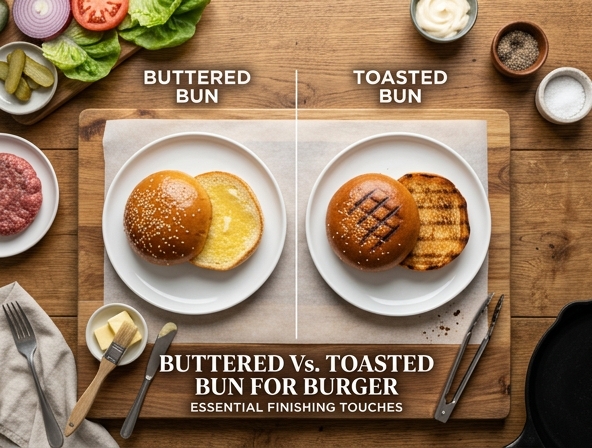
| Finishing Technique | Primary Purpose | Key Considerations |
|---|---|---|
| Buttered Toasting | Creates a rich, protective moisture barrier against burger juices. | Requires precise heat control to avoid bitterness from burnt butter. |
| Dry Toasting | Reinforces structural integrity and prevents sogginess without added fat. | Essential to avoid over-toasting, which compromises the "firm yet supple" texture. |
| Goal: Proper preparation ensures the bun remains firm, preventing the burger from becoming soggy regardless of bread type (brioche, sesame, etc.). | ||
Buttered vs. Toasted: Mastering the Foundation of the Perfect Burger
When we discuss the anatomy of the perfect burger, our focus frequently drifts toward the quality of the beef blend, the melting point of the cheese, or the acidity of the pickles. However, there is an often-overlooked hero-or villain-that determines the structural integrity and sensory experience of the final product: the bun. A burger is only as good as the vessel that holds it, and the debate between buttering and toasting is one of the most essential culinary decisions a home cook or chef can make. This isn't just about heat; it's about flavor, texture, and the critical science of moisture control.
The Case for Buttered Buns: A Symphony of Richness
Buttering a bun is less about simply "adding fat" and more about engineering a flavor profile. When you spread a thin layer of high-quality unsalted butter onto the cut surface of a bun and sear it in a hot cast-iron skillet, you are initiating the Maillard reaction. This chemical reaction between amino acids and reducing sugars creates a depth of flavor that is both nutty and deeply savory.
Beyond the flavor, butter acts as a vital barrier. A well-buttered bun effectively creates a hydrophobic layer. By searing the cut face of the bun until it turns a deep, golden brown, you are essentially "toasting" the porosity of the bread. This prevents the juices from the burger patty, the rendered fat, and the acidity of your condiments from seeping into the crumb of the bread, which would otherwise lead to the dreaded "soggy bottom."
Furthermore, the butter adds a luxurious mouthfeel. As you take that first bite, the richness of the buttered crust provides an immediate sensory reward, bridging the gap between the savory, salty protein and the soft, neutral dough of the bun.
The Case for Toasted Buns: The Pursuit of Structural Integrity
While butter is about flavor, dry toasting is often about structure. There are instances-such as with a heavy, double-patty smash burger or a burger piled high with coleslaw and chili-where you need the bun to act as a resilient scaffolding. Dry toasting the bun on a hot griddle draws out excess moisture from the surface of the bread, effectively hardening the interior crumb.
A dry-toasted bun offers a distinct, audible crunch. This textural contrast is essential in a dish that can otherwise become monotonous in its softness. If the meat is juicy and the cheese is melted, a crunch provided by the bun breaks up the repetitive chewing motion, making the meal feel more dynamic. It creates a "snap" that tells your brain the burger is fresh and carefully prepared.
However, the danger of dry toasting is the loss of moisture. Without the fat of the butter to keep the bread supple, an overly toasted bun can become dry and crumbly, turning into a scratchy distraction rather than a harmonious component of the sandwich.
The Best of Both Worlds: The Hybrid Technique
The secret to professional-grade burgers isn't choosing between buttered or toasted; it is finding the perfect balance of both. To achieve this, many chefs utilize a "hard sear" method. By using a small amount of clarified butter or high-smoke-point oil (like grapeseed or avocado) on a searing-hot flat top, you get the flavor and moisture-barrier benefits of butter combined with the structural crunch of a toasted surface.
The goal is a surface that is deep mahogany in color but still maintains a soft, pillowy interior. This ensures that the bun holds its shape against the weight of the patty and the drip of the sauce, yet remains delicate enough that it doesn't fight against the meat during the bite.
Expert Tips for Bun Perfection
- Know your Bun: A brioche bun is high in sugar and fat, meaning it will burn faster than a neutral potato bun or a sturdy Kaiser roll. Watch it like a hawk.
- Don't Over-Crowd: Only toast as many buns as you can fit comfortably on your pan. If you crowd them, they will steam rather than sear, resulting in a rubbery texture rather than a crisp one.
- The "Lipid Barrier" Rule: If you are serving a "juicy" burger with lots of tomato or sauce, prioritize the butter-sear to seal the pores of the bread. If you are serving a dry-style burger, you can afford to be lighter on the fat.
- Heat Management: Use medium-high heat. You want to toast the surface quickly before the heat penetrates too deeply, which would make the entire bun soft and soggy.
Conclusion: The Finishing Touch
In the hierarchy of burger preparation, the treatment of the bun is the final statement. It is the first thing your hand touches and the first thing your tongue encounters. Whether you prefer the deep, buttery decadence of a pan-seared brioche or the clean, crisp structural integrity of a dry-toasted sesame bun, the technique you choose should be intentional.
Ultimately, a burger is a complex assembly of ingredients, but its success relies on the synergy of its parts. By treating the bun as more than just a holder-by toasting it with precision and adding that essential kiss of fat-you elevate a standard backyard meal into a curated culinary experience. When the bun is perfect, the burger is transformed from a collection of ingredients into a unified, unforgettable bite.
Disclaimer:
The information provided on Eateryn is for general educational and informational purposes only and is not intended as medical, nutritional, or healthcare advice. It should not be used to diagnose, treat, cure, or prevent any disease or medical condition.
Always consult a qualified physician, registered dietitian, or other certified healthcare professional before making changes to your diet, exercise routine, or lifestyle, or regarding any medical questions or concerns you may have. Never disregard or delay seeking professional medical advice because of something you have read on this website.