
Butter vs Olive Oil for Clam Chowder - Assessing The Impact Of Fat Sources
Many chefs struggle to balance richness and clarity when crafting the perfect clam chowder. Traditionally, recipes oscillate between dairy-heavy butter and versatile olive oil. Choosing the right medium elevates your dish from standard to signature. While personal preference dictates your base, technical execution remains non-negotiable; for instance, butter provides the necessary emulsion for cream bases, whereas olive oil suits lighter, broth-forward variations. This analysis explores how these distinct fat sources fundamentally impact emulsification, mouthfeel, and final flavor profiles.
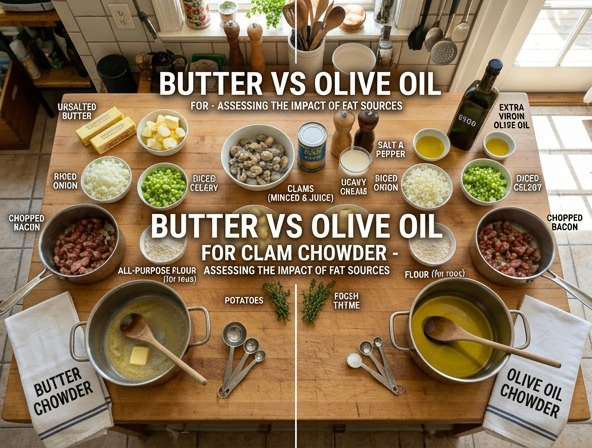
| Fat Source | Best Application | Key Characteristic | Impact on Chowder |
|---|---|---|---|
| Butter | Cream-based chowders | Dairy-heavy richness | Provides essential emulsification and deep, decadent mouthfeel. |
| Olive Oil | Broth-forward chowders | Versatile and lighter | Maintains clarity and suits recipes requiring a lighter flavor profile. |
Butter vs. Olive Oil for Clam Chowder: Assessing The Impact Of Fat Sources
In the pantheon of comfort foods, few dishes command as much reverence-or spark as much debate-as clam chowder. Whether you are a purist loyal to the creamy, potato-laden New England style, an aficionado of the tomato-based Manhattan variety, or a fan of the translucent, brine-forward Rhode Island clear broth, the foundation of your chowder begins long before the first clam hits the pot. It begins with the fat.
Choosing between butter and olive oil is more than a simple matter of pantry availability; it is a fundamental decision that dictates the mouthfeel, flavor profile, and emulsification structure of your finished soup. To understand the impact of these two distinct fats, we must examine how they interact with aromatics, thicken agents, and the delicate salinity of the shellfish itself.
The Case for Butter: The Traditionalist's Foundation
Butter has long been the gold standard for creamy chowders. When you begin a New England clam chowder by sweating onions, celery, and garlic in butter, you are engaging in a culinary process that defines the dish's identity. Butter is not merely a cooking medium; it is a flavor enhancer composed of approximately 80-82% milk fat, 16-18% water, and 1-2% milk solids.
The magic happens when those milk solids begin to toast. As the butter melts and foams, the sugars and proteins in the milk solids undergo the Maillard reaction, producing a subtle, nutty complexity that permeates the aromatics. This browned butter note provides an earthy, rich backdrop that perfectly complements the briny sweetness of the clams.
Furthermore, butter is the essential partner to flour when creating a roux. The saturated fats in butter stabilize the starch, preventing it from clumping and ensuring that the final chowder reaches that characteristic "velvet" consistency. Because butter remains relatively solid at room temperature, it provides a "fullness" on the palate, coating the tongue and prolonging the flavor of the cream and clam nectar.
The Case for Olive Oil: The Modernist's Alternative
Olive oil, particularly high-quality extra virgin olive oil, introduces a completely different architecture to a chowder. While butter is undeniably rich, olive oil is bright, grassy, and inherently lighter. For those looking to create a chowder that emphasizes the purity of the seafood-perhaps a Rhode Island-style broth or a modern, vegetable-forward variation-olive oil can be a revelation.
When used as the primary fat, olive oil prevents the chowder from becoming overly heavy or cloying. The polyphenols and fatty acids in olive oil provide a "peppery" or "fruity" finish that cuts through the starchiness of potatoes. In a clear-broth chowder, butter can sometimes leave a waxy film that masks the subtle notes of the clam liquor; olive oil, by contrast, integrates into the broth without clouding the flavor profile or leaving an opaque residue.
Health-conscious cooks also gravitate toward olive oil for its unsaturated fat profile. While chowder is rarely considered "diet food," replacing a portion or all of the saturated fat found in butter with olive oil results in a heartier, more Mediterranean-inspired soup. However, one must be careful: the smoke point of extra virgin olive oil is lower than that of refined fats. When sweating your aromatics, the heat must be carefully managed to avoid burning the delicate fruity notes of the oil.
Assessing the Impact: A Comparative Analysis
1. Mouthfeel and Viscosity
If your primary goal is a luxurious, thick chowder, butter is indispensable. The emulsification of cream, clam juice, and butter fat creates a stable suspension that feels substantial. Olive oil, being a liquid fat, creates a "slicker" mouthfeel. While this feels clean on the palate, it can occasionally lead to a separation in creamy chowders if the emulsion isn't handled with precise temperature control.
2. Flavor Volatility
Fat acts as a carrier for aromatics. Butter's milky, dairy-rich flavor profile works in concert with cream and thyme, effectively masking any "fishiness" that might exist in sub-par clams. Olive oil acts as a flavor sharpener. It highlights the salinity and the mineral qualities of the clams, making it an excellent choice for freshly harvested, high-quality shellfish.
3. Visual Appeal
The impact on appearance is significant. Butter lends a soft, pearlescent sheen to a creamy chowder. Olive oil, especially if it has a deep green hue, can slightly tint your broth. In a stark white New England chowder, this might look unconventional, but in a clear or tomato-based chowder, it adds a polished, restaurant-quality luster to the surface of the bowl.
The Verdict: When to Use Which?
The choice between butter and olive oil ultimately depends on the specific character you want your chowder to express.
- Choose Butter If: You are preparing a classic, thick, creamy New England clam chowder. You want that nostalgic, decadent comfort, and you are using a roux-based thickening method.
- Choose Olive Oil If: You are preparing a clear broth, a Manhattan style, or a modern chowder that emphasizes fresh herbs, lemon zest, and the natural salinity of the clams. It is also the superior choice for those who find traditional creamy chowders too heavy.
- The "Hybrid" Approach: For the best of both worlds, many professional chefs use a 50/50 split. The butter provides the necessary base for the roux and the nutty depth of flavor, while the olive oil prevents the soup from feeling overly dense and adds a bright, clean finish to the aromatics.
As you stand over your pot, consider the origin of your ingredients. Clams from the cold, turbulent waters of the North Atlantic often pair beautifully with the deep richness of butter. Conversely, if you are incorporating Mediterranean ingredients-like roasted red peppers, fennel, or saffron-the grassy notes of a robust olive oil will elevate the dish beyond traditional confines.
Ultimately, the "best" fat is the one that achieves the balance you seek. Whether it is the golden, creamy indulgence of the traditionalist or the light, nuanced elegance of the modernist, your choice of fat is the silent partner to your clams-choose it with the same care you apply to the harvest itself.
Disclaimer:
The information provided on Eateryn is for general educational and informational purposes only and is not intended as medical, nutritional, or healthcare advice. It should not be used to diagnose, treat, cure, or prevent any disease or medical condition.
Always consult a qualified physician, registered dietitian, or other certified healthcare professional before making changes to your diet, exercise routine, or lifestyle, or regarding any medical questions or concerns you may have. Never disregard or delay seeking professional medical advice because of something you have read on this website.