
Butter vs Mayonnaise for Grilled Cheese Sandwich - Achieving The Perfect Golden Crust
Perfecting Your Grilled Cheese Crust
Achieving a consistent, golden crust on a grilled cheese often leads to scorched bread or uneven browning. While butter is the traditional choice, its milk solids frequently char under high heat. Mayonnaise offers a superior smoke point, ensuring an even, crisp sear via the Maillard reaction. Please note that this substitution imparts a subtle tang compared to butter's richness. Using stable emulsions like Hellmann's yields professional-grade results. This guide evaluates both fats to optimize your sandwich quality.
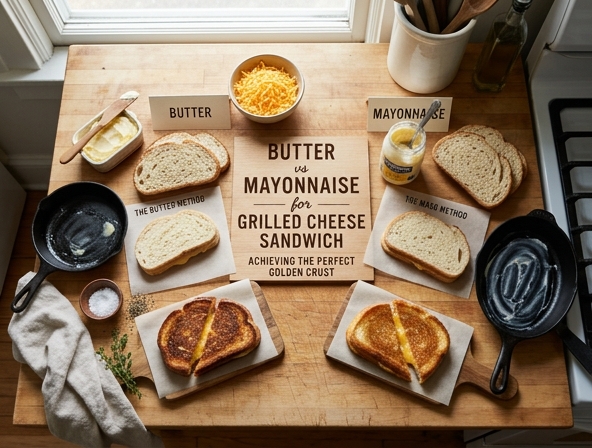
| Fat Choice | Key Advantage | Flavor Profile | Browning Performance |
|---|---|---|---|
| Butter | Traditional appeal | Rich and classic | Prone to burning due to milk solids |
| Mayonnaise | High smoke point | Subtle, tangy finish | Excellent, even sear via the Maillard reaction |
The Great Debate: Butter vs. Mayonnaise for the Perfect Grilled Cheese
There are few things in the culinary world as comforting and universally beloved as a perfectly executed grilled cheese sandwich. It is a masterpiece of simplicity: golden, crispy bread yielding to a molten, gooey heart of melted cheese. Yet, for all its simplicity, the grilled cheese is a battleground of technique. The most contentious skirmish in this culinary war? The choice of fat used to coat the bread: butter or mayonnaise.
For generations, butter was the undisputed champion. It is the nostalgic choice, the one grandmother used, and the one that provides that quintessential, rich, dairy-infused aroma. However, in recent years, a quiet revolution has taken place in home kitchens and professional diners alike. Mayonnaise-yes, the sandwich spread-has emerged as the secret weapon for the ultimate crunch. But which one truly reigns supreme? To answer this, we must look at the science, the flavor profiles, and the results.
The Case for Butter: The Traditionalist's Choice
Butter is the gold standard for a reason. When you spread softened butter onto bread, you are coating the surface with milk solids and fats. As the pan heats up, the water in the butter evaporates, allowing the milk solids to toast-this is the foundation of the Maillard reaction, the chemical process responsible for browning and that deep, complex flavor we associate with toasted bread.
Pros of Butter:
- Flavor Depth: Butter adds a subtle, creamy sweetness that is impossible to replicate. It enhances the savoriness of the cheese, creating a cohesive, decadent bite.
- The Aroma: The smell of butter browning in a hot pan is arguably the most appetizing scent in the kitchen. It sets the stage for a meal that feels like an indulgence.
Cons of Butter:
- Low Smoke Point: Butter contains milk solids that burn quickly at high temperatures. If your heat is even slightly too high, you run the risk of bitter, burnt black specks on your crust before the cheese has fully melted.
- The "Soggy" Factor: Because of its high water content, butter can occasionally steam the bread slightly if not used carefully, leading to a crust that is less than perfectly crisp.
The Case for Mayonnaise: The Modern Specialist
If butter is the traditionalist, mayonnaise is the precision instrument. Mayonnaise is essentially a stable emulsion of oil, egg yolks, and an acid (vinegar or lemon juice). Because the oil in mayonnaise is already emulsified, it spreads perfectly edge-to-edge, ensuring even browning.
Pros of Mayonnaise:
- Higher Smoke Point: The oil in mayonnaise is more stable than the milk solids in butter. You can cook your sandwich at a slightly higher temperature without the bread turning black, which is ideal for getting a deep, uniform golden color.
- Superior Crispness: Because mayonnaise is essentially a high-quality oil emulsion, it acts like a shallow fryer for the exterior of the bread. It creates a thinner, sharper, and more durable crunch that holds up better to the moisture of the melted cheese.
- Neutrality: Mayonnaise doesn't overpower the flavor of the bread or the cheese. It allows the quality of your sourdough or rye to shine through.
Cons of Mayonnaise:
- The Missing Dairy Note: Some purists argue that without butter, the sandwich lacks that "buttery" richness that defines a grilled cheese.
- The "Mayo" Stigma: Despite its effectiveness, there is a psychological barrier for some eaters who find the idea of heating mayonnaise unappealing.
The Science of the Crust: Why Mayo Often Wins the Texture Game
When you put a mayo-slathered slice of bread into a pan, you are effectively pan-frying the surface. The egg yolks in the mayo assist in creating a beautiful, uniform browning due to the way proteins and sugars react under heat. Because mayo is pre-emulsified, it creates a thinner, more consistent layer than butter, which can be chunky or uneven if not perfectly softened. This consistent layer leads to a more uniform "crunch" across the entire face of the sandwich, rather than the occasional soggy patch often found with butter.
The "Hybrid" Solution: The Best of Both Worlds
If you find yourself torn between the rich, nostalgic flavor of butter and the high-performance crunch of mayonnaise, there is a third path: the hybrid approach. Many professional chefs advocate for using both.
The Strategy: Use a thin layer of mayonnaise on the outside of the bread to achieve that high-smoke-point, ultra-crispy golden crust, but finish the sandwich by dropping a small knob of butter into the pan for the last 30 seconds of cooking. The butter melts into the pan, basting the crust and infusing it with that signature dairy richness right as you serve. It is the ultimate compromise for the discerning grilled cheese enthusiast.
Final Considerations for the Perfect Sandwich
Regardless of which fat you choose, the crust is only as good as the bread and the heat control. Here are three pro-tips to elevate your grilled cheese:
- Low and Slow is Key: Even with mayonnaise's high smoke point, patience is the secret ingredient. Medium-low heat ensures that the cheese melts completely-reaching that glorious "cheese pull" state-before the crust becomes too dark.
- Choose the Right Bread: A sturdy loaf, such as a sourdough or a thick-cut country white, is essential. These breads have the structural integrity to handle the fat without falling apart. Avoid overly soft, thin-sliced sandwich bread, which can become greasy or soggy regardless of the fat used.
- Grate Your Own Cheese: Pre-shredded cheese is coated in cellulose to prevent clumping, which inhibits melting. For the perfect melt, buy a block of sharp cheddar or Gruyère and grate it yourself.
The Verdict
So, which is the winner? If your priority is the nostalgic, rich, "home-cooked" flavor of your childhood, stick with butter. But if your goal is the perfect, shatteringly crisp, restaurant-quality crust that maintains its integrity from the first bite to the last, mayonnaise is objectively the superior tool for the job.
Ultimately, the perfect grilled cheese is a subjective masterpiece. Whether you are Team Butter, Team Mayo, or a convert to the Hybrid Method, the true joy of the grilled cheese lies in the experimentation. Grab a pan, fire up the stove, and don't be afraid to test the science for yourself. After all, the best part of this culinary research is that you get to eat the evidence.
Disclaimer:
The information provided on Eateryn is for general educational and informational purposes only and is not intended as medical, nutritional, or healthcare advice. It should not be used to diagnose, treat, cure, or prevent any disease or medical condition.
Always consult a qualified physician, registered dietitian, or other certified healthcare professional before making changes to your diet, exercise routine, or lifestyle, or regarding any medical questions or concerns you may have. Never disregard or delay seeking professional medical advice because of something you have read on this website.