
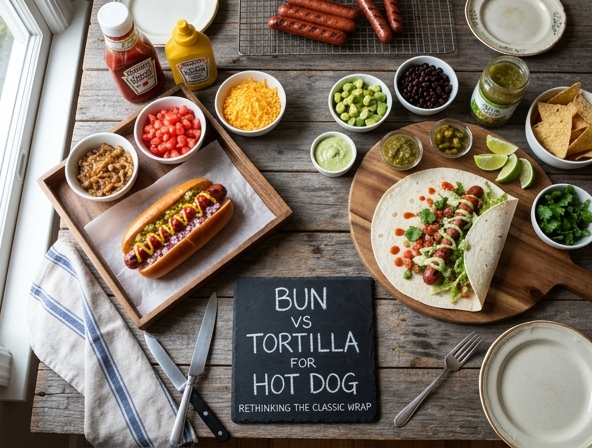
Bun vs Tortilla for Hot Dog - Rethinking The Classic Wrap
Bun vs. Tortilla: Rethinking The Classic Wrap
Traditional hot dog buns often compromise, failing under heavy toppings and leading to structural collapse. While standard brioche rolls remain the industry benchmark, they frequently struggle with moisture management. Transitioning to a tortilla provides superior durability and heat retention. Note, however, that this shift alters the flavor profile toward a distinct, flour-based aesthetic. Street food vendors globally currently leverage this method for enhanced portability. This analysis explores these culinary trade-offs and performance metrics.
| Feature | Traditional Bun (e.g., Brioche) | Tortilla |
|---|---|---|
| Structural Integrity | Prone to collapse under heavy toppings | High durability; prevents mess |
| Moisture Management | Often struggles with soggy textures | Superior moisture retention |
| Heat Retention | Standard | Enhanced |
| Portability | Standard/Variable | Excellent (preferred by street vendors) |
| Flavor Profile | Industry benchmark / Traditional | Distinct, flour-based aesthetic |
The Great Culinary Divide: Bun vs. Tortilla in the Hot Dog Evolution
For over a century, the hot dog has been a bastion of culinary tradition. It is a food synonymous with baseball stadiums, backyard barbecues, and the frantic, satisfying bite of a street-corner snack. Central to this iconic status is the vessel: the soft, pillowy, sliced-open bun. It is the architectural foundation upon which the entire hot dog experience rests. But lately, a challenger has emerged from the kitchen shadows-the humble flour tortilla. This shift is more than a simple substitution; it is a fundamental rethinking of how we consume one of our most beloved comfort foods.
The Tradition of the Bun: Why It Won (Initially)
To understand the debate, we must first respect the bun. History tells us that the hot dog-the frankfurter-was brought to America by German immigrants. Initially served on a plate or wrapped in paper, the bun was a later, utilitarian innovation. It served a singular, vital purpose: to keep the grease and juices off the consumer's hands. The bun is a sponge. Its porous crumb is designed to absorb the rendered fat of the sausage, the tang of the mustard, and the brine of the sauerkraut.
There is also the matter of texture. The contrast between a charred, snappy frankfurter and a soft, slightly sweet brioche or potato bun is a sensory masterpiece. It's the "cushion" that balances the intensity of the protein. The bun is a vessel of nostalgia; it tells the brain exactly what to expect from the first bite to the last.
The Rise of the Tortilla: The "Burrito-ization" of the Hot Dog
So, why would anyone disrupt such a perfect system? The answer lies in versatility and the changing landscape of modern fusion cuisine. The flour tortilla, particularly the soft, pliable variety found in Tex-Mex and Southwestern cooking, offers a different structural advantage: the seal.
Unlike the bun, which is open-ended and prone to structural collapse under the weight of heavy chili or excessive toppings, a tortilla allows for the "wrap" technique. When a hot dog is rolled into a tortilla, it becomes a self-contained unit. The juices that might dribble down your sleeve in a traditional bun are trapped inside the wrap. This isn't just a snack anymore; it's a portable meal engineered for the modern, on-the-go lifestyle.
Comparing the Sensory Experience
When we break down the mechanics, the difference is stark:
- Structural Integrity: The bun is prone to "blowouts" if overfilled. The tortilla, when tucked properly, holds even the most unruly toppings-think heavy chili, diced onions, shredded cheddar, and jalapeños-with ease.
- Flavor Interaction: A bun acts as a neutral background, occasionally sweet or yeasty. A tortilla provides a slightly nutty, toasted grain flavor that interacts beautifully with bolder, spicier condiments like salsa verde, cilantro-lime crema, or chipotle mayo.
- Portability: The tortilla wrap eliminates the need for a napkin-heavy cleanup. It is the difference between a messy street treat and a functional lunch.
Culinary Innovation: Where the Tortilla Shines
The "tortilla-dog" opens the door to flavor profiles that would feel alien on a standard bun. Consider the "Elote Dog," where the sausage is nestled in a bed of roasted corn, cotija cheese, and chili powder inside a lightly charred flour tortilla. The tortilla acts as a bridge between the savory frankfurter and the Mexican street-corn flavor profile. Try putting that on a potato bun, and you'll find the flavors clashing rather than harmonizing.
Moreover, the tortilla allows for the "toasted" factor. Once wrapped, a hot dog can be placed on a skillet or a panini press. The result is a crispy, golden-brown exterior that contrasts sharply with the hot, juicy interior-a texture profile that a standard steamed bun simply cannot replicate.
The "Drip Factor" and Social Acceptability
We must address the elephant in the room: the social stigma of eating a "messy" food. Part of the hot dog's charm is its informality, but there comes a point where it becomes unmanageable. The tortilla serves as a safety net. For parents feeding children, or for a quick lunch at a desk, the tortilla makes the experience cleaner and more efficient. It democratizes the hot dog, taking it from a specific "baseball game" context to an "anytime, anywhere" food.
Is the Bun Obsolete?
Absolutely not. The bun remains the gold standard for the "classic" experience. If you are serving a Chicago-style dog-complete with celery salt, neon green relish, and raw onions-a tortilla would be a culinary heresy. The bun is part of the recipe for the classic dog; remove it, and the entire dish loses its identity.
However, we are seeing a shift where the "hot dog" is becoming a category rather than a single dish. Just as the taco evolved into endless variations, the hot dog is beginning to shed its rigid associations. The bun is for tradition; the tortilla is for experimentation.
The Verdict: Rethinking the Wrap
The choice between bun and tortilla shouldn't be about one winning and the other losing. It's about matching the vessel to the mission. If your goal is a classic, mustard-and-kraut experience that honors the ghosts of Coney Island, reach for the bun. If your goal is to incorporate bold, spicy, complex toppings and ensure you can eat without wearing your lunch, the tortilla is your best friend.
The hot dog is a canvas, and the vessel is merely the frame. By stepping outside the bun-bound orthodoxy, we allow ourselves to explore new flavor combinations and functional benefits that keep this timeless food relevant in a changing culinary world. So, the next time you fire up the grill, don't feel restricted by the bread aisle. Grab a pack of tortillas, experiment with your toppings, and rethink what a hot dog can actually be. After all, the best meal is the one that tastes the best-regardless of how it's wrapped.
Disclaimer:
The information provided on Eateryn is for general educational and informational purposes only and is not intended as medical, nutritional, or healthcare advice. It should not be used to diagnose, treat, cure, or prevent any disease or medical condition.
Always consult a qualified physician, registered dietitian, or other certified healthcare professional before making changes to your diet, exercise routine, or lifestyle, or regarding any medical questions or concerns you may have. Never disregard or delay seeking professional medical advice because of something you have read on this website.