
Brown Sugar vs Honey Glaze for Barbecue Ribs - Perfecting The Caramelized Crust
Achieving the elusive, perfectly caramelized crust on barbecue ribs remains a common challenge for many pitmasters. While standard practice often defaults to simple mop sauces, mastering the specific chemistry of your glaze provides essential control over texture and flavor depth. Note that sugar concentration significantly alters burn temperatures; careful heat management is non-negotiable. For example, brown sugar delivers a robust, earthy crust, whereas honey yields a superior, high-tack finish. This analysis compares both to refine your signature barbecue.
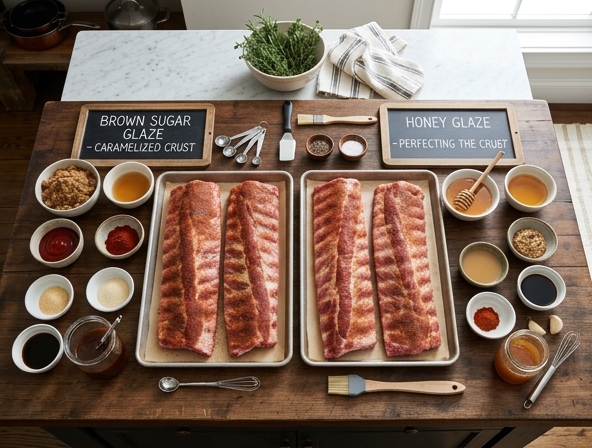
| Feature | Brown Sugar Glaze | Honey Glaze |
|---|---|---|
| Flavor Profile | Robust and earthy | Sweet and intense |
| Texture/Finish | Classic caramelized crust | Superior, high-tack finish |
| Key Consideration | Both glazes require precise heat management; high sugar concentration significantly lowers burn temperature. | |
Brown Sugar vs. Honey Glaze for Barbecue Ribs: Perfecting The Caramelized Crust
There is perhaps no greater culinary debate in the world of competitive barbecue than the quest for the "perfect bite." While smoke penetration and meat texture are fundamental, the crowning jewel of a rack of ribs is the crust. A well-executed crust-often called the "bark" or the "finish"-is the bridge between the savory depth of the smoke and the sweet, sticky finish that defines the regional styles of Kansas City, Memphis, and beyond. At the heart of this finish lie two titans of sweetness: brown sugar and honey. Each brings a unique chemical composition to the grill, and understanding how they interact with heat is the difference between a mahogany masterpiece and a charred catastrophe.
The Chemistry of Caramelization
To understand the debate, we must first look at the science of caramelization. Caramelization is the pyrolysis of sugar-essentially, the thermal decomposition of sugar molecules. When subjected to heat, sugar molecules break down into hundreds of aromatic compounds, transitioning from crystalline sweetness to a complex, nutty, and bitter-sweet profile. However, this process is delicate. In barbecue, we are not just caramelizing sugar; we are attempting to create a stable layer that adheres to the meat without crossing the threshold into carbonization (burning). Brown sugar and honey, due to their different moisture contents and glucose-to-fructose ratios, behave quite differently under the direct or indirect heat of a smoker.
The Case for Brown Sugar: The Foundation of the Rub
Brown sugar is the backbone of most traditional barbecue dry rubs. Because it contains molasses, it is inherently "dirtier" than refined white sugar, which translates into deeper, earthier flavor notes. When used as part of a rub, brown sugar undergoes a two-stage process:
- Absorption: As the heat rises, the brown sugar draws out moisture from the surface of the meat, creating a dark, syrupy "slurry."
- Setting: As the excess moisture evaporates, the molasses content begins to harden, creating a grainy, textured crust that provides a satisfying resistance to the bite.
The primary advantage of brown sugar is its stability. Because it is applied early in the cooking process, it integrates with the smoke particles and the rendered fat of the ribs. It is less prone to sudden burning than honey, making it an excellent choice for pitmasters who prefer a long, slow finish. A brown sugar-based crust is typically matte or satin in finish, offering a complex, savory-sweet profile that complements the wood smoke rather than masking it.
The Case for Honey: The Glossy Finisher
Honey is an entirely different beast. Composed primarily of fructose and glucose, honey is a liquid sugar that offers a high-shine, candy-like coating. Unlike brown sugar, which works best as a foundational layer, honey is almost exclusively a finishing element. Its high sugar content makes it incredibly susceptible to heat-it will go from a beautiful, translucent gold to an acrid, blackened mess in seconds if handled improperly.
When you apply a honey glaze in the final 15 to 20 minutes of the cook, you aren't looking for a crunchy crust so much as a lacquered finish. The honey bonds with the fats on the surface of the ribs to create a "tack" that is highly desirable for aesthetic appeal and mouthfeel. Honey adds a floral, bright sweetness that cuts through the saltiness of a heavy rub, creating a flavor profile that is punchy and immediate.
The Hybrid Method: Finding the Sweet Spot
For those aiming for competition-level results, the secret is rarely choosing one over the other, but rather utilizing both in a strategic sequence. This "Hybrid Method" allows you to leverage the textural benefits of brown sugar with the visual allure of honey.
1. The Foundation (The Brown Sugar Phase)
Begin with a heavy-handed application of a brown sugar-heavy rub before the ribs ever hit the smoker. Allow this to permeate the meat for at least an hour. Throughout the smoke, the brown sugar will melt and darken, creating the foundation of the crust. By the time you reach the "crutch" (wrapping the ribs) or the final stages of the cook, you already have a textured, flavor-dense bark.
2. The Transformation (The Honey Phase)
The glaze should be applied only during the final 10–15 minutes of the process. If using honey, thin it slightly with a small amount of apple cider vinegar or barbecue sauce to prevent it from becoming overly thick and gummy. Brush a thin, even layer over the already-set crust. Because the brown sugar has already created a stable surface, the honey will adhere perfectly, "locking in" the smoke and providing that professional-grade glossy finish.
Technique Tips for a Perfect Crust
Regardless of whether you favor the sugar or the honey, your technique is the final variable in the equation. Here are three rules to live by:
- Avoid the "Early Glaze" Trap: Never apply honey or high-sugar sauces at the start of the cook. Sugars will burn long before the collagen in the ribs has broken down.
- Manage Your Temps: If you are glazing with honey, keep your grill temperature below 300°F (150°C). Anything hotter increases the risk of the sugars breaking down into carbon.
- Resting is Essential: A crust needs time to set after coming off the heat. If you slice into the ribs the moment they leave the smoker, the steam and residual moisture will soften your beautiful crust. Let them rest for 15 minutes to ensure that final, sticky, or crunchy bite remains intact.
Conclusion
Choosing between brown sugar and honey isn't a matter of which is "better," but rather a matter of what you want your rib experience to be. Brown sugar provides the foundation, the texture, and the depth-the essential grit that defines authentic barbecue. Honey provides the high-gloss finish and the bright, impactful sweetness that captivates the eye and the palate. By combining these two-using brown sugar to build the bark and honey to provide the luster-you can elevate your barbecue ribs from home-cooked fare to a masterpiece of caramelization.
Disclaimer:
The information provided on Eateryn is for general educational and informational purposes only and is not intended as medical, nutritional, or healthcare advice. It should not be used to diagnose, treat, cure, or prevent any disease or medical condition.
Always consult a qualified physician, registered dietitian, or other certified healthcare professional before making changes to your diet, exercise routine, or lifestyle, or regarding any medical questions or concerns you may have. Never disregard or delay seeking professional medical advice because of something you have read on this website.