
Brioche Vs. Potato Bun For Burger - Best Texture Comparison
Brioche Vs. Potato Bun: Texture Comparison
Selecting the ideal bun is often challenging, as inferior options frequently collapse under heavy patties. While standard sesame rolls remain the industry default, professional chefs understand that crumb texture fundamentally defines the dining experience. Both brioche and potato buns prioritize a pillowy mouthfeel, yet they function differently. For instance, Shake Shack utilizes potato rolls for their superior absorbency, while gourmet bistros favor brioche for its buttery resilience. This analysis evaluates which structure best sustains your burger.
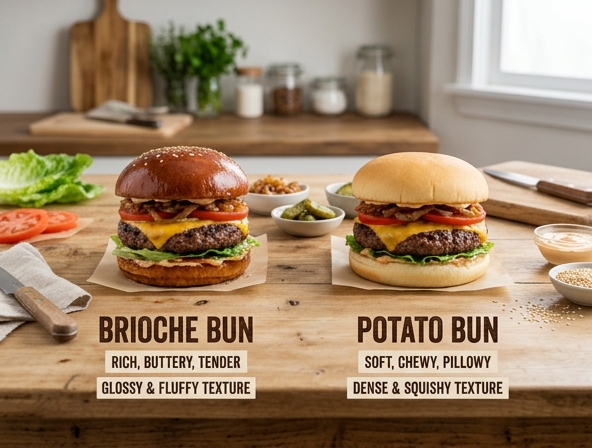
| Comparison Feature | Brioche Bun | Potato Bun |
|---|---|---|
| Core Texture | Buttery and resilient | Pillowy and soft |
| Key Benefit | High structural integrity | Superior sauce absorbency |
| Common Usage | Gourmet bistros | Casual chains (e.g., Shake Shack) |
| Main Function | Supports heavy, gourmet patties | Balances moisture and juices |
The Great Burger Debate: Brioche vs. Potato Bun
In the culinary world, the burger is often judged by the quality of the patty-the grind, the sear, the seasoning, and the internal temperature. However, the true connoisseur knows that the burger is only as good as its foundation. The bun acts as the structural integrity of the sandwich, the first point of contact for your taste buds, and the essential sponge for rendered fat and savory juices. Two titans have emerged to dominate the modern burger landscape: the decadent Brioche and the classic Potato Bun.
The Anatomy of Brioche: Decadence in Every Bite
Brioche is an enriched bread dough that relies heavily on butter and eggs. Unlike standard white bread, which is lean, brioche is fundamentally a pastry-adjacent dough. This high fat content changes everything about how it behaves in a burger application.
The Texture Profile
The texture of a quality brioche bun is characterized by a tender, crumbly, and slightly "cakey" mouthfeel. It is incredibly soft, yet has enough structural integrity to hold up under the weight of a heavy patty. Because of the high egg and butter content, brioche tends to have a golden, shimmering crust that offers a subtle resistance before yielding to a rich, airy interior. It is, by definition, luxurious.
The Pros and Cons
- Pros: The richness of the butter enhances the savory profile of a beef patty. It provides a beautiful, toasted aesthetic and has a sweetness that balances salty toppings like bacon or aged cheddar.
- Cons: Because brioche is so dense and rich, it can occasionally overwhelm a more delicate protein. If the bun is too thick, it can feel like you are eating a dessert bread rather than a savory sandwich. Furthermore, if not toasted properly, its crumb can become soggy when exposed to excessive grease.
The Anatomy of the Potato Bun: The King of Softness
The potato bun, often associated with iconic regional burger chains like Shake Shack, is a marvel of food science. By incorporating potato flour or mashed potatoes into the dough, bakers create a bun that is fundamentally different from a wheat-based product.
The Texture Profile
The defining characteristic of a potato bun is its "squishability." It is remarkably elastic and incredibly light. When you press down on a potato bun, it bounces back, yet it melts in your mouth with almost zero resistance when chewed. The starch from the potato helps the bread retain moisture, keeping it from drying out, even when sitting under a heat lamp.
The Pros and Cons
- Pros: Its lightness ensures that the focus remains entirely on the meat. It is the perfect vessel for a "smash burger," as it doesn't fight the patty for dominance. It has a slight, pleasant sweetness that complements the charred, crispy edges of a griddled beef patty.
- Cons: It lacks the structural robustness of heavier breads. If you are loading your burger with three different sauces, heavy slaw, and a thick tomato slice, a potato bun can disintegrate, becoming a sticky mess by the time you reach the final bite.
A Direct Comparison: Texture and Performance
When comparing these two under the pressure of a juicy burger, we must look at three key factors: absorption, resistance, and flavor profile.
Absorption of Juices
This is where the battle is often won or lost. Brioche, with its tight crumb and buttery composition, acts as a barrier. It absorbs some juice but stays relatively separate from the meat. The potato bun, however, acts as a sponge. It draws in the fat from the patty, becoming infused with the flavor of the beef. For many, this "absorption factor" is exactly what makes a burger successful; for others, it is the cause of structural failure.
Mouthfeel and Resistance
Brioche provides a "chew." It forces you to engage with the bread as a distinct component of the meal. It feels substantial. A potato bun, conversely, disappears into the burger. It provides the necessary contrast to the crusty sear of the meat, but it doesn't interrupt the experience. If you prefer a burger where everything integrates into one harmonious bite, the potato bun is the superior choice.
The Verdict: Which Should You Choose?
Choosing between brioche and potato is less about which is objectively "better" and more about the type of burger you are building.
Choose Brioche if: You are serving a gourmet, thick-patty burger, perhaps topped with melted blue cheese, sautéed mushrooms, or a thick aioli. The brioche has the heft to support complex, heavy ingredients without collapsing. It brings a level of sophistication and richness that elevates the burger to a "meal" status.
Choose Potato Bun if: You are aiming for the nostalgic, classic diner experience. It is the gold standard for thin, crispy, lacy-edged smash burgers topped with American cheese, pickles, and a simple special sauce. The potato bun's ability to "disappear" allows the Maillard reaction-the flavor created by the seared beef-to take center stage.
Final Thoughts
At the end of the day, both buns are vast improvements over the dry, flavorless white bread buns of the past. Whether you lean toward the buttery, decadent embrace of a toasted brioche or the cloud-like, absorbent comfort of a potato bun, both provide a significant upgrade to your home grilling or restaurant experience. Texture is subjective; while one diner may crave the structural reliability of brioche, another will always be drawn to the soft, ephemeral perfection of the potato bun. Experiment with both, and you'll find that the "perfect" burger is often a reflection of the bun you choose to house it in.
Disclaimer:
The information provided on Eateryn is for general educational and informational purposes only and is not intended as medical, nutritional, or healthcare advice. It should not be used to diagnose, treat, cure, or prevent any disease or medical condition.
Always consult a qualified physician, registered dietitian, or other certified healthcare professional before making changes to your diet, exercise routine, or lifestyle, or regarding any medical questions or concerns you may have. Never disregard or delay seeking professional medical advice because of something you have read on this website.