
Breadcrumbs vs Oats For Meatloaf - Determining The Perfect Binding Agent
Achieving consistent meatloaf texture is often frustrating, as loaves frequently crumble when sliced. Traditional recipes rely on either breadcrumbs or oats as primary binding agents. Selecting the correct medium is essential for structural integrity. Please note: individual results depend heavily on the meat's fat content. Breadcrumbs provide a refined, lighter crumb, while oats offer a robust, moisture-retaining finish. This comparison evaluates the specific performance characteristics of each to help you refine your signature recipe.
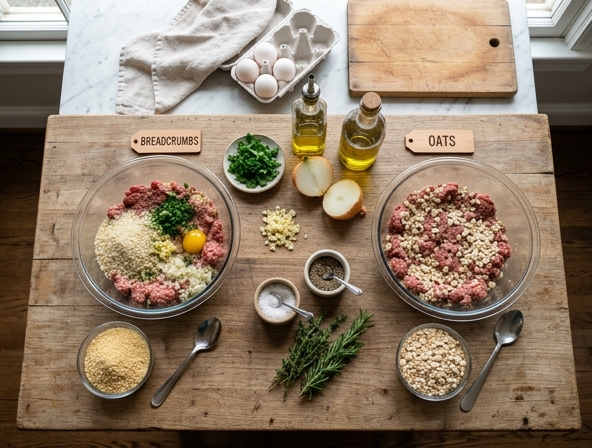
| Binding Agent | Key Characteristics | Texture Result |
|---|---|---|
| Breadcrumbs | Refined and traditional | Lighter, finer crumb |
| Oats | Robust and moisture-retaining | Dense, moist finish |
| Note: Performance is heavily influenced by the fat content of the meat used. | ||
Breadcrumbs vs. Oats for Meatloaf: Determining the Perfect Binding Agent
The humble meatloaf is a quintessential comfort food, a culinary chameleon that anchors family dinners across the globe. Yet, despite its simplicity, achieving the perfect meatloaf-one that remains moist, holds its shape perfectly on the plate, and avoids the dreaded "brick-like" density-is a science all its own. At the heart of this challenge lies the binder. Whether you are a traditionalist reaching for a canister of breadcrumbs or a health-conscious home cook favoring the hearty texture of oats, the choice of binder fundamentally changes the structural integrity and mouthfeel of your dish.
The Role of the Binder: Why Meatloaf Needs Help
To understand the debate, we must first understand the function of a binder. When you mix ground meat with eggs and herbs, the proteins in the meat naturally want to bond. However, without a filler, these proteins tighten significantly during the cooking process. As the meat contracts under heat, it squeezes out its internal moisture, leading to a dry, tough final product. Binders-often referred to as "fillers" or "extenders"-serve three critical purposes:
- Moisture Retention: They act as sponges, soaking up meat juices and any added liquids (like milk or stock) to keep the loaf succulent.
- Structural Integrity: They prevent the meat from becoming too dense, creating enough space between the meat particles to ensure a tender, rather than rubbery, bite.
- Flavor Distribution: They provide a neutral medium to distribute seasonings throughout the mixture evenly.
The Case for Breadcrumbs: The Traditional Standard
Breadcrumbs have long been the gold standard for meatloaf, and for good reason. They are essentially dehydrated bread, which makes them highly absorbent.
The Power of the Panade
The secret to using breadcrumbs effectively is the "panade"-a technique where breadcrumbs are soaked in milk, cream, or stock before being mixed into the meat. When breadcrumbs are pre-hydrated, they swell and become a gelatinous paste. When incorporated into the meat, this paste creates microscopic pockets that prevent the meat fibers from knitting together too tightly. The result is a pillowy, light, and tender meatloaf that melts in the mouth.
Types of Breadcrumbs
Not all breadcrumbs are created equal. Fine, dry breadcrumbs provide a uniform texture, while Panko (Japanese-style coarse crumbs) offers a lighter, airier structure. The key is avoiding overly seasoned store-bought crumbs, which can introduce artificial flavors that clash with your carefully curated spice blend.
The Case for Oats: The Rustic, Hearty Alternative
For those looking for a different profile, old-fashioned rolled oats have become an increasingly popular substitute. Oats bring a rustic, earthy quality to meatloaf that many find superior to the neutrality of bread.
The Texture Factor
Oats provide a distinct "chew." While breadcrumbs dissolve almost entirely into the background, oats maintain a slight textural integrity. This makes the meatloaf feel more substantial-a "meat-and-potatoes" kind of dish. They are particularly excellent for recipes involving ground turkey or chicken, which can often be bland and soft; the oats give these leaner meats a much-needed "bite."
Nutritional and Dietary Considerations
From a nutritional standpoint, oats offer a higher fiber content and a lower glycemic index compared to standard white breadcrumbs. Furthermore, for those living with gluten sensitivities, certified gluten-free rolled oats are a far safer and easier binder to source than gluten-free bread alternatives, which can be expensive and texturally inconsistent.
Comparison Matrix: Which One Should You Choose?
| Feature | Breadcrumbs | Rolled Oats |
|---|---|---|
| Texture | Soft, light, pillowy | Substantial, hearty, rustic |
| Absorption | Extremely high (best for moisture) | Moderate (good for body) |
| Prep Time | Best when made into a panade | Ready to mix immediately |
| Flavor | Neutral | Nutty and earthy |
The Science of Choice: Making the Decision
Choosing between breadcrumbs and oats often comes down to the desired "vibe" of the meal. If you are aiming for a classic diner-style meatloaf-one that slices into neat, soft squares and pairs perfectly with a smooth gravy-stick with breadcrumbs, preferably processed into a panade.
Conversely, if you are crafting a "homestyle" meatloaf for a rustic dinner, or if you are working with leaner meats like turkey or venison, reach for the oats. Their ability to soak up excess fat while maintaining structure makes them an underdog hero in the kitchen.
Pro-Tips for Perfect Binding
Regardless of which binder you choose, follow these three rules to ensure success:
- Don't Overwork the Meat: Overmixing develops the proteins too much, resulting in a dense loaf regardless of how many oats or crumbs you add. Mix until just combined.
- The Ratio Matters: A general rule of thumb is 1/2 to 3/4 cup of binder for every 2 pounds of meat. Too little, and the loaf crumbles; too much, and it becomes a "meat-flavored bread loaf."
- Resting is Non-Negotiable: Allow your meatloaf to rest for at least 15 minutes after it leaves the oven. This allows the juices to redistribute and the binding agent to "set" the structure, ensuring you get that clean, professional slice every time.
Conclusion: The Verdict
There is no "wrong" answer in the battle between breadcrumbs and oats. Both serve the essential purpose of keeping your meatloaf moist and structurally sound. Breadcrumbs offer a refined, tender, and classic experience, while oats provide a rustic, hearty, and nutritionally dense alternative. The best way to determine your preference is to experiment-perhaps even try a 50/50 blend. Once you master the technique of the binder, you will never have to worry about a dry, crumbly meatloaf again.
Disclaimer:
The information provided on Eateryn is for general educational and informational purposes only and is not intended as medical, nutritional, or healthcare advice. It should not be used to diagnose, treat, cure, or prevent any disease or medical condition.
Always consult a qualified physician, registered dietitian, or other certified healthcare professional before making changes to your diet, exercise routine, or lifestyle, or regarding any medical questions or concerns you may have. Never disregard or delay seeking professional medical advice because of something you have read on this website.