
Bread Bowl vs Oyster Crackers for Clam Chowder - Comparing Serving Presentation
Bread Bowl vs. Oyster Crackers: Refining Clam Chowder Presentation
Chefs often struggle to elevate clam chowder from a simple snack to a premium dining experience. While traditional oyster crackers provide a familiar texture, they often lack the aesthetic impact required for refined service. Selecting the right vessel grants your dish a signature identity, transforming comfort food into a culinary centerpiece. Note that sourdough structural integrity is paramount. Whether you prefer rustic bread bowls or minimalist cracker pairings, this analysis evaluates how presentation shapes guest perception.
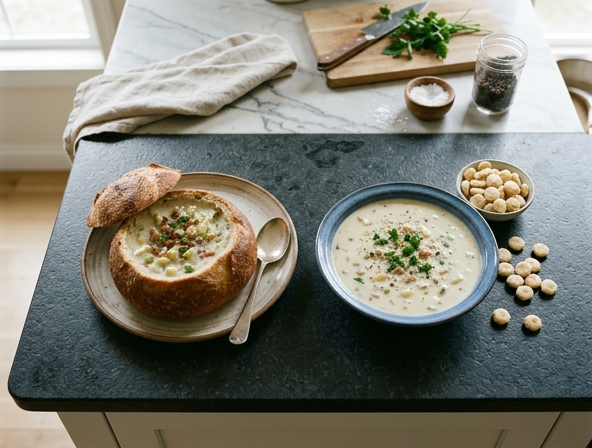
| Comparison Aspect | Bread Bowl | Oyster Crackers |
|---|---|---|
| Presentation Style | Culinary centerpiece; high visual impact | Traditional, minimalist pairing |
| Dining Experience | Elevated, premium dining | Comforting and familiar |
| Key Requirement | High sourdough structural integrity | Ease of service |
| Guest Perception | Sophisticated/Refined | Standard/Casual |
The Great Clam Chowder Dilemma: Bread Bowl vs. Oyster Crackers
Clam chowder is more than just a soup; it is a coastal institution. Whether it's the creamy, milk-based New England style or the tomato-forward Manhattan variation, the way you serve it is nearly as important as the recipe itself. For decades, a friendly but fervent debate has persisted in coastal kitchens and seaside restaurants alike: Do you opt for the architectural, hearty embrace of a sourdough bread bowl, or do you stick to the humble, timeless simplicity of a handful of oyster crackers?
The Bread Bowl: An Architectural Marvel
To eat clam chowder from a bread bowl is to commit to a full-blown culinary event. Popularized largely by the sourdough bakeries of San Francisco's Fisherman's Wharf, the bread bowl elevates the soup from a mere appetizer to a substantial, one-pot meal. The visual appeal is undeniable-a hollowed-out, crusty loaf of artisanal sourdough acting as a steaming, edible chalice for the velvety chowder.
The primary advantage of the bread bowl is the interaction between textures. As the hot cream base sits within the loaf, the interior crumb begins to soak up the briny, savory essence of the clams and potatoes. By the time you reach the bottom of the bowl, you are rewarded with a dumpling-like delicacy that has absorbed the full flavor profile of the soup. It is a satisfying, rustic experience that feels distinctly "vacation-coded"-it is indulgent, messy, and deeply comforting.
However, the bread bowl is not without its detractors. From a culinary perspective, critics argue that the sheer volume of bread can overpower the delicate flavor of the clams. Furthermore, there is the “sogginess threshold.” If the soup is not thick enough, the bread bowl becomes a structural nightmare, leading to leaks and a disintegrated base before the diner has finished. It is a commitment that requires a hearty appetite and a lack of concern for calorie counting.
The Oyster Cracker: The Traditionalist's Companion
If the bread bowl is a decadent indulgence, the oyster cracker is the soul of tradition. For those raised on East Coast chowder, a bowl without a package of oyster crackers feels like a sky without stars. These small, pillow-shaped, salted crackers provide a necessary textural counterpoint to the creamy, soft mouthfeel of the soup.
The beauty of the oyster cracker lies in its unobtrusiveness. Because the crackers are relatively neutral in flavor, they do not compete with the clams or the aromatics. Instead, they provide a clean, satisfying "crunch" that refreshes the palate between spoonfuls. When added sparingly, they maintain their integrity; when stirred in, they thicken the soup, creating a heartier consistency that many aficionados swear by.
Moreover, the oyster cracker is the ultimate tool for portion control. It allows the diner to modulate the thickness of the chowder according to their personal preference. It is a communal, nostalgic experience-a nod to maritime history, when crackers were used by sailors to bulk up rations during long, cold voyages. For many, the iconic sound of a crackling paper packet being torn open is the true "start" of a clam chowder meal.
The Showdown: Comparing the Experience
When deciding between these two vessels, one must consider the setting and the purpose of the meal. The bread bowl is undeniably the choice for an "occasion" meal. It belongs at a bustling tourist wharf or a casual lunch where the diner is looking to be fully sated. It is a dish that dominates the plate, requiring no side dishes because the vessel itself is a carbohydrate-heavy accompaniment.
Conversely, the oyster cracker is the choice for the refined or traditional diner. It allows the chowder to be the star. If you have spent hours sourcing fresh quahogs, sweating leeks, and hand-dicing potatoes, you likely want the chowder to stand on its own merits rather than be masked by a heavy sourdough shell. The oyster cracker respects the integrity of the chef's work.
Comparative Table: At a Glance
- Bread Bowl: Best for hearty appetites, rustic dining, and visual presentation.
- Oyster Crackers: Best for purists, portion control, and highlighting the soup's flavor.
- Bread Bowl Texture: Becomes soft, doughy, and integrated with the soup.
- Oyster Cracker Texture: Provides a sharp, satisfying snap that punctuates the creaminess.
The Verdict: It Depends on Your Mood
Ultimately, the choice between a bread bowl and oyster crackers comes down to what you seek from your bowl of chowder. Are you looking for a culinary project-a messy, delicious battle against a sourdough loaf that demands your full attention? Or are you looking for a warm, comforting baseline that allows you to enjoy the nuances of the brine and the cream without distraction?
There is no "wrong" answer. In fact, many high-end coastal restaurants have found a middle ground, offering a cup of chowder served alongside a side of crusty, artisanal sourdough bread (un-hollowed) and a small dish of oyster crackers. This "best of both worlds" approach allows the diner to experience the crispness of the bread, the satisfying crunch of the crackers, and the purity of the soup, all without the structural instability of the bowl.
Whether you choose to tear into a sourdough loaf or carefully dispense a handful of crackers, the essential truth remains: clam chowder is meant to be shared, enjoyed, and served hot. The vessel is merely the vehicle for the experience, and as long as the soup is seasoned correctly, the vessel becomes a matter of personal style rather than culinary dogma. Next time you find yourself staring down a menu at a seaside shack, take a moment to listen to your stomach-are you ready for the bread bowl challenge, or will you stick to the classic crunch?
Disclaimer:
The information provided on Eateryn is for general educational and informational purposes only and is not intended as medical, nutritional, or healthcare advice. It should not be used to diagnose, treat, cure, or prevent any disease or medical condition.
Always consult a qualified physician, registered dietitian, or other certified healthcare professional before making changes to your diet, exercise routine, or lifestyle, or regarding any medical questions or concerns you may have. Never disregard or delay seeking professional medical advice because of something you have read on this website.