
Beef vs Pork for Tacos - Finding the Best Fat Content for Juiciness
Achieving Taco Perfection
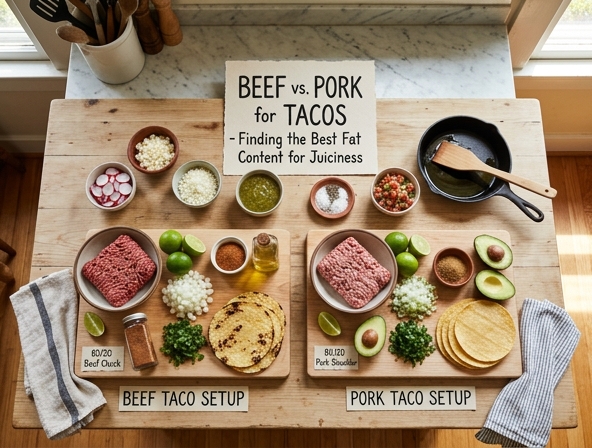
Many home cooks struggle with dry, flavorless tacos despite using quality ingredients. While conventional recipes often default to lean cuts, true culinary success hinges on precise fat ratios. Maintaining an optimal lipid balance ensures moisture retention and flavor depth in every bite. Note that varying fat levels mandate specific cooking techniques, from slow braising to high-heat searing. For instance, 80/20 beef or pork shoulder consistently yields superior results. This guide analyzes ideal fat content for elevated tacos.
| Feature | Summary Details |
|---|---|
| Core Issue | Common struggles with dry, flavorless tacos caused by using meat that is too lean. |
| The Solution | Focusing on precise fat ratios to ensure moisture retention and deep flavor. |
| Recommended Ratio | 80/20 (lean-to-fat) is considered the gold standard for juiciness. |
| Ideal Meat Cuts | 80/20 ground beef or pork shoulder. |
| Cooking Technique | Methods must be matched to fat content, utilizing either slow braising or high-heat searing for best results. |
The Great Taco Debate: Beef vs. Pork and the Quest for the Perfect Fat Content
If there is a singular dish that has captivated the global palate with its versatility and depth, it is undoubtedly the taco. At the heart of every great taco lies the meat-a foundation of flavor, texture, and mouthfeel that determines whether a taco is merely "good" or truly transcendent. Yet, even among seasoned home cooks and culinary enthusiasts, a debate rages: Is beef or pork superior for the taco experience? And, more importantly, how much fat is enough to achieve that elusive, succulent juiciness?
To understand the taco, one must understand the role of fat. Fat is not merely a caloric component; it is a flavor carrier, a tenderizer, and a lubricant for the palate. Without adequate fat, meat proteins tighten and dry out under the intense heat of the griddle or the slow churn of a slow cooker, resulting in a fibrous, "chalky" bite. To find the "Goldilocks" ratio for your next taco night, we must peel back the layers of beef and pork composition.
The Science of Succulence: Why Fat Matters
The secret to juicy meat lies in the rendering process. When fat melts (renders) during the cooking process, it coats the individual muscle fibers, preventing them from fusing into tough, dry strands. This provides that satisfying, velvety mouthfeel we associate with the best street tacos.
Generally, for taco meat, a fat-to-lean ratio of approximately 15% to 20% is considered the sweet spot. Anything less, and the meat struggles to retain moisture during the evaporation that occurs during high-heat searing. Anything significantly more can lead to a greasy, heavy result that overpowers the delicate balance of your salsa and corn tortillas.
Beef: The Bold and the Savory
Beef is the heavy hitter of the taco world. It brings a robust, iron-rich profile that can stand up to heavy seasoning, charred onion, and acidic salsas. However, beef can be unforgiving if the cut is chosen poorly.
- Chuck Roast: Often called the king of the braise, chuck is ideal for Birria or slow-cooked shredded beef tacos. With its significant intramuscular marbling, it breaks down into tender, succulent strands that retain moisture beautifully.
- Skirt and Flank Steak: These are the staples of Carne Asada. Because these cuts are lean, they rely on quick, high-heat cooking to remain tender. Here, the fat content is lower, so the technique-slicing against the grain and not overcooking-becomes the primary driver of texture.
- Ribeye: For those looking for the ultimate luxury taco, ribeye provides the perfect fat ratio. Its high marbling ensures that even if you miss your window by a few seconds on the grill, the meat remains juicy.
Pork: The Master of Melt-in-Your-Mouth Texture
If beef is the bold adventurer, pork is the graceful master of texture. Pork fat has a lower melting point than beef fat, which gives it a distinct advantage in creating a luscious mouthfeel. This is why pork is the undisputed champion of the Carnitas.
The gold standard for pork tacos is the Pork Shoulder (Boston Butt). This cut is a masterpiece of biology: it contains a massive amount of connective tissue and internal fat deposits. When braised or slow-roasted, the connective tissue transforms into gelatin, while the fat renders down to baste the meat from the inside out. The result is a taco filling that doesn't just hold moisture; it carries the flavors of the aromatics (citrus, oregano, cinnamon) into every bite.
The Comparison: Finding Your Preference
Choosing between the two often comes down to your desired flavor profile:
Beef is best when you want a "meaty" experience. If your tacos are topped with raw onion, cilantro, and a sharp lime-heavy salsa verde, the depth of beef holds its own. The fat here acts as a bridge, mellowing the intensity of the protein.
Pork is best when you want a "harmonious" experience. Because pork has a milder, sweeter flavor, it acts as a canvas for complex spice rubs and acidic toppings like pickled red onions or charred pineapple (as seen in Al Pastor). The higher fat content of pork lends itself to the "crisp and tender" duality-where the exterior of the meat is fried in its own rendered fat while the interior stays juicy.
Pro-Tips for Home Cooks
- The 80/20 Rule: If you are buying ground meat for tacos, always aim for the 80/20 mix. It is the industry standard for a reason. If you find your meat is too lean, consider adding a tablespoon of rendered lard or bacon fat to the pan before browning.
- Don't Rush the Render: If you are cooking pork shoulder or beef chuck, give the fat time to render. A common mistake is cranking the heat too high too early. Slow, steady heat allows the fat to liquefy without burning the meat proteins.
- The Rest is Mandatory: Even after the meat is perfectly cooked, resting allows the juices (and the melted fat) to redistribute throughout the muscle fibers. Resting for 10 minutes can mean the difference between a dry taco and a life-changing one.
- Balance with Acid: Regardless of your fat content, always cut through the richness with acidity. A squeeze of fresh lime is non-negotiable. The acid doesn't just brighten the flavor; it physically cuts through the fat on the palate, resetting your taste buds for the next bite.
Conclusion: The Verdict
Ultimately, there is no "best" in the binary sense of beef versus pork. There is only the best *approach*. If you crave a robust, rustic taco that stands up to strong spices, lean toward a well-marbled beef chuck. If you desire a tender, meltingly soft taco that embraces the nuances of your seasonings, look no further than the pork shoulder.
The true "best" fat content is the one that forces you to reach for a second napkin. Whether you choose the rich depth of beef or the silken luxury of pork, remember that fat is your flavor ally. Treat your meat with patience, respect the rendering process, and you will find that the perfect taco isn't just a meal-it's a balanced masterpiece of culinary science.
Disclaimer:
The information provided on Eateryn is for general educational and informational purposes only and is not intended as medical, nutritional, or healthcare advice. It should not be used to diagnose, treat, cure, or prevent any disease or medical condition.
Always consult a qualified physician, registered dietitian, or other certified healthcare professional before making changes to your diet, exercise routine, or lifestyle, or regarding any medical questions or concerns you may have. Never disregard or delay seeking professional medical advice because of something you have read on this website.