
Beans vs No Beans for Tacos - Authentic Fillings Versus Modern Twists
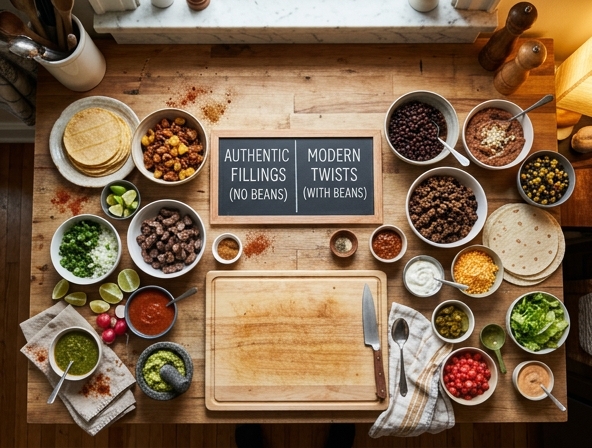
Navigating the "beans or no beans" debate is a common challenge for culinary professionals balancing tradition with modern guest preferences. While authentic street tacos typically prioritize proteins and fresh aromatics, the strategic inclusion of beans can offer significant value through enhanced textural depth.
Context remains vital; for instance, refried beans are staples in Tex-Mex crispy shells, unlike traditional Oaxacan styles. This guide examines regional norms versus contemporary fusion trends to refine your menu strategy.
| Perspective | Key Characteristics | Strategic Objective |
|---|---|---|
| Authentic Street Tacos | Protein-focused, emphasizes fresh aromatics. | Adhere to traditional culinary roots. |
| Regional (Tex-Mex) | Incorporates refried beans, common in crispy shells. | Maintain regional standards and popular expectations. |
| Modern Fusion | Strategic use of beans to add textural depth. | Balance tradition with contemporary guest preferences. |
The Great Taco Divide: Authenticity, Innovation, and the Bean Debate
The taco is perhaps the world's most perfect culinary vessel. It is a portable, functional, and deeply cultural expression of history wrapped in a nixtamalized corn tortilla. Yet, among the faithful-the taqueros, the home cooks, and the food critics-there exists a simmering, occasionally heated debate that can divide dinner tables faster than politics: Should beans have a place in a taco?
To the purist, the very suggestion of a bean inside a taco is an affront to tradition. To the culinary modernist, it is a versatile, nutrient-dense, and delicious addition. To understand this divide, we must look beyond the plate and examine the cultural history, the mechanics of flavor, and the evolving definition of what a taco truly is.
The Purist's Case: The Meat-Centric Heritage
In the bustling streets of Mexico City, the taco is a masterpiece of efficiency. When you stand at a puesto (street stall) ordering a taco al pastor or suadero, the composition is deliberate. It is meat, fat, onion, cilantro, and salsa. These elements are designed to be eaten quickly, standing up, often with one hand while the other holds a napkin.
The "No Beans" argument is rooted in this structural integrity. Authentic street tacos are defined by their moisture levels and texture. A well-made taco relies on the interplay of rendered fat from the meat and the sharp, acidic punch of a salsa verde or roja. Beans-particularly refried beans-carry a heavy, starch-based texture that, in the eyes of many traditionalists, muddies the flavor profile of high-quality proteins. When you add beans, you introduce a creamy element that can overwhelm the delicate char of the meat or the brightness of the raw aromatics. For the purist, the taco is not a burrito; it doesn't need to be "filled out" with legumes to feel substantial.
The Case for Inclusion: Texture, Nutrition, and Modern Adaptation
Conversely, the "Beans are Welcome" camp views the taco not as a static artifact, but as a living, breathing culinary evolution. In many parts of Northern Mexico and across the diaspora, beans are a staple-a humble, grounding element that provides earthiness and satiety.
From a culinary standpoint, the inclusion of beans can be a tactical choice. A smear of frijoles refritos on a tortilla acts as a barrier, preventing the juices of a slow-cooked carnitas from making the tortilla tear too quickly. Furthermore, in the plant-based movement, the black bean or pinto bean taco has become the gold standard for vegetarian options. When seasoned with epazote, onion, and garlic, beans offer a depth of flavor that complements smoky salsas beautifully.
Moreover, the "Authentic vs. Modern" binary is often a simplification. In the central regions of Mexico, tacos de canasta-or "basket tacos"-frequently feature mashed potatoes or beans as a primary filling. These tacos are steamed, creating a soft, cohesive package where the beans aren't just an "extra," but the star of the show. Therefore, the argument that "beans don't belong in tacos" is historically inaccurate even within Mexican culinary borders.
The Gastronomy of the Taco
When we break down the sensory experience of a taco, it comes down to three things: fat, acid, and heat. The perfect taco is a balancing act.
- Fat: Provides the richness (carnitas, cabeza, al pastor).
- Acid: Cuts through the fat (salsas, pickled onions, lime).
- Heat/Texture: The raw snap of onion or the earthy crunch of a radish.
Where do beans fit? Beans operate as a "neutral base." They are the canvas. When you add beans, you are changing the taco from a focused "meat-and-salsa" experience to a heartier, more comforting meal. This is why you rarely see beans in a high-end, asada-focused taco, but you will often find them in the tacos served at family gatherings or regional roadside diners, where the goal is to feed people affordably and fully.
Cultural Context: Tex-Mex and the Borderland Influence
It is impossible to discuss this debate without acknowledging the influence of Tex-Mex and Southwestern cuisine. In the United States, the line between the taco, the burrito, and the tostada is often blurred. Because the American palate grew up with the bean-heavy burrito, the transition of beans into the taco format felt like a natural progression of "fusion."
Critics of this fusion argue that it masks the nuance of the protein. Supporters argue that it democratizes the taco, making it more accessible and satisfying as a standalone lunch. The reality is that both can coexist. A taco does not have to be an anthropological study; it can simply be a vehicle for what we enjoy eating.
Finding Your Own Balance
So, where does the truth lie? Like most culinary debates, it is subjective. If you are aiming for a classic Mexico City-style street taco, keep the beans on the side in a small bowl, traditionally accompanied by a piece of chicharrón or fresh cheese. If you are building a taco at home, experimenting with frijoles charros as a topping for a crispy taco can introduce a layer of comfort that is hard to beat.
The taco is a vessel of identity. Whether you belong to the "No Beans" purist sect or the "Beans are a Staple" innovation camp, the common denominator is the tortilla. As long as the tortilla is fresh, the ingredients are treated with respect, and the salsa has enough kick to make you sweat, you are participating in a tradition that is far larger than any single ingredient debate.
In the end, the taco is a canvas, not a rulebook. Whether you decide to add beans or keep your taco strictly to the protein is entirely up to your palate. After all, the best taco you've ever had isn't the one that strictly followed the rules-it's the one that made you reach for a second one immediately.
Disclaimer:
The information provided on Eateryn is for general educational and informational purposes only and is not intended as medical, nutritional, or healthcare advice. It should not be used to diagnose, treat, cure, or prevent any disease or medical condition.
Always consult a qualified physician, registered dietitian, or other certified healthcare professional before making changes to your diet, exercise routine, or lifestyle, or regarding any medical questions or concerns you may have. Never disregard or delay seeking professional medical advice because of something you have read on this website.