
All Purpose vs Cake Flour for Pancakes - Choosing the Ideal Base
Many home cooks struggle with achieving an elusive, perfect pancake texture, often debating between standard all-purpose and lighter cake flour. Selecting the correct base fundamentally transforms your batter, ensuring either a hearty bite or a delicate, cloud-like crumb.
While all-purpose flour provides necessary structure for classic flapjacks, cake flour offers a tender refinement ideal for gourmet-style soufflé pancakes. This guide evaluates how protein content dictates your final result, helping you master the ideal pancake foundation.
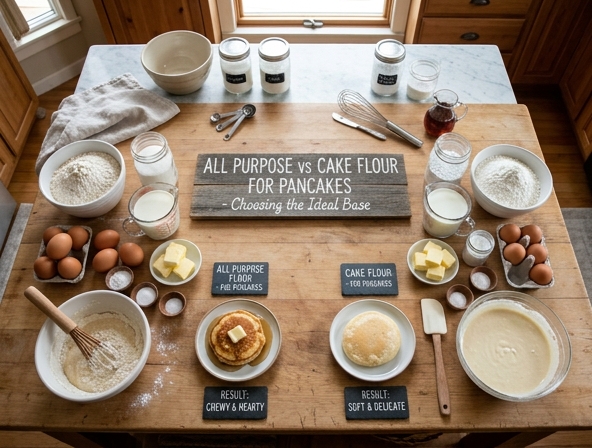
| Flour Type | Best For | Texture Outcome |
|---|---|---|
| All-Purpose Flour | Classic, everyday flapjacks | Structured, hearty, and firm |
| Cake Flour | Gourmet-style or soufflé pancakes | Tender, delicate, and cloud-like |
All-Purpose vs. Cake Flour for Pancakes: Choosing the Ideal Base
For many, the Sunday morning pancake is a ritual of comfort-a golden, fluffy stack dripping with syrup and butter. But behind every perfect pancake lies a debate that divides home cooks and pastry chefs alike: which flour provides the superior foundation? While flour is often treated as a generic pantry staple, it is the single most important variable in determining the texture, structure, and mouthfeel of your breakfast. To understand the difference between all-purpose and cake flour, we must first look at the science of the pancake itself.
The Science of Structure: Gluten and Protein
At the heart of the flour debate is protein content. When flour comes into contact with liquid-be it milk, buttermilk, or water-its proteins (glutenin and gliadin) bond to form gluten. Gluten is the elastic network that gives bread its chew and structure. In a loaf of sourdough, you want a strong, developed gluten network. In a pancake, however, you generally want the opposite: a delicate, tender crumb that melts in your mouth.
All-purpose flour typically contains between 10% and 12% protein. It is a "middle-of-the-road" flour designed for versatility, providing enough structure to hold up a cookie or a muffin while remaining tender enough for a crust. Cake flour, conversely, is milled from soft wheat and has a significantly lower protein content, usually hovering between 6% and 8%. This lower protein percentage limits the development of gluten, inherently resulting in a softer, more fragile final product.
All-Purpose Flour: The Reliable Workhorse
All-purpose flour is the industry standard for a reason. Its moderate protein levels offer a reliable "chew" that many pancake lovers find satisfying. When you use all-purpose flour, you are creating a sturdy foundation. This flour allows the pancake to rise effectively and maintain its shape even when loaded with mix-ins like blueberries, chocolate chips, or walnuts.
Pros:
- Structural Integrity: It holds heavy toppings easily.
- Browning: The higher protein content encourages Maillard browning, giving you those beautiful, deep-golden edges.
- Convenience: It is already in your pantry and requires no adjustments to standard recipes.
Cons: If the batter is over-mixed, the higher protein count can quickly turn a light pancake into something reminiscent of a rubbery kitchen sponge.
Cake Flour: The Path to Cloud-Like Tenderness
If your goal is a pancake that feels ethereal-something approaching the texture of a Japanese soufflé pancake-cake flour is your secret weapon. Because it contains less protein, the resulting batter is far less likely to become "tough." Furthermore, cake flour is often bleached, a process that changes the starch properties, allowing the flour to absorb more liquid and fat. This results in a pancake that is not only softer but also holds moisture better throughout the cooking process.
Pros:
- Unmatched Softness: The lower protein yields a remarkably tender crumb.
- Fine Texture: It creates a very consistent, tight-crumbed pancake that feels elegant on the palate.
Cons: Because the structure is so delicate, cake flour pancakes can be difficult to flip. They are also prone to becoming slightly "pasty" if not cooked with enough leavening, and they lack that characteristic, robust "toasted" flavor found in all-purpose flour pancakes.
The "Mixing" Factor: Why Technique Trumps Ingredients
It is important to note that the flour you choose matters less if you abuse your batter. Regardless of whether you reach for all-purpose or cake flour, the golden rule of pancake making is: Don't over-mix.
The more you stir a batter, the more gluten you develop. If you vigorously whisk an all-purpose flour batter, you will end up with a chewy, dense disc regardless of the protein content. If you gently fold the ingredients just until the dry pockets disappear, leaving the batter slightly lumpy, you preserve that tenderness. In fact, many professional chefs argue that using all-purpose flour with a light hand produces a better result than using cake flour and mixing it too aggressively.
Finding the Middle Ground: The Hybrid Approach
If you find all-purpose too sturdy but cake flour too fragile, many bakers employ a hybrid technique. By replacing a small portion of your all-purpose flour with cornstarch-roughly two tablespoons per cup-you can simulate the properties of cake flour. The cornstarch physically inhibits gluten development by occupying space where protein would otherwise bond. This provides the best of both worlds: the structure of all-purpose flour with the melt-in-your-mouth lightness of a cake-based batter.
The Final Verdict
Choosing between all-purpose and cake flour ultimately depends on what kind of breakfast you are craving. If you want a hearty, classic stack to fuel a long day of hiking or work, stick with all-purpose flour. It offers the structural reliability and rich flavor that defines the traditional American diner pancake.
If, however, you are aiming for a refined, delicate breakfast-perhaps served with fresh whipped cream and macerated berries-cake flour (or an all-purpose/cornstarch blend) will provide that sophisticated, cloud-like texture that makes a pancake feel like a true luxury.
Experimentation is the best way to determine your preference. Try making a half-batch with both flours side-by-side using the same recipe and leavening. You may find that your ideal pancake exists somewhere in the middle-a perfect harmony of structure and softness that elevates your morning routine from a chore to a culinary event.
Disclaimer:
The information provided on Eateryn is for general educational and informational purposes only and is not intended as medical, nutritional, or healthcare advice. It should not be used to diagnose, treat, cure, or prevent any disease or medical condition.
Always consult a qualified physician, registered dietitian, or other certified healthcare professional before making changes to your diet, exercise routine, or lifestyle, or regarding any medical questions or concerns you may have. Never disregard or delay seeking professional medical advice because of something you have read on this website.