
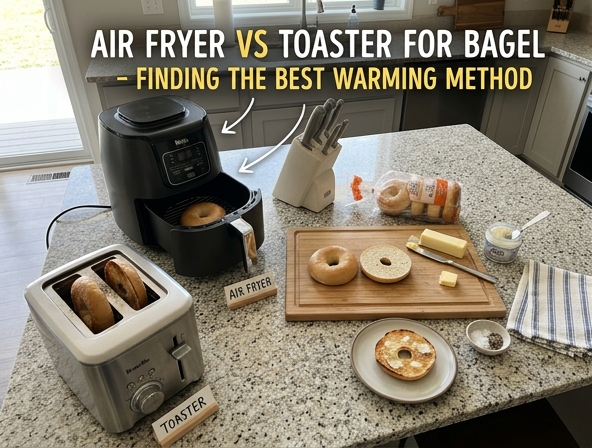
Air Fryer vs Toaster for Bagel - Finding the best warming method
Achieving the perfect bagel texture-crispy on the outside, soft within-is a persistent challenge. While traditional toasters and ovens are standard, they often compromise structural integrity. Selecting the optimal warming method preserves essential moisture, elevating your breakfast experience. Keep in mind that density and device wattage influence outcomes; for example, air fryers excel at rapid crisping, while toasters provide consistent browning. This guide evaluates both methods to identify your ideal solution.
| Method | Primary Strength | Best For |
|---|---|---|
| Air Fryer | Rapid, intense crisping | Achieving a crunchy exterior while maintaining an interior soft texture. |
| Toaster | Consistent browning | Traditional, even toasting results. |
| Key Considerations | Density & Wattage | Adapting timing based on the specific bagel thickness and device power. |
The Bagel Battle: Air Fryer vs. Toaster for the Perfect Morning Toast
For many, the bagel is the cornerstone of a proper breakfast. Whether it's a classic plain, a savory everything, or a hearty cinnamon raisin, the way you toast your bagel can mean the difference between a chewy, warm delight and a sad, leathery disappointment. For decades, the vertical pop-up toaster has held the throne in the kitchen counter hierarchy. However, the rise of the air fryer has disrupted this breakfast ritual, forcing a serious debate: which appliance truly yields the superior bagel?
The Case for the Traditional Toaster
The toaster is a kitchen relic for a reason: simplicity. It is a single-purpose machine designed to do one thing very well. When you drop a bagel into a toaster, the heating elements provide intense, direct infrared radiation to the surface of the bread. This process is focused entirely on the cut side of the bagel.
The Pros of Toasting
- Speed: Toasters are generally faster at achieving that initial crunch because the heating coils are mere centimeters away from the bread.
- Consistency: If you find the "sweet spot" on your dial, you can achieve nearly identical results every single morning without fail.
- Countertop Footprint: A standard two-slice toaster is compact and easily tucked away, leaving your kitchen workspace open.
The Cons of Toasting
The primary issue with the toaster is the "uneven browning" syndrome. Unless you have a high-end model with bagel-specific settings, the heating elements often scorch the edges while leaving the center pale. Furthermore, if you are a fan of adding toppings like cheddar cheese or butter *before* the toast, the toaster is a non-starter-it's a fire hazard waiting to happen.
The Rise of the Air Fryer
The air fryer is essentially a high-powered convection oven shrunk down to countertop size. Instead of relying solely on radiant heat, it uses a powerful fan to circulate hot air around the food. This creates a different thermodynamic environment for your bagel, one that changes the texture significantly.
The Pros of Air Frying
- Texture Mastery: Because the hot air circulates, the bagel is toasted on all sides-not just the face. You get a crispy exterior while the interior remains remarkably soft and chewy, rather than drying out into a cracker.
- Versatility: If you want to melt cheese onto your bagel, or warm up a slice of ham to place on top, the air fryer is your best friend. It handles "open-faced" preparations with ease.
- Control: Most air fryers have precise digital temperature controls, allowing you to "toast" at a lower temperature for a longer period if you are dealing with a thick, dense bagel that needs warming all the way through.
The Cons of Air Frying
The air fryer takes longer to heat up and "cook" than a toaster. You also have to deal with the cleanup; crumbs fall into the bottom of the basket, and if you melt cheese, you have a bit of a scrubbing chore ahead of you. Additionally, air fryers take up significantly more real estate on your counter.
The Technical Comparison: Texture and Moisture
The science of the perfect bagel comes down to the Maillard reaction-the chemical reaction between amino acids and reducing sugars that gives browned food its distinctive flavor. The toaster relies on high-heat radiation to initiate this quickly. While effective, it tends to dehydrate the bagel. If you leave it in even thirty seconds too long, you've essentially created a bagel-flavored crouton.
The air fryer, by contrast, uses convection to toast. By keeping the air moving, it creates a crisp barrier without sucking every drop of moisture out of the crumb. This is particularly beneficial for frozen bagels. While a toaster might burn the outside of a frozen bagel before the center is even thawed, the air fryer gently defrosts the entire bread in one go.
Expert Tips for the Best Results
Whether you choose team toaster or team air fryer, there are ways to elevate your bagel game:
If you use a toaster:
Invest in a pair of bamboo tongs. Nothing ruins a morning faster than trying to dig a stuck bagel out of a hot toaster with a metal fork. Also, if your bagel is very thick, toast it on a lower setting for two cycles rather than one high-heat cycle to ensure the center warms through.
If you use an air fryer:
Don't crowd the basket. Air fryers work on airflow; if you put too many items in, the air can't circulate properly, leading to soggy spots. A light mist of water or a tiny brush of butter on the cut side before air frying can help mimic the artisanal crust of a bakery-fresh bagel.
The Verdict
So, which is the winner? If you are a minimalist who wants a quick, crispy vehicle for cream cheese in under two minutes, the toaster remains the undisputed king of convenience.
However, if you are a "bagel-as-a-meal" person-someone who appreciates a perfectly melted slice of gouda, a toasted breakfast sandwich, or the artisanal texture of a bakery-grade bagel-the air fryer is the superior tool. It offers a culinary upgrade that the standard pop-up toaster simply cannot match. It's not just about toasting bread; it's about treating the bagel with the respect it deserves.
Ultimately, the best method is the one that fits your morning routine. But next time you're standing in front of your appliances, consider the air fryer-you might just find that your bagel tastes better than it has in years.
Disclaimer:
The information provided on Eateryn is for general educational and informational purposes only and is not intended as medical, nutritional, or healthcare advice. It should not be used to diagnose, treat, cure, or prevent any disease or medical condition.
Always consult a qualified physician, registered dietitian, or other certified healthcare professional before making changes to your diet, exercise routine, or lifestyle, or regarding any medical questions or concerns you may have. Never disregard or delay seeking professional medical advice because of something you have read on this website.