
Air Fryer vs Microwave for Hot Dog - Rapid Cooking Methods
Achieving the perfect hot dog texture often leads to soggy buns or rubbery, uneven results. While boiling and stovetop searing remain standard preparation methods, modern technology provides superior efficiency. Choosing the right appliance significantly improves flavor profile and casing snap. Note that outcomes depend on microwave wattage and air fryer airflow dynamics, affecting everything from simple franks to artisanal sausages. This analysis evaluates the precise technical differences between air frying and microwaving for optimal home preparation.
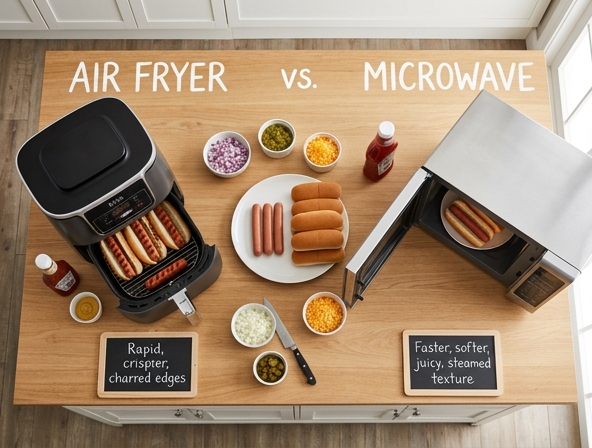
| Feature | Air Fryer | Microwave |
|---|---|---|
| Texture & Snap | Superior; achieves a crispy casing. | Prone to rubbery or uneven results. |
| Flavor Profile | Enhanced due to improved cooking dynamics. | Standard; lacks depth compared to other methods. |
| Key Variable | Airflow dynamics. | Appliance wattage. |
| Best Use Case | Optimal quality for artisanal and standard franks. | Quick, rapid preparation. |
The Ultimate Hot Dog Showdown: Microwave vs. Air Fryer
There are few foods as universally loved, convenient, and nostalgic as the humble hot dog. Whether it's a quick lunch, a late-night snack, or a staple of backyard barbecues, the hot dog is a culinary chameleon that fits almost any occasion. However, the method you choose to heat your frankfurter can be the difference between a sad, rubbery bite and a crisp, savory masterpiece. When time is of the essence, the debate usually boils down to two heavy hitters in the modern kitchen: the Microwave and the Air Fryer.
The Microwave Method: Speed Above All
For most, the microwave is the default choice. It is the king of "instant gratification." If you are starving and have less than two minutes to spare, the microwave is your best friend. But how does it actually treat the meat?
The Science of Nuking
Microwaves work by emitting electromagnetic waves that cause water molecules within the food to vibrate rapidly. This creates heat through friction. Because hot dogs are high in moisture and fat, they heat up almost instantly. The process is efficient, but it lacks the nuance of traditional cooking methods.
The Pros and Cons
Pros:
- Unbeatable Speed: You can go from fridge to plate in under 60 seconds.
- Low Effort: Minimal cleanup-just a paper towel.
- Softness: If you prefer a very soft, steamed-style hot dog, the microwave delivers a consistent, albeit uniform, texture.
Cons:
- Texture Issues: The microwave does not provide the "snap" that defines a high-quality sausage. It often results in a rubbery or soggy casing.
- Uneven Heating: You often end up with a hot exterior and a lukewarm center, or conversely, a burst casing where the fat has exploded through the side.
- Bun Fatigue: If you microwave the hot dog inside the bun, the bread often turns into a gummy, chewy mess.
The Air Fryer Method: The Modern Grill
If the microwave is a convenience tool, the air fryer is a miniature convection oven-and it has revolutionized the way we prepare quick snacks. By circulating high-temperature air around the food, the air fryer mimics the effects of a grill or a deep fryer without the massive oil vat.
Achieving the Perfect "Snap"
The air fryer excels because it allows for moisture evaporation on the surface of the meat. As the hot air hits the casing, it dehydrates the skin just enough to create that coveted "snap" upon the first bite. It effectively renders the fat beneath the skin, giving you a flavor profile much closer to a charcoal-grilled dog than a boiled one.
The Pros and Cons
Pros:
- Texture Superiority: The skin becomes crisp and lightly charred, providing a delightful textural contrast to the juicy interior.
- Flavor Development: The dry heat promotes Maillard reaction (browning), which significantly enhances the savory notes of the meat.
- Versatility: You can toast the bun right alongside the hot dog for the final two minutes, ensuring a perfectly warmed, slightly crunchy vessel.
Cons:
- Time Investment: While not "slow," it typically takes 5–8 minutes, compared to the microwave's 45 seconds.
- Cleanup: You have to wash the air fryer basket or clean the parchment paper liner, which is more involved than tossing a paper towel.
Comparative Breakdown: Which Should You Choose?
| Criteria | Microwave | Air Fryer |
|---|---|---|
| Time | Winner (under 1 min) | Average (5-8 mins) |
| Texture | Soft/Rubbery | Crisp/Grilled |
| Flavor | Basic | Enhanced/Savory |
| Convenience | High | Medium |
Pro-Tips for Mastery
If You Must Use the Microwave:
To avoid the "rubber dog" effect, use a damp paper towel. Wrap the hot dog loosely; this creates a mini steam chamber that prevents the skin from drying out into a tough, leathery texture. Also, poke a few small holes in the casing with a fork to prevent it from exploding due to pressure buildup.
If You Want the Perfect Air-Fried Dog:
Don't just throw the frank in. Take a sharp knife and make three to four shallow diagonal cuts (scoring) along the surface. This allows the heat to penetrate the center and creates more surface area for crisping. Preheat your air fryer to 375°F (190°C). If you want to toast your bun, add it to the basket for the last 90 seconds-brush it with a tiny bit of melted butter first for a gourmet touch.
Final Verdict
Ultimately, the choice depends on your priorities. If you are in the middle of a gaming session or rushing out the door, the microwave is the reliable workhorse that will get the job done. However, if you have five minutes to spare, the air fryer is objectively the superior cooking method for a hot dog.
The air fryer offers a culinary upgrade that transforms a simple processed meat product into something that feels deliberate and delicious. The texture, the crisp skin, and the perfectly toasted bun elevate the experience from "I'm just eating to stay alive" to "I'm having a legitimate snack." For the true hot dog enthusiast, the microwave is a compromise, but the air fryer is a tool for excellence.
Disclaimer:
The information provided on Eateryn is for general educational and informational purposes only and is not intended as medical, nutritional, or healthcare advice. It should not be used to diagnose, treat, cure, or prevent any disease or medical condition.
Always consult a qualified physician, registered dietitian, or other certified healthcare professional before making changes to your diet, exercise routine, or lifestyle, or regarding any medical questions or concerns you may have. Never disregard or delay seeking professional medical advice because of something you have read on this website.